


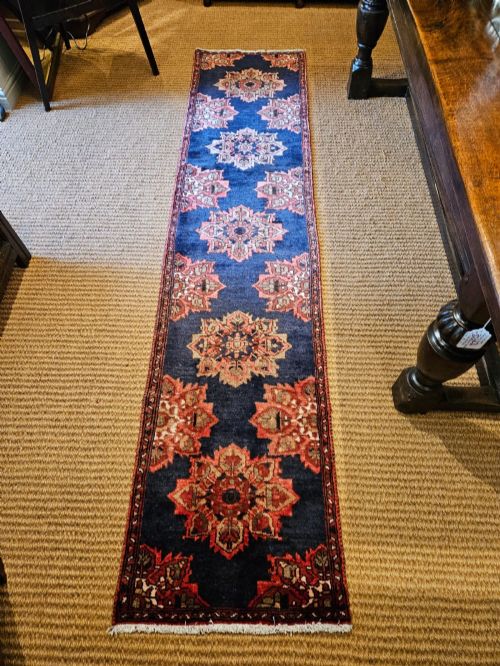
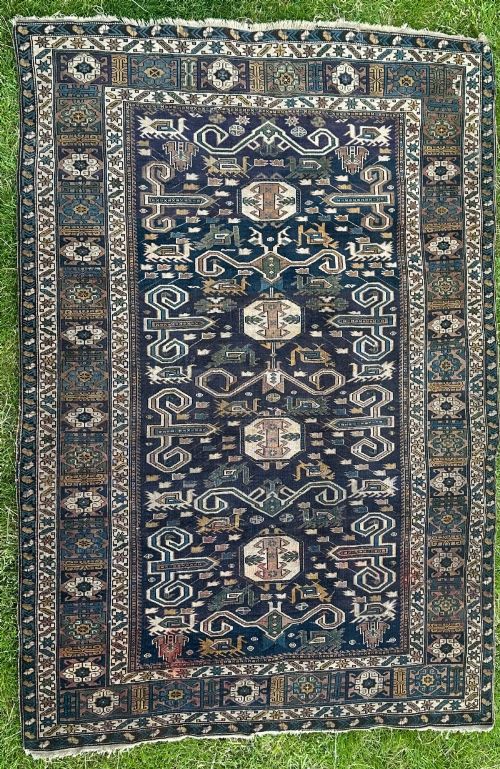
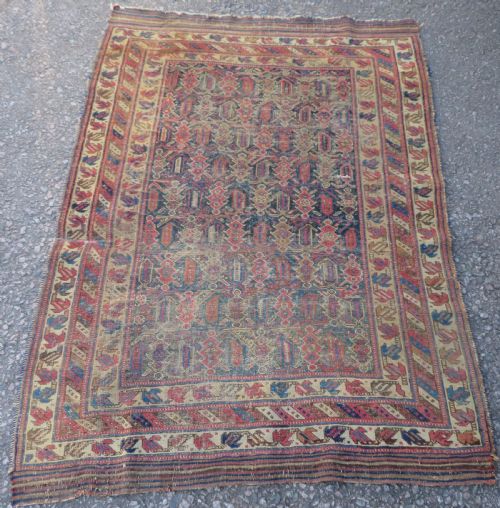
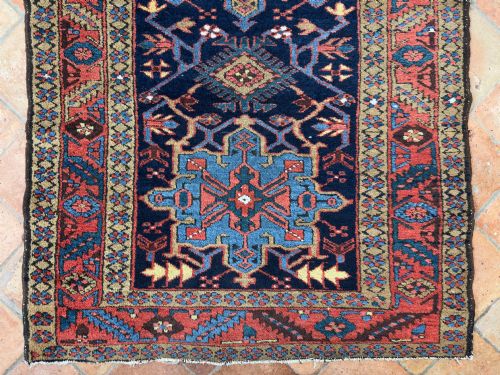
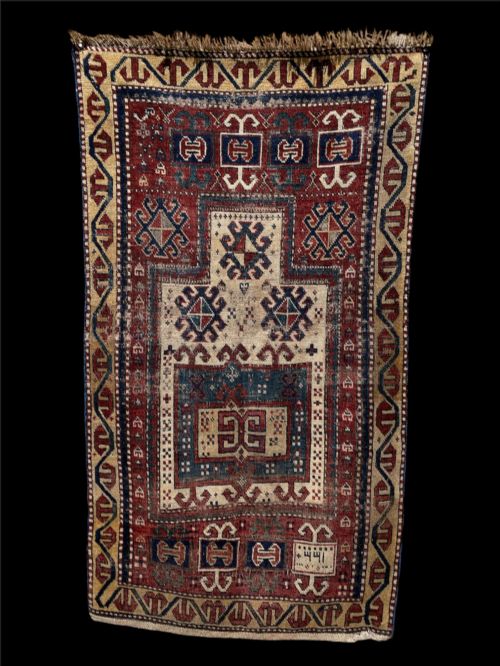
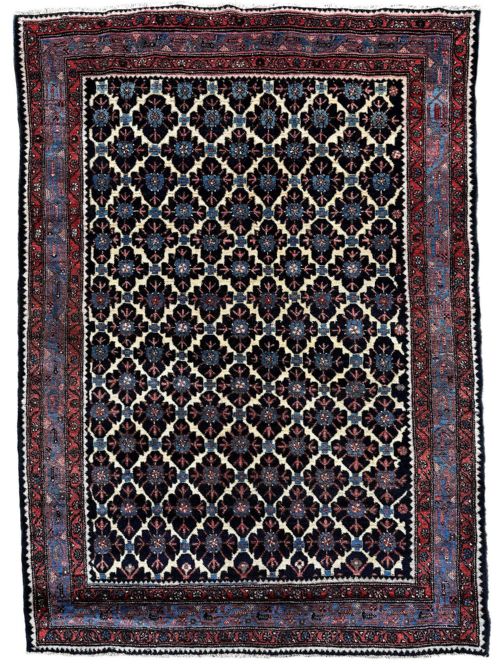


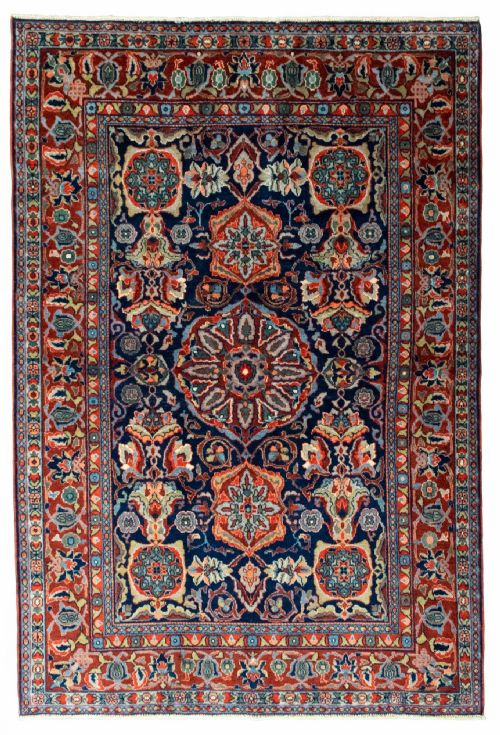
Navy Wool Floor Runner
A navy wool floor runner provides durable texture and deep indigo or dark blue tones along corridors and narrow spaces.
Navy Wool Floor Runner
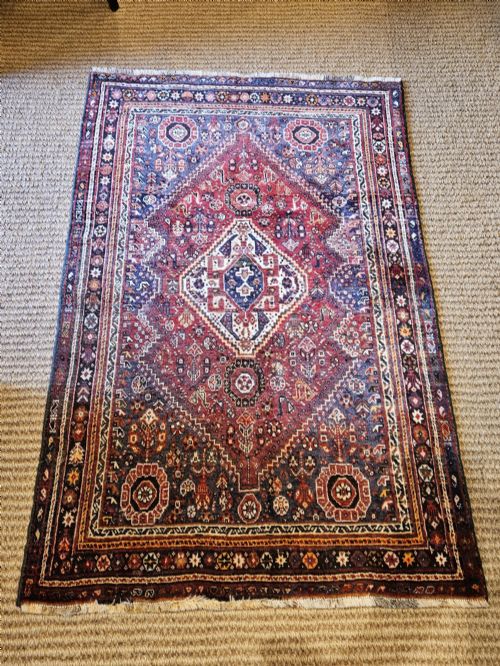
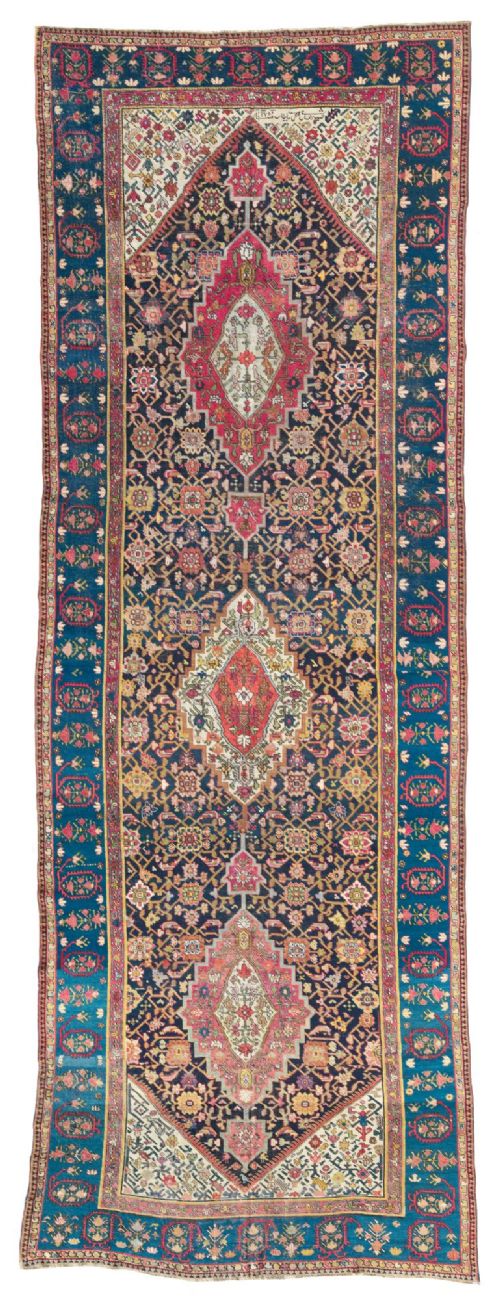
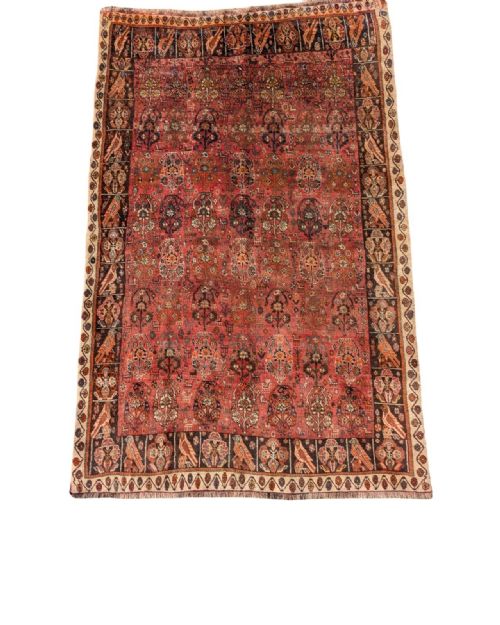
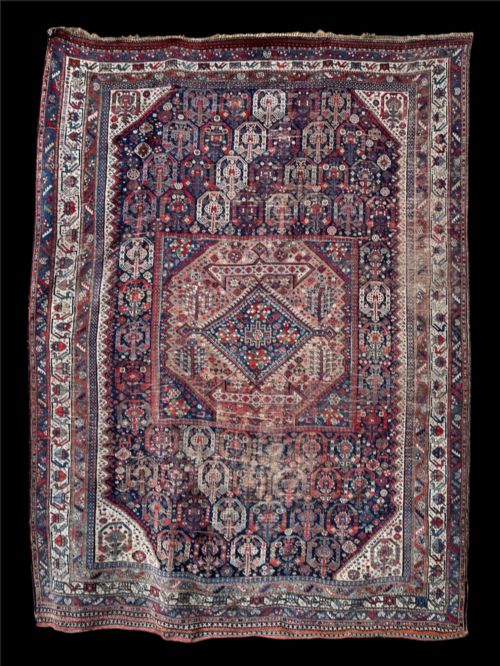
A navy wool floor runner serves as a practical and long textile covering designed specifically for hallways and narrow rooms. When buyers search for a navy wool floor runner, they encounter antique examples originating from Persian, Caucasian, and tribal village traditions dating from the nineteenth and early twentieth centuries.
The selection includes specific regional weaving styles such as Heriz, Bakhtiari, Hamadan, and Caucasian formats produced between 1850 and 1930. These pieces bring dense patterns and deep blue dyed grounds into domestic interiors while offering substantial foot traffic endurance.
How they were made
These textiles rely on hand-spun wool combined with cotton foundations, knotted tightly by hand across nomadic camps and village workshops. Natural dyeing methods yielded durable navy and indigo hues derived from plant sources.
Weavers constructed each runner using dense wool piles tied securely onto sturdy warp and weft threads, ensuring the structural integrity necessary for continuous floor use.
Nomadic weavers frequently incorporated small protective animal symbols into their dark wool fields to ward off misfortune along dusty paths.
What varies in quality
The standard of a navy wool floor runner depends upon the fineness of the knotting, the complexity of the tribal or village design, and the retention of deep, saturated natural dyes. Superior examples exhibit tightly packed foundations and sharply defined geometric or floral motifs.
The Navy Wool Floor Runner Glossary
- Runner
- A long, narrow carpet format designed principally for hallways, corridors, and staircases. These pieces balance linear geometry with functional floor coverage.
- Wool
- A natural animal fibre sheared from sheep, providing the primary resilient pile material for traditional carpets and rugs. It absorbs natural dye stuffs readily.
- Knot
- An individual loop of coloured wool tied around warp threads to form the pile of a carpet. Density dictates detail clarity and durability.
- Tribal
- Describing rugs woven by nomadic or semi-nomadic groups using traditional memory patterns rather than pre-drawn cartoon designs. These styles feature expressive geometric motifs.
Navy Wool Floor Runner: Frequently Asked Questions
Where should I place a navy wool floor runner?
These narrow textiles suit hallways, corridors, and long entrance passages where durable floor coverings are required. Their deep blue tones anchor high-traffic circulation spaces effectively.
Position them away from direct, prolonged exposure to harsh sunlight to protect the saturated wool dyes over time.
How do I clean a wool floor runner?
Regular gentle vacuuming without a rotating beater bar removes loose dirt from the wool pile safely. Professional specialist cleaning remains essential for deep maintenance.
Avoid harsh chemical detergents or excessive moisture which can damage the natural wool fibres and dye foundations.
How do I identify the regional origin of these runners?
Regional attribution relies upon analyzing specific knotting structures, colour palettes, and characteristic geometric or floral motifs. Different weaving groups from Persia and the Caucasus utilised distinct border arrangements.
Comparing structural details against established tribal and village weaving characteristics clarifies where a piece was made.
What underlay should I use beneath an antique runner?
A breathable, high-friction rug underlay prevents slipping on hard wooden or tiled floors while providing extra cushioning. This layer reduces direct friction between the floorboards and the antique wool foundation.
Select a specialised mesh pad designed specifically for vintage textiles to maintain proper air circulation.