

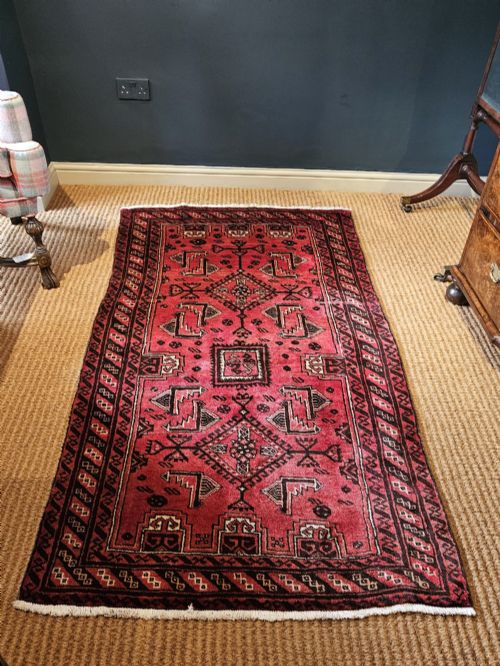
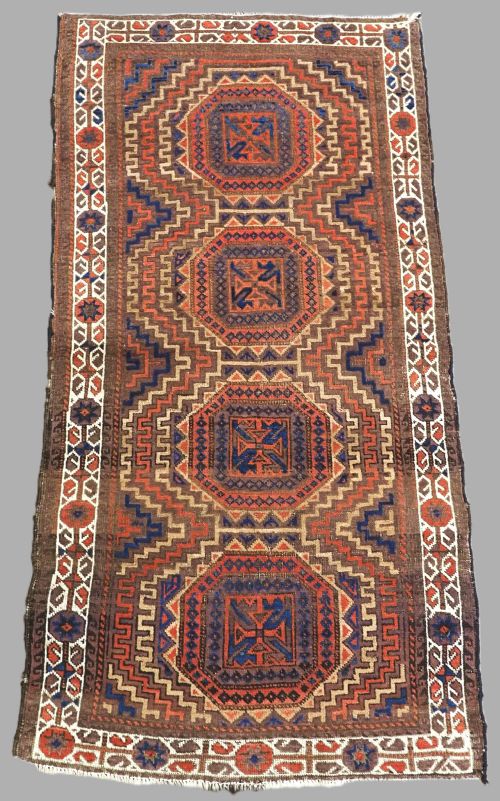
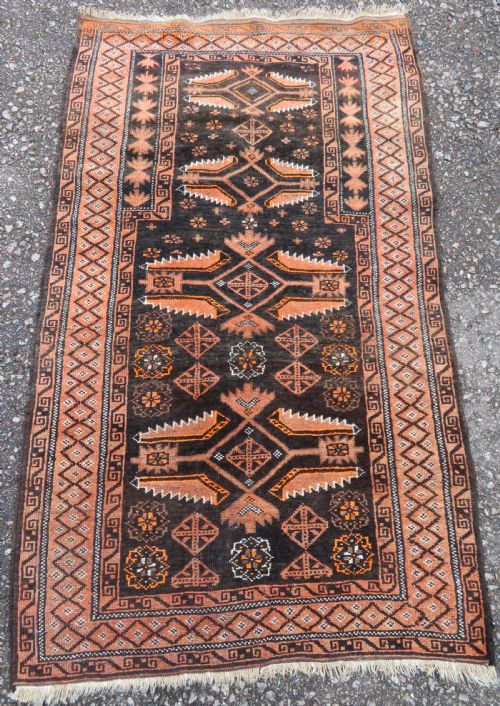
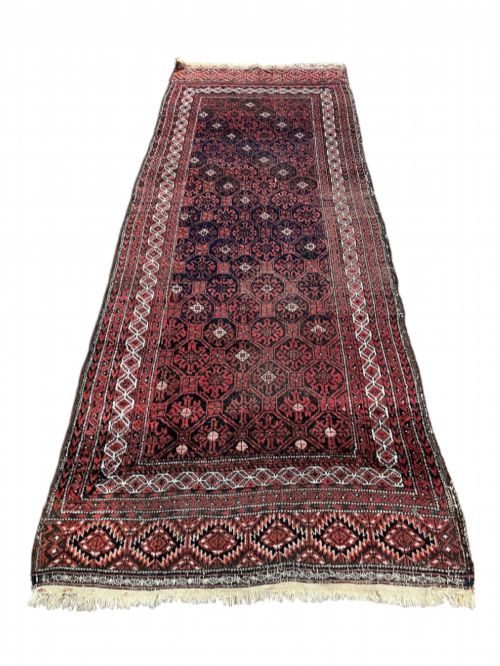


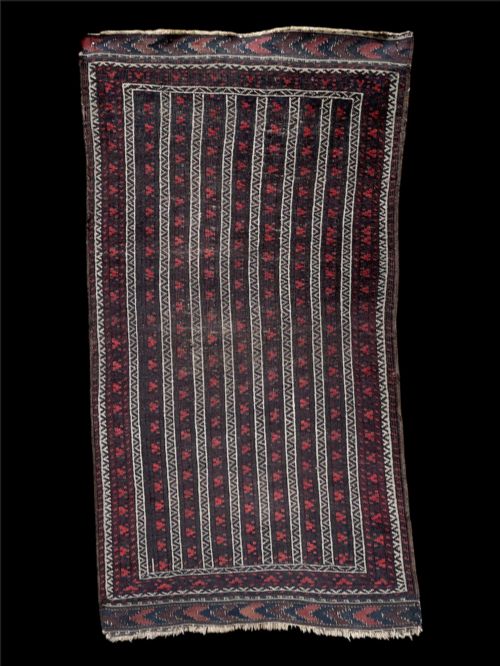


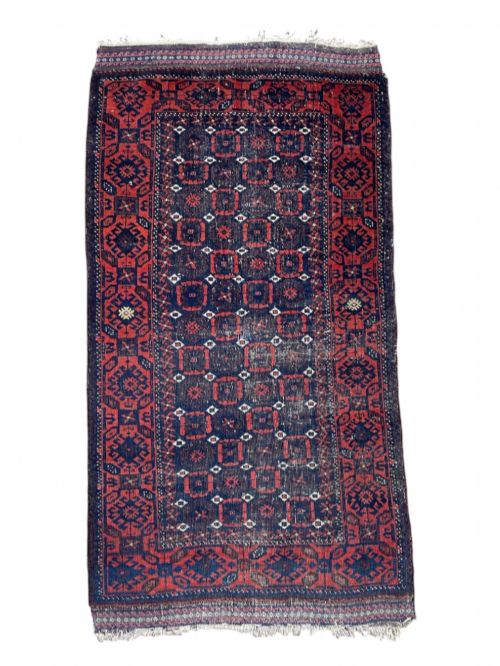

Baluch Tribal Runner
These pieces known as a baluch tribal runner represent nomadic and village weaving traditions from the nineteenth and early twentieth centuries.
Baluch Tribal Runner
A baluch tribal runner is a narrow, elongated textile woven by nomadic and semi-nomadic weavers originating from regions across Afghanistan, Persia and the borderlands. These floor coverings served practical purposes in tribal tents and dwellings, often taking the form of long formats designed for specific spaces.
The pieces available typically date from the nineteenth century up to the 1930s, encompassing older village productions and tribal works. Alongside traditional runners, buyers will frequently encounter related formats such as prayer rugs featuring mihrab designs, kilims, and small format pushti faces.
The visual vocabulary relies heavily on traditional motifs including guls, latch hook medallions, shrub patterns, and the distinctive kalam donneh or pencil box design. Tribal variations linked to specific groups such as the Taimani, Salar Khani, Timuri, and Mushwani appear throughout the selection.
Materials and construction
The foundation of these textiles relies primarily on hand-spun wool, often paired with cotton for structural integrity and occasional additions of goat hair or camel hair in specific sections. Weavers utilised natural dyes to achieve deep tones, frequently incorporating camel wool to provide a natural warm ground colour.
Construction techniques involve traditional hand-weaving methods, combining piled carpet knotting with flat-woven kilim sections and mixed techniques. The processing of local fibres by hand yields a dense, durable textile designed to withstand daily nomadic use.
Certain runners double as portable dining floors, meaning your new hallway rug likely spent its early years holding flatbread and tea.
Distinctions in quality
Quality in these runners rests upon the fineness of the knotting and the handled tension of the foundation yarns, which determines how flat and true the textile lies. Tighter construction and careful preparation of hand-spun wool result in a resilient handle that retains its structural integrity over decades of use.
The depth and variation of natural dyes also set examples apart, with superior pieces displaying rich, harmonious colour palettes that develop a subtle patina. Additionally, the clarity and complexity of traditional tribal designs contribute to the overall merit of an individual textile.
Salar Khani Tribe·Djhan Beghi Tribe·Timuri·Taimani Sistan Baluch·Mushwani Baluch
The Baluch Tribal Runner Glossary
- Mihrab
- A niche design symbolising a prayer arch, commonly found oriented towards Mecca on Islamic prayer rugs. This architectural motif often appears in single, double, or multiple formats on tribal weavings.
- Gul
- A repeating medallion or floral-like octagonal stamp used as a primary motif across many Central Asian and tribal carpets. These motifs often identify the specific weaving tribe or clan.
- Sofreh
- A spreading cloth or dining spread traditionally used for sharing meals on the ground within nomadic households. These flat-woven or piled textiles feature specific geometric layouts related to food hospitality.
- Kilim
- A flat-woven carpet or rug produced without a pile by tightly interweaving warp and weft strands. These pieces are lighter in weight than piled rugs and often incorporate sharp geometric bands.
- Pushti
- A small mat or rug, frequently used as a cushion face or small sitting rug in tribal tents. They share the decorative patterns of larger carpets in a compact scale.
Baluch Tribal Runner: Frequently Asked Questions
Where were these runners made?
These textiles were produced by nomadic and village weavers across regions spanning modern-day Afghanistan, eastern Persia, and surrounding borderlands. Different tribes contributed distinct structural habits and regional design variations.
Local access to specific materials, such as camel hair and rich plant dyes, directly influenced the appearance of weavings from different geographic pockets.
How do I care for an old wool runner?
Maintenance requires regular gentle vacuuming without a rotating power brush to protect the hand-spun wool pile and delicate edges. Keeping the textile away from direct, prolonged sunlight helps preserve the stability of natural dyes.
Professional cleaning should be undertaken periodically by specialists familiar with antique tribal carpets rather than standard domestic methods.
What is a prayer rug design?
A prayer rug incorporates a distinct arched mihrab motif at one or both ends to signify the direction of prayer. These formats were utilised individually for daily ritual observance within nomadic camps.
Mihrab designs range from simple single arches to complex double and triple arrangements executed in varied tribal palettes.
How can I tell the age of a piece?
Dating relies on assessing the composition of hand-spun wool, the character of natural dye palettes, and structural wear patterns consistent with nineteenth and early twentieth-century production. Certain tribal attributions and structural quirks also provide reliable chronological markers.
Comparing structural techniques against documented village and nomadic examples helps narrow down the period of manufacture.