
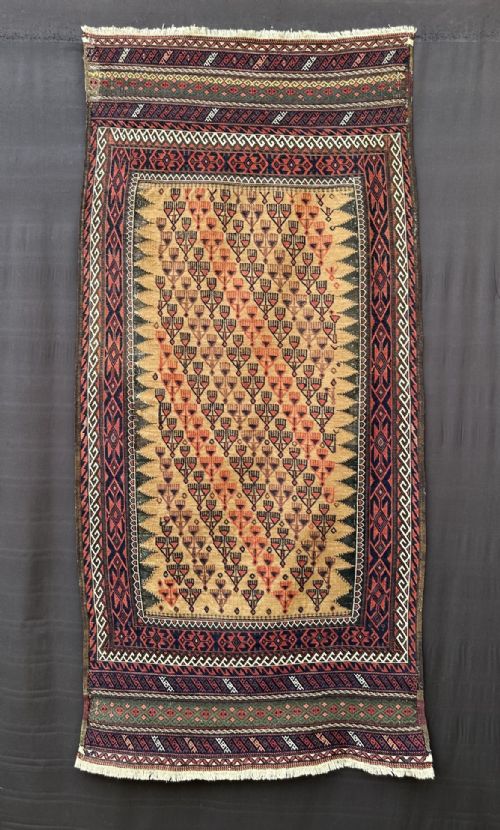
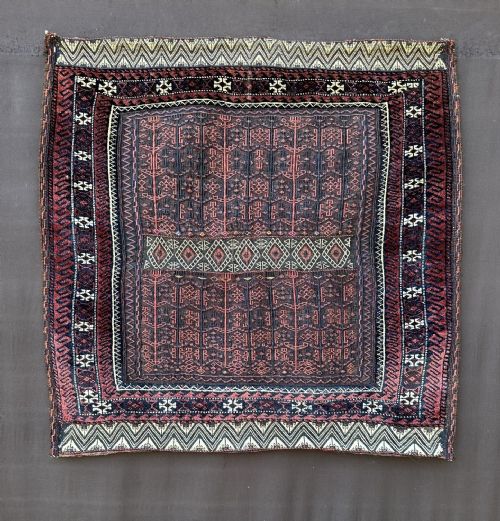
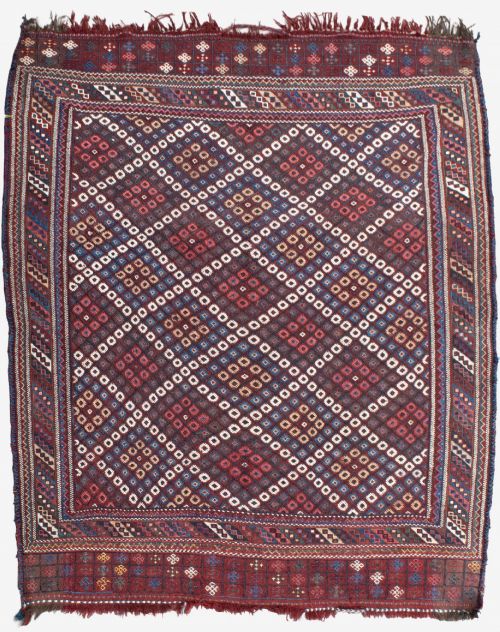


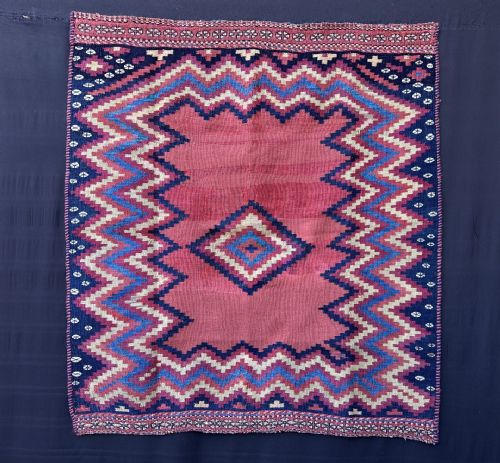


Antique Sofreh Rug
An antique sofreh rug is a tribal cloth woven for dining or bread preparation, bringing genuine nomadic utility and striking geometric artistry into a modern interior.
Antique Sofreh Rug
When you examine an antique sofreh rug, you are looking at utilitarian textiles woven by nomadic and tribal groups across Persia and Afghanistan. These flatweaves and pile rugs served specific domestic purposes within tribal life, principally as eating cloths or bread-making spreads.
The pieces you encounter on this page span the late nineteenth century and the early decades of the twentieth century. They originate from specific tribal groups including the Afshar, Timuri, Baluch, and Luri-Bakhtiari communities.
Forms divide primarily into dining sofreh and bread sofreh, reflecting the original domestic function of the textile. Their geometry and field designs often map out utilitarian spaces intended for communal meals or dough preparation.
Materials and weaving techniques
The construction relies predominantly on wool and cotton foundations, paired with wool pile or flatweave structures. Artisans utilised natural dyes to achieve the deep reds, blues, and earthy tones characteristic of these tribal pieces.
Certain examples incorporate camel hair into the weave, adding tonal variation and durability to the field. The combination of flatweave kilim techniques and structural knotting demonstrates the versatile methods employed by nomadic weavers.
Current listings feature wool, cotton, camel hair, and natural dyes across nineteenth and early twentieth-century tribal pieces.
Assessing quality and craftsmanship
Quality in these textiles rests upon the precision of the tribal weave and the purity of the natural dyes used across the field. Tighter knotting or finer flatweave execution indicates a higher level of technical skill from the maker.
The handling of traditional tribal motifs and the depth of colour achieved through natural dyeing separate standard examples from superior pieces. Preservation of the original edges and structural integrity also determines the standing of an individual textile.
The Antique Sofreh Rug Glossary
- Sofreh
- A spread or cloth used in nomadic households for dining or preparing bread. These textiles are central to traditional tribal hospitality.
- Flatweave
- A textile produced without a pile by interlocking warp and weft threads. Pieces like kilims and certain sofreh are constructed using this method.
- Natural Dyes
- Colourants derived from plant, insect, or mineral sources rather than synthetic chemicals. They produce the complex, ageing tones seen in older tribal rugs.
- Tribal
- Pertaining to wares made by semi-nomadic or village groups for their own use or local exchange, rather than urban workshop production.
- Warp
- The stationary vertical threads stretched across a loom that form the structural foundation of the rug.
Antique Sofreh Rug: Frequently Asked Questions
What is an antique sofreh rug used for?
These textiles were originally utilised by nomadic tribes as floor coverings for communal meals or as protective spreads for kneading and preparing bread.
Today, collectors primarily display them as wall hangings or decorative floor flatweaves in contemporary residential interiors.
How do I care for an antique flatweave rug?
Gentle vacuuming without a rotating brush helps remove dust without damaging the wool or cotton foundations.
Professional textile conservation cleaning is recommended when deeper maintenance is required to protect natural dyes.
Which tribes made these rugs?
The pieces recorded here were produced by various regional groups including the Afshar nomads, Timuri tribes, Baluch weavers, and Luri-Bakhtiari communities.
Each group maintained distinct design vocabularies tied to their specific geographic regions in Persia and Afghanistan.
How can I tell the age of a sofreh?
Age is assessed through the analysis of natural dye palettes, wool quality, and structural characteristics typical of late nineteenth and early twentieth-century weaving.
Tribal attributions and regional wool preparation methods also provide reliable indicators of a piece's historical period.