


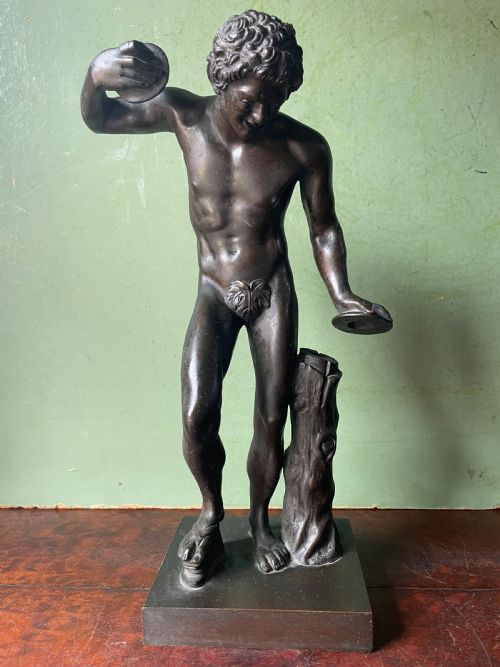


Dancing Faun Statue
A dancing faun statue captures the exuberant spirit of classical antiquity through dynamic movement and enduring bronze casting.
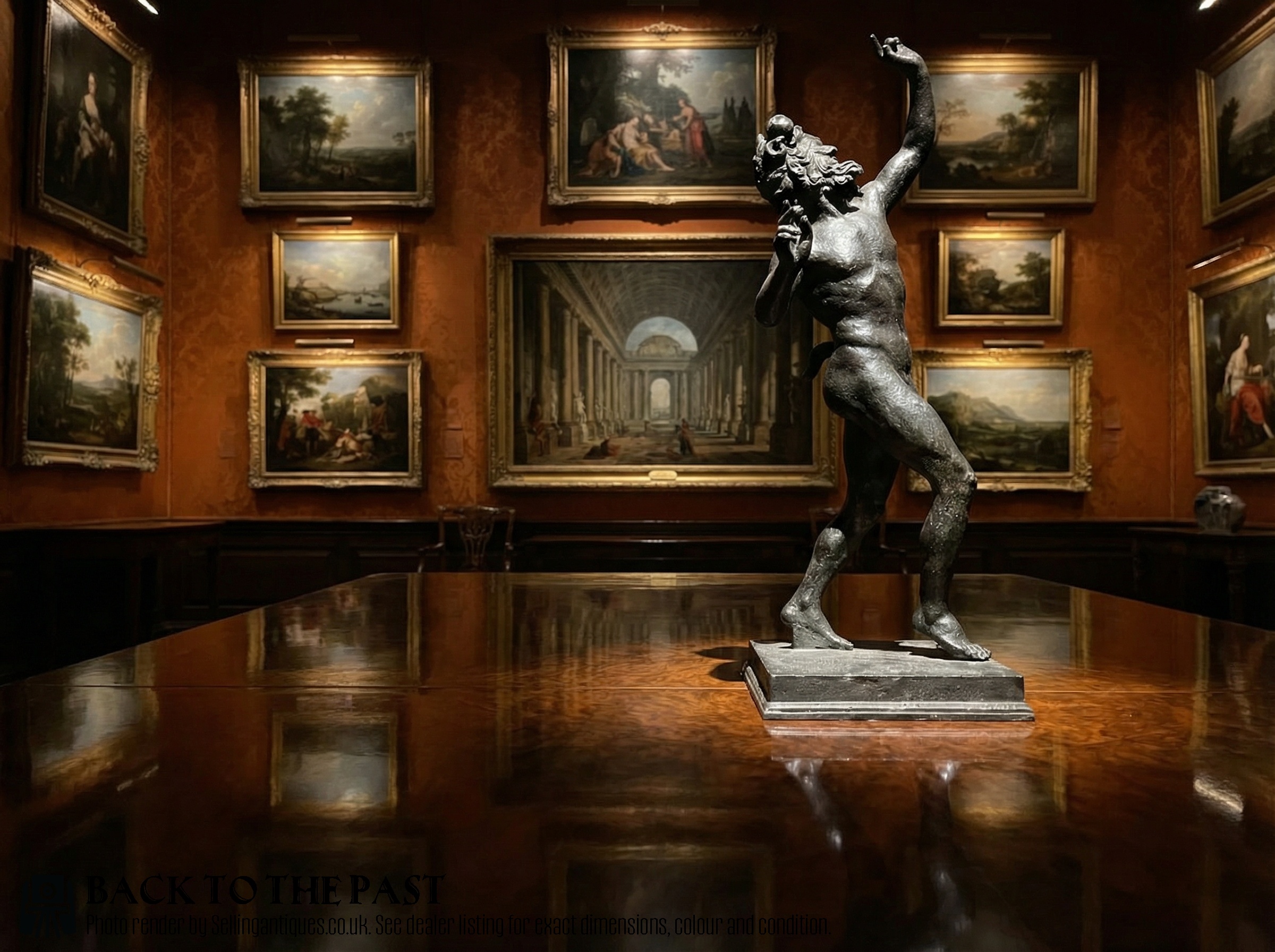
Dancing Faun Statue
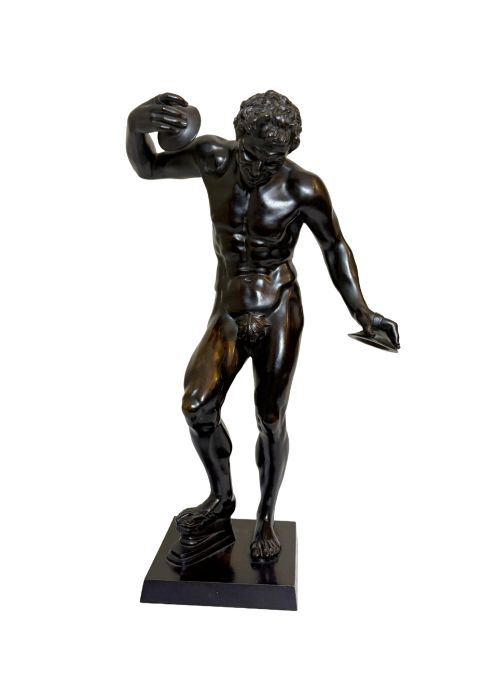
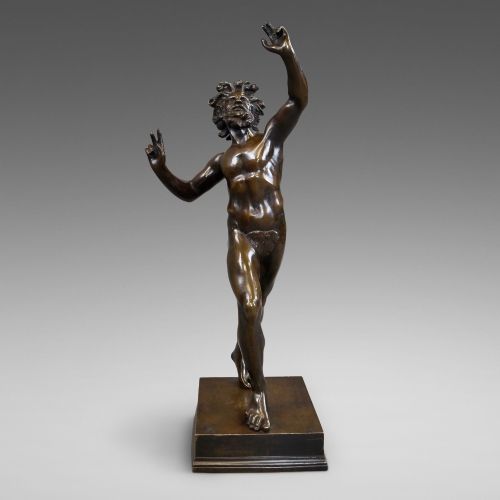
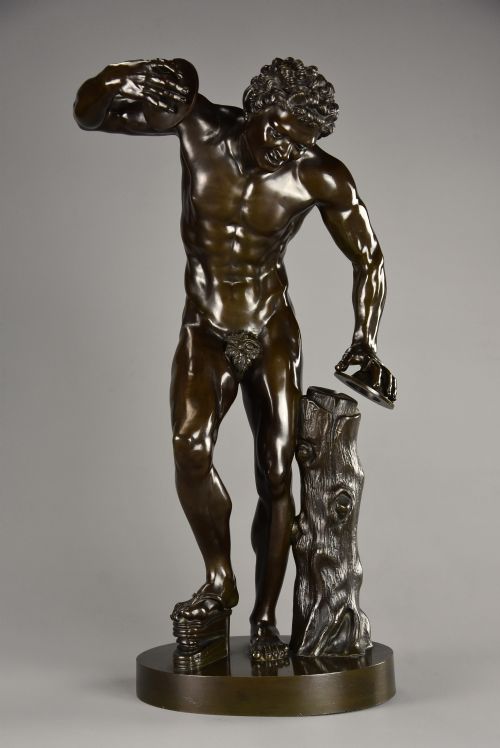
A dancing faun statue takes its inspiration from classical archaeological discoveries, most notably the celebrated bronze figure recovered from the House of the Faun in Pompeii. These pieces typically depict a mythological figure caught mid-dance, often holding cymbals or clappers to mark the rhythm.
Most examples encountered on this page originate from the nineteenth century, created as Grand Tour souvenirs for travellers returning from Italy. They range from small cabinet reductions to substantial cabinet bronzes modelled closely on the ancient originals preserved in Naples.
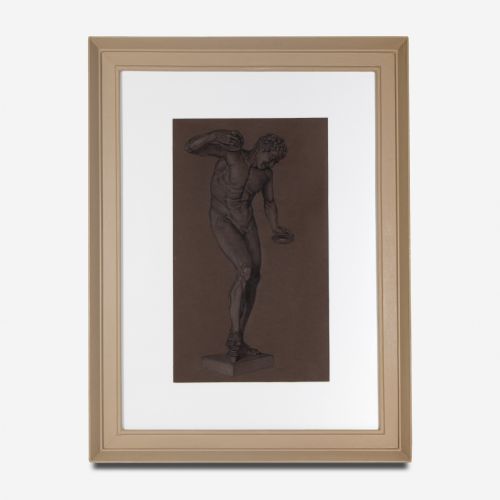
While bronze remains the predominant medium for these sculptures, variations include patinated metal, plaster, and framed works on paper. The style aligns firmly with the Neoclassical taste of the Victorian period, reflecting a widespread fascination with classical antiquity.
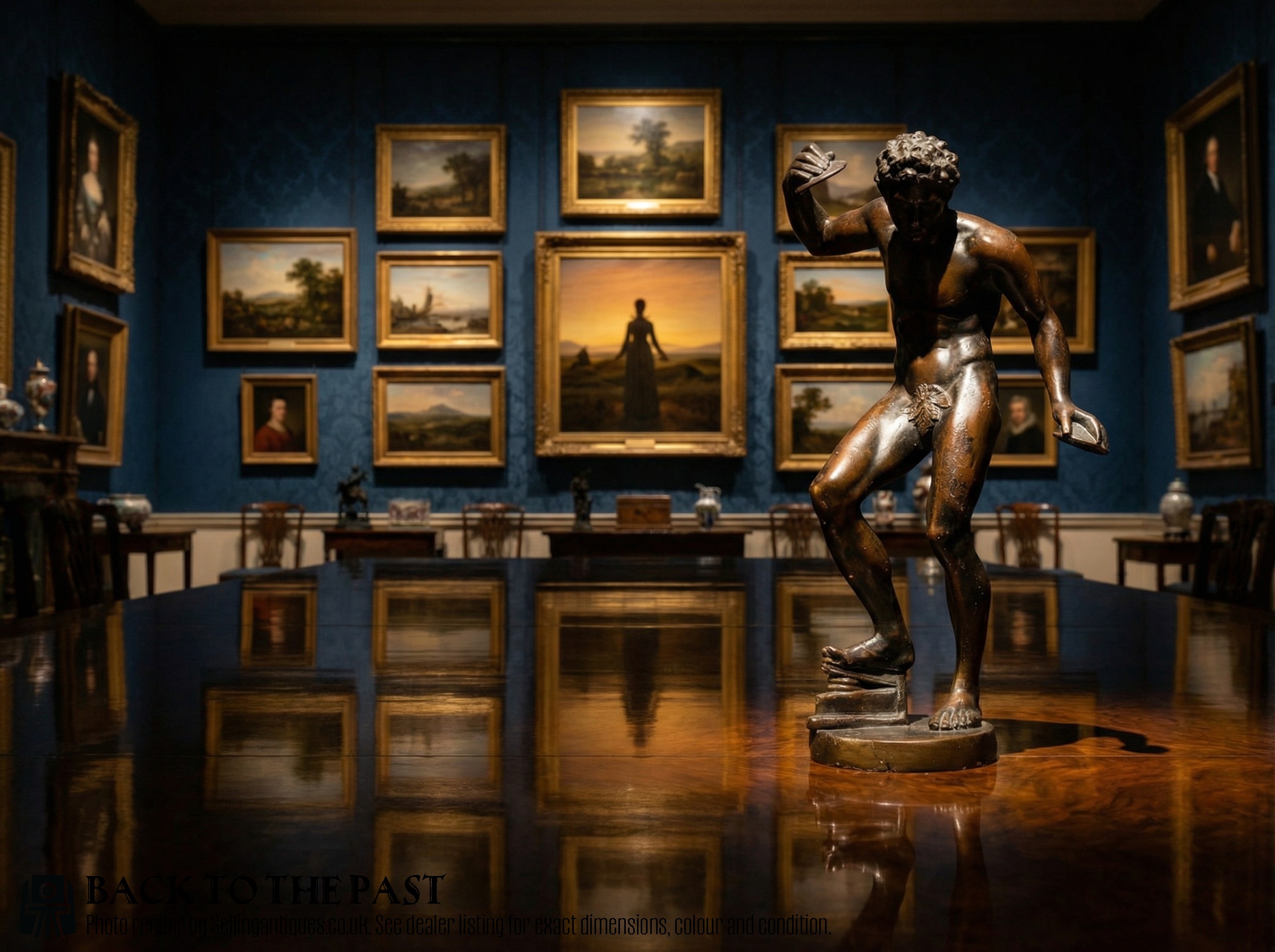
Materials and construction methods
The majority of these sculptures utilise bronze, shaped through traditional casting methods and finished with chemical patination to achieve deep brown, green, or dark tones. This patination mimics the appearance of excavated antiquities recovered from archaeological sites.
Alternative materials recorded in the evidence include plaster and mixed media such as paper, charcoal, wood, and glass used in framed artwork. Metal and marble occasionally support the sculptures as integrated bases or plinths.
Dancing Faun Statue Retail Price Guide 2026
Typical asking prices for dancing faun statue among the pieces listed under this phrase on Sellingantiques today, from the lower quarter to the upper quarter. They describe what is for sale here now, not the wider market.
Pan occasionally gatecrashes the dance floor, reminding everyone that ancient revellers brought their own musical instruments.
Distinctions in quality and execution
Quality in a nineteenth-century bronze reduction lies in the crispness of the chasing and the fidelity to the antique source. Finer castings preserve the musculature, facial expression, and intricate details of the hands and instrumentation.
The depth and subtlety of the patination contribute significantly to the visual success of the piece. Smoother transitions of colour and carefully maintained surfaces distinguish superior workshop output from simpler souvenir productions.
Augusto Rivalta·Duchemin
The Dancing Faun Statue Glossary
- Grand Tour
- A traditional journey through Europe, particularly Italy, undertaken by upper-class young men in the eighteenth and nineteenth centuries to study the arts and classical antiquity. Souvenirs purchased along the route often included bronze reductions of famous sculptures.
- Neoclassical
- A Western cultural movement in the visual arts inspired by the classical art and culture of ancient Greece and Rome. This aesthetic prioritised heroic subjects, balance, and restraint.
- Patination
- The process of applying chemical treatments to a metal surface to alter its colour and texture. In nineteenth-century bronzes, patination was carefully controlled to simulate aged bronze.
- Reduction
- A smaller copy of a larger, well-known sculpture. Foundries produced these scaled-down versions for domestic display in nineteenth-century drawing rooms and libraries.
Dancing Faun Statue: Frequently Asked Questions
What is a dancing faun statue?
A dancing faun statue is a nineteenth-century decorative sculpture modelled after ancient Roman bronzes excavated in Pompeii. They typically portray a mythological half-man, half-goat figure captured in an energetic pose.
These pieces were produced primarily as Grand Tour souvenirs for European travellers. They bring classical mythology and nineteenth-century foundry craftsmanship into domestic interiors.
How old are these sculptures?
The pieces available here date predominantly from the nineteenth century, spanning the Victorian era up to around nineteen hundred. They reflect the period's intense revival of classical styles.
While inspired by ancient Roman art, the objects themselves were cast during the eighteen-fifties through the end of the nineteenth century. Makers often worked directly from museum casts in Naples.
Where were they originally displayed?
In the nineteenth century, these bronze figures were displayed in libraries, studies, and drawing rooms as conversation pieces. They signalled the owner's classical education and cultured travel experiences.
Today, they function well on mantelpieces, desks, or open shelving where their detailed patination can be appreciated up close.
How do I care for a bronze statue?
Bronze requires minimal maintenance beyond occasional dusting with a soft, dry cloth. Avoid using commercial metal polishes, which can strip the historic patination.
Keeping the sculpture away from direct moisture and extreme temperature fluctuations helps preserve the stability of the metal and its surface finish.