


Curiosity Display Dome
A curiosity display dome protects and frames natural history specimens under blown glass, bringing Victorian taxonomy into domestic interiors.
Curiosity Display Dome
A curiosity display dome offers a glass cover fitted over a wooden base to protect delicate specimens from dust and handling. These enclosures range from simple circular covers to flat-sided or tall oval showcases designed for specific interiors.
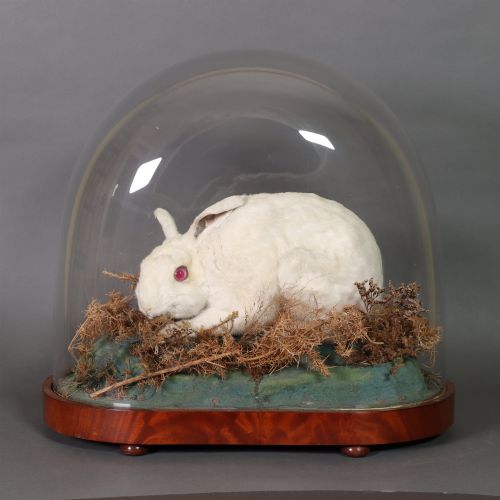
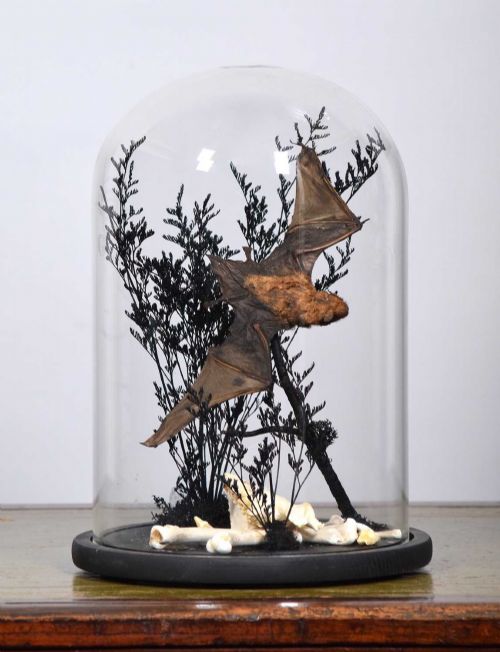
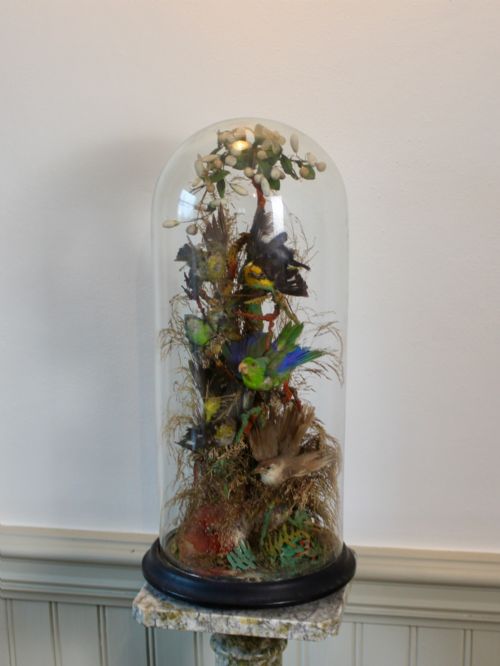
The selections encountered here originate from the Victorian and Edwardian periods, stretching from eighteen seventy into nineteen hundred. They house taxidermy specimens, including birds of paradise, snow buntings, rabbits, bats, and animal skulls.
Makers utilised ebonised wood for bases to contrast with the colourful plumage of exotic birds and white bone structures. Collectors encounter both simple glass covers and elaborate compositions arranged by taxidermists.
How they were made
Glass was blown to create tall or oval domes, which sat upon turned wooden bases, frequently finished in ebonised wood. These covers required steady hands to achieve even thickness and clarity across large curved surfaces.
Taxidermists mounted specimens using wire and internal armatures, often arranging birds or mammals within naturalistic compositions incorporating fabric, velvet, and feathers. Bases were fitted with grooves or channels to secure the glass firmly in place.
Some Victorian domes house albino rabbits and exotic birds of paradise frozen in perpetual stillness beneath blown glass.
What varies in quality
Quality rests in the clarity and thickness of the blown glass dome, where older examples often show subtle bubbles and ripples. Superior pieces feature heavier ebonised wood bases and complex taxidermy arrangements executed by known practitioners.
The taxidermy composition itself dictates the standing of a piece, separating simple single specimens from intricate groupings of colourful birds. Proportion between the height of the glass and the scale of the mounted specimen governs visual balance.
James Gardner·Henry Ward London·A Pollard
The Curiosity Display Dome Glossary
- Cloche
- A bell-shaped glass cover used to protect fragile objects. This term is frequently interchanged with display dome.
- Ebonised wood
- Timber treated to imitate ebony, giving a deep black finish. Bases of display domes often utilise this treatment.
- Taxidermy
- The art of preparing, stuffing, and mounting the skins of animals for display. Specimens inside these domes showcase Victorian natural history methods.
- Diorama
- A three-dimensional scene housing mounted specimens in a recreated habitat. Some oval domes enclose these detailed settings.
Curiosity Display Dome: Frequently Asked Questions
Can I remove the glass cover?
Most antique domes lift off the wooden base freely, though some older examples were sealed at the groove. Check how the glass sits in the channel before attempting to lift it.
Ask someone to assist with tall or heavy domes to avoid chipping the antique glass edges against the wood.
Where should I place a dome?
Position your display dome away from direct sunlight to prevent the plumage of birds and fabrics from fading. A sturdy mantelpiece, cabinet top, or sideboard provides a stable surface.
Keep the enclosure away from sources of heat or dampness to protect the historic wood and internal taxidermy materials.
How do I date an antique dome?
Examine the blown glass for slight imperfections, bubbles, and thickness variations typical of nineteenth-century production methods. Turned ebonised wooden bases often follow stylistic traits of the Victorian and Edwardian eras.
Taxidermy styles and mounting techniques inside the glass also offer strong clues to the decade of creation.