

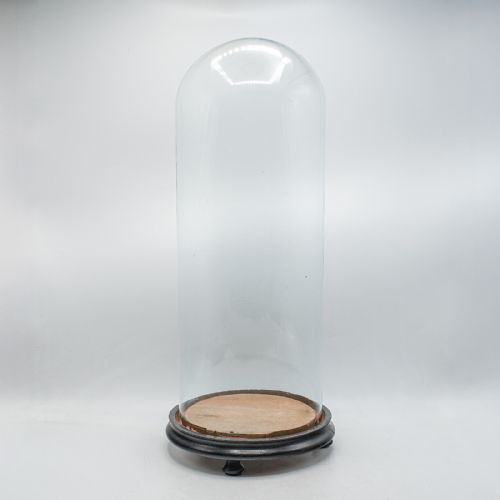


Black Wood Cloche
A black wood cloche protects delicate curiosities under clear glass, bringing quiet Victorian elegance to any desk or mantelpiece.
Black Wood Cloche
When searching for a black wood cloche, collectors encounter Victorian and Edwardian display domes designed to preserve taxidermy, botanical specimens, and delicate curiosities. These pieces combine a transparent glass cover with a dark wooden base, protecting fragile items from dust and disturbance.
The versions most commonly met on this page originate from the late nineteenth and early twentieth centuries, featuring English craftsmanship suited to academic or domestic display. Forms range from tall specimen cases to wide oval display domes and clock cases.
Each black wood cloche serves as an enclosed stage for displaying prized possessions, whether natural history specimens or decorative artefacts. The contrast between clear glass and ebonised timber focuses attention entirely on the contents within.
How they were made
Maker's workshops utilised blown or cast glass for the transparent covers, shaping tall and oval domes to accommodate specific display items. This glass rests securely within turned timber bases, often treated with an ebonised finish to achieve a deep dark appearance.
Interiors frequently incorporate fabric or felt linings on the wooden bases to cushion specimens and enhance the presentation of taxidermy or botany displays. The structural joinery relies on traditional woodworking techniques designed to support heavy glass bells.
Black Wood Cloche Retail Price Guide 2026
Typical asking prices for black wood cloche among the pieces listed under this phrase on Sellingantiques today, from the lower quarter to the upper quarter. They describe what is for sale here now, not the wider market.
What varies in quality
Quality rests primarily on the clarity and historic integrity of the glass dome itself, where older blown examples display subtle ripples and bubbles absent in later machine-made panes. The depth and finish of the ebonised wood base also dictate the overall standard, alongside the survival of original felt or fabric linings.
Proportions set superior examples apart from standard utility items, particularly in the graceful sweep of tall professor's domes and the precise turning of timber plinths. Pieces retaining their original fitted interior boards demonstrate a higher grade of period manufacture.
The Black Wood Cloche Glossary
- Ebonised wood
- Timber treated with a dark stain or finish to imitate expensive ebony. This dark surface creates a stark contrast against light-coloured specimens and clear glass.
- Taxidermy showcase
- An enclosed glass dome or case designed specifically to house preserved animals or birds. These displays protect fragile feathers and fur from dust and insect damage.
- Display dome
- A clear glass bell cover paired with a protective base. They preserve three-dimensional objects while allowing all-round visibility.
- Specimen case
- A protective housing built to display botanical, geological, or biological items. These enclosures were common in Victorian studies and laboratories.
- Clock case
- A glass cover originally intended to shelter delicate timepieces from dust and atmospheric moisture. Collectors frequently repurpose these covers for other curiosities.
Black Wood Cloche: Frequently Asked Questions
What fits under a black wood cloche?
These glass covers accommodate a wide array of delicate curiosities, including taxidermy birds, botanical specimens, and small models. Victorian collectors frequently used them to showcase preserved insects and mineral samples.
Today, modern owners place small sculptures, dried flowers, and horological items beneath the glass. The enclosed space protects fragile items while keeping them visible from every angle.
How do I date a black wood cloche?
Dating relies on examining the characteristics of the glass and the turning style of the wooden base. Victorian examples often feature thicker, heavier glass with minor imperfections from hand-blowing.
Edwardian pieces tend to show slightly more uniform glass production and refined timber mouldings. Comparing the base construction with known period furniture helps narrow down the decade of manufacture.
Were these used in Victorian homes?
Victorian households made extensive use of glass domes to display taxidermy, wax fruit, and sentimental keepsakes. These arrangements reflected a Victorian fascination with natural history and scientific collection.
Purchasers placed them on mantelpieces, side tables, and cabinets in parlours and studies. They served both as decorative centrepieces and as practical shields against household soot.
How do I clean the glass safely?
Cleaning requires removing the glass dome from its wooden base entirely to prevent any moisture from reaching the timber or historic interior surfaces. Use a soft cloth and mild glass cleaner to wipe the exterior.
Avoid spraying liquid directly onto the glass while it sits on the wood, as drips can stain or damage antique finishes. Allow the glass to dry completely before replacing it on the base.