
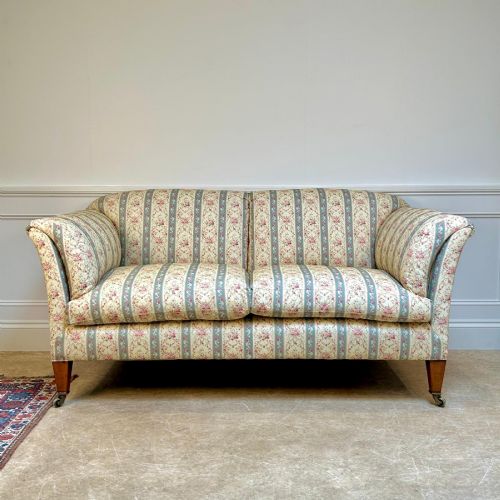
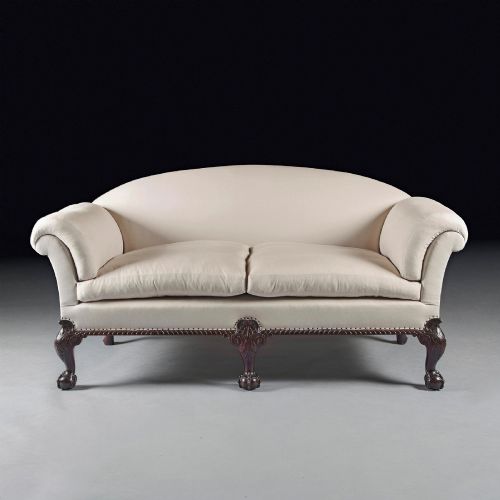
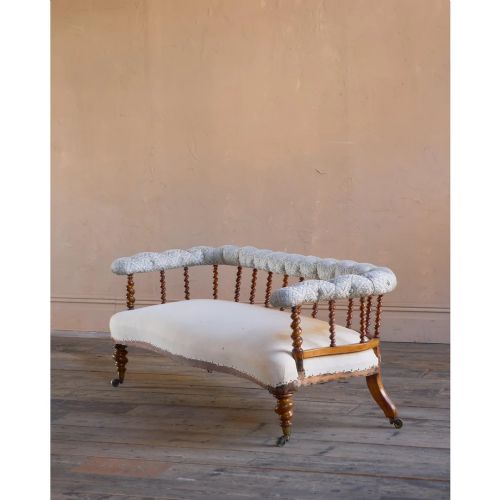
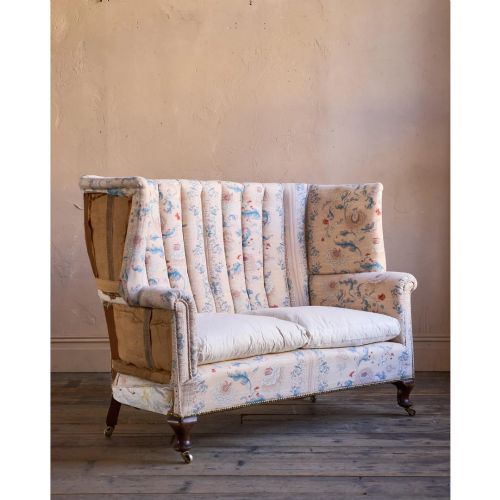

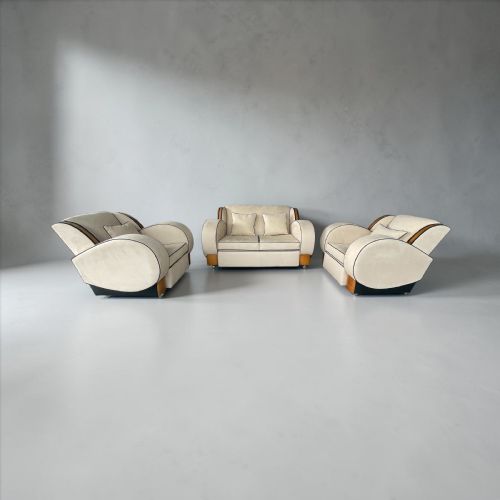
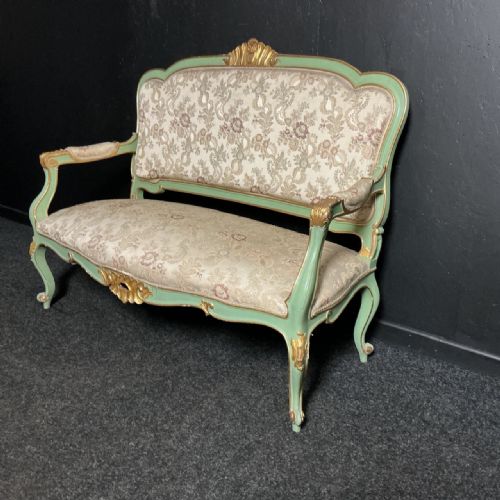
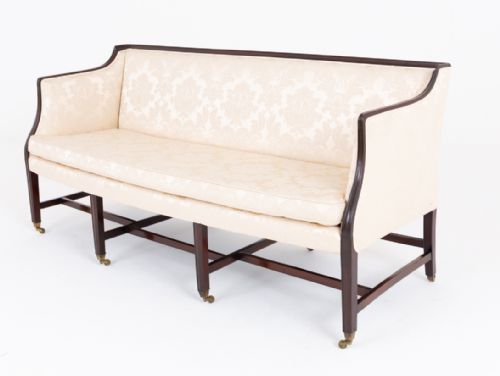
Cream Upholstered Sofa
When you search for a cream upholstered sofa, you are looking at seating spanning from the eighteenth century through to the art deco period.
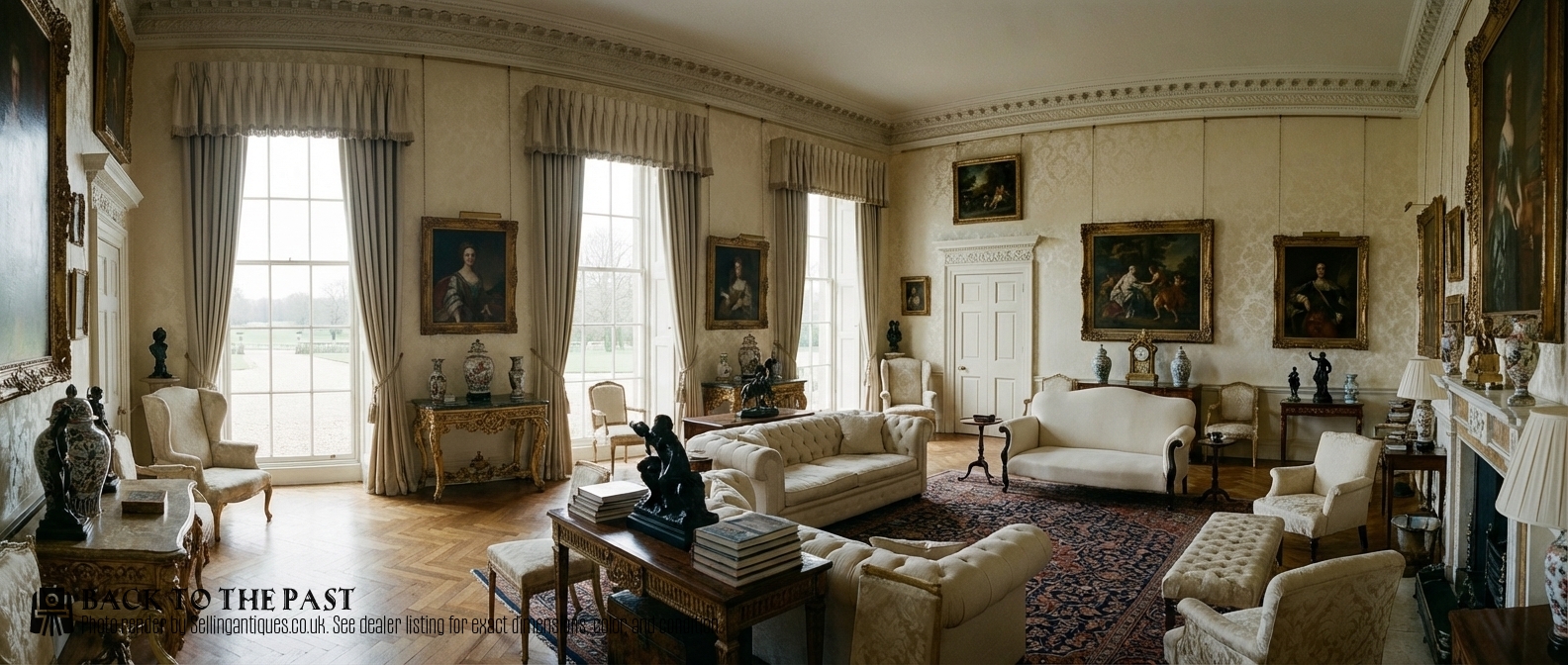
Cream Upholstered Sofa
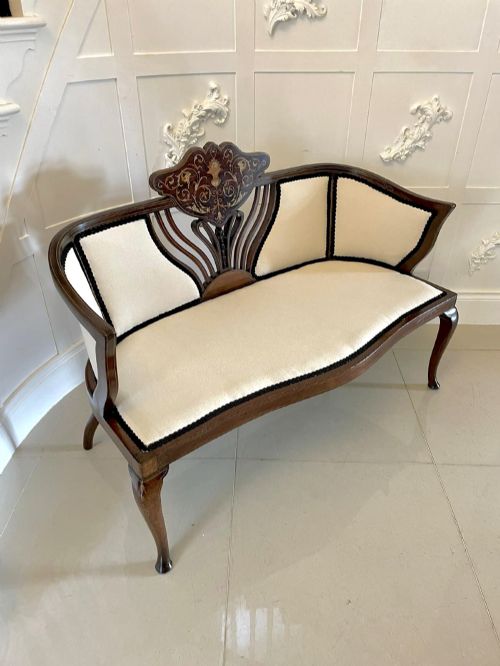
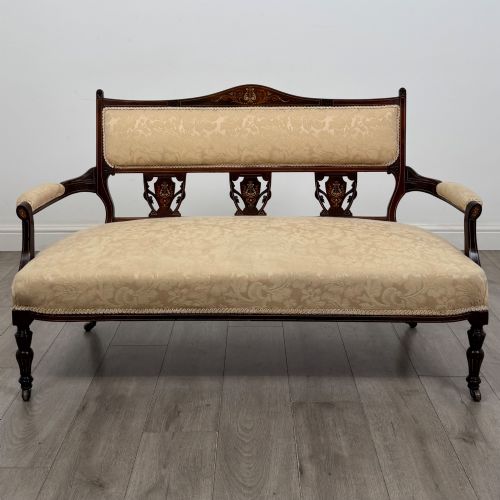
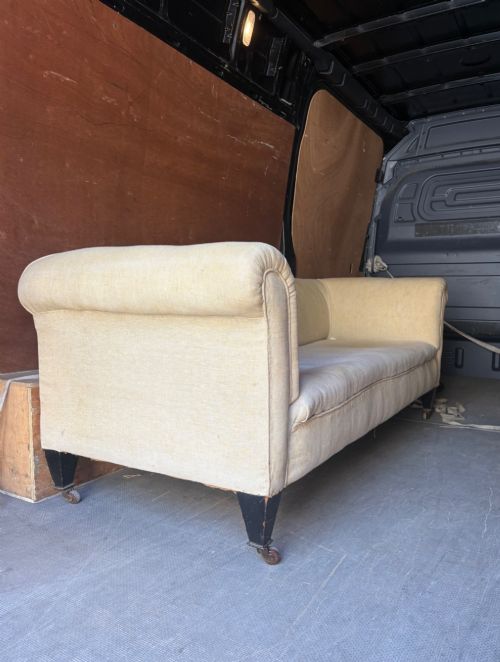
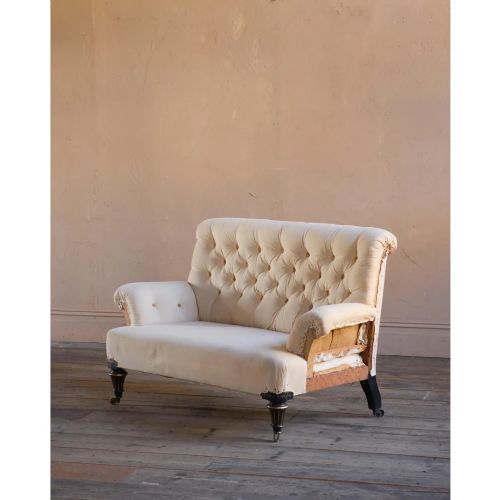
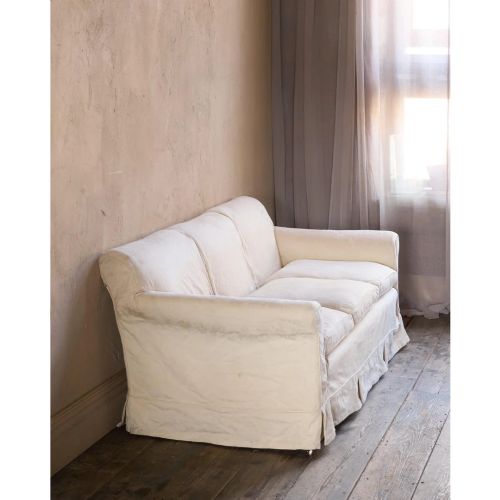
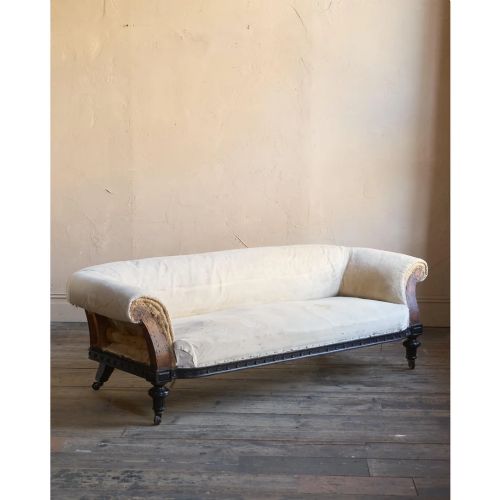
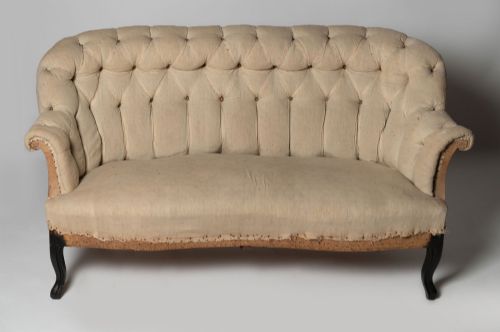
A cream upholstered sofa encompasses a range of seating forms including settees, large chesterfields, corner sofas, and chaise longues from various periods. The selection on this page draws heavily from Victorian, Edwardian, and French styles, alongside earlier Georgian and eighteenth-century examples.
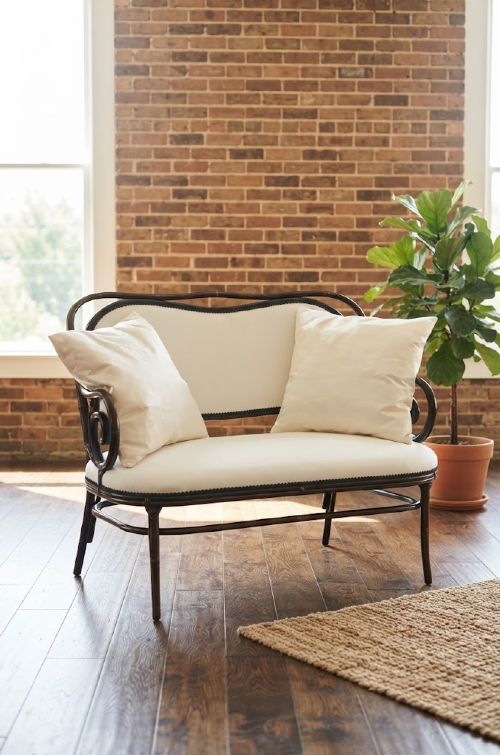
Makers and workshops range from notable firms like Howard and Sons to regional French pieces and English country house designs. Forms vary from spindle backs and camel backs to scroll arms and fluted wingbacks.
The materials visible across these pieces include traditional timber frames paired with tactile fabric coverings such as linen, calico, and various upholstery cloths. Buyers meet everything from large drawing room suites to intimate two-seater salon settees.
How they were made
Frames are constructed from solid timbers such as mahogany, walnut, rosewood, satinwood, and bentwood, often featuring hand-carved details, inlay, or parcel gilt highlights. Brass and ormolu mounts appear on specific revival pieces.
Upholstery relies on traditional techniques utilising fabrics like linen, calico, and bespoke upholstery cloth applied to sprung or padded foundations. Frames frequently exhibit traditional joinery suited to the specific cabinet-making standards of their period.
Cream Upholstered Sofa Retail Price Guide 2026
Typical asking prices for cream upholstered sofa among the pieces listed under this phrase on Sellingantiques today, from the lower quarter to the upper quarter. They describe what is for sale here now, not the wider market.
Several pieces preserve nineteenth-century maker stamps hidden beneath their upholstery, offering a quiet nod to the original workshop floor.
What varies in quality
The standard of a piece rests in the integrity of the timber frame, the crispness of any carved ornamentation, and the authenticity of the period construction. Finer examples display meticulous joinery and sophisticated timber selection, such as figured mahogany or detailed marquetry.
Upholstery quality is determined by the precision of the stitching and the compatibility of the fabric with the period of the frame. Original maker stamps and labels also distinguish workshop-attributed items from general vernacular pieces.
Howard and Sons·C. Hindley and Sons·Jackson and Graham·Thonet·Butlers of Dublin
The Cream Upholstered Sofa Glossary
- Chesterfield
- A large, deep-buttoned sofa traditionally featuring arms and back of the same height. This form became a staple of nineteenth-century drawing rooms.
- Chaise Longue
- An upholstered long chair or daybed designed for reclining, combining the attributes of a chair and a sofa. These pieces appear frequently in Victorian and Edwardian settings.
- Settee
- A small or medium-sized upholstered seat with a back and arms, designed for two or more people. The term is often used interchangeably with sofa in historical inventories.
- Bentwood
- Wood that has been heated and bent into curved shapes, famously utilised by makers like Thonet for lightweight and resilient frames. This technique defined several avant-garde designs of the late nineteenth century.
- Calico
- A plain-woven cotton fabric frequently utilised as the underlying upholstery layer or primary cover on period seating. It provides a neutral, durable base for traditional furniture.
Cream Upholstered Sofa: Frequently Asked Questions
What is an Edwardian country house sofa?
An Edwardian country house sofa typically prioritises deep comfort and generous proportions over formal rigidity. These pieces were built for relaxed domestic spaces and often feature loose cushion seats.
They frequently appear upholstered in practical neutral fabrics like linen or calico, reflecting the unpretentious aesthetic of early twentieth-century domestic interiors.
Are antique settees suitable for daily use?
Most antique settees are structurally robust, having survived a century or more of domestic life. Solid timber frames and traditional joinery allow them to withstand regular seating when maintained properly.
Buyers often assess the internal webbing and springs, as older upholstery foundations may require professional re-securing to support modern daily use comfortably.
What is the difference between a settee and a sofa?
Historically, a settee referred to an upholstered or wooden seat with a back and arms built for two or more occupants. A sofa traditionally denoted a larger, fully upholstered piece designed for reclining.
Over time, these terms have become largely interchangeable in descriptions, though older listings may use settee for more compact or formal designs.