


Antique Camelback Settee
An antique camelback settee offers a graceful arched profile and generous seating, bringing refined eighteenth-century proportions to a drawing room.
Antique Camelback Settee
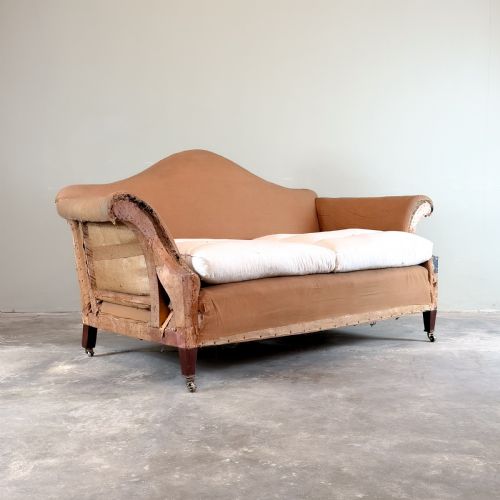
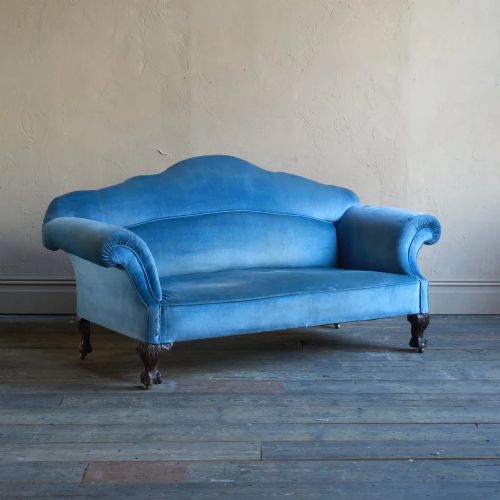
The antique camelback settee is defined by its characteristic undulating crest rail, which curves upward in the centre like a camel's back before sweeping down to scrolled arms. When searching this phrase, you will encounter examples spanning the eighteenth century through the Edwardian period, alongside later revivals.
The most common iterations on this page date from the nineteenth and early twentieth centuries, drawing heavily on Georgian, George III, and Chippendale aesthetics. These seating pieces appear under various designations including sofas, settees, and two-seater options.
Origins in the evidence range from eighteenth-century craftsmanship to Edwardian and 1940s interpretations, often featuring serpentine fronts and traditional upholstery fabrics such as damask and velvet.
Materials and construction
Construction relies upon robust hardwoods, predominantly mahogany, which provide the structural integrity required for the sweeping lines of the frame. Carved details often highlight the legs, incorporating motifs such as ball and claw feet.
Upholstery techniques utilise traditional supportive materials including jute and modern fabric coverings like damask and velvet. Brass accents occasionally appear in the hardware or decorative detailing of the frame.
Several listings note ball and claw feet, giving these stately settees the distinct impression of standing on very polite wooden paws.
Assessing craftsmanship and proportion
Quality in these pieces is dictated by the harmony of the overall silhouette and the crispness of the timber carving. Superior examples exhibit balanced serpentine fronts and finely executed legs that complement the curve of the back.
The integrity of the frame construction and the fidelity to historical proportions separate standard revival pieces from finer interpretations. Original timber patination and careful attention to the upholstery line further distinguish the upper tier of the range.
The Antique Camelback Settee Glossary
- Camelback
- A sofa or settee featuring a distinctive undulating crest rail that arches gently in the middle. This profile became popular during the Georgian period and remains a defining hallmark of traditional seating.
- Serpentine
- A curved line that turns outward in the middle and inward at the sides, often seen along the front rail of these settees. This shaping adds visual movement to the heavy wooden base.
- Chippendale
- A style of eighteenth-century English furniture characterised by ornate carving, cabriole legs, and Chinese or Gothic influences. Revival versions of this style frequently appear in later seating.
- Damask
- A reversible figured fabric traditionally woven in silk, wool, or linen, frequently utilised for formal upholstery. Its patterned surface reflects light differently depending on the weave direction.
- Cabriole leg
- A furniture leg that curves outward at the knee and inward at the ankle, ending in a pad, scroll, or ball and claw foot. This form draws inspiration from classical Chinese and Roman design.
Antique Camelback Settee: Frequently Asked Questions
What is a camelback settee?
A camelback settee is a traditional upholstered seating form characterised by a distinctive undulating top rail that resembles the hump of a camel.
First popularized in the eighteenth century, these pieces combine a supportive curved back with scrolled arms and exposed wooden legs, often finished with a serpentine front edge.
How do I date an antique settee?
Dating relies on examining the timber species, joinery methods, and stylistic cues present in the frame and legs. Eighteenth-century pieces typically show hand-cut joinery and period-specific carving details.
Later Edwardian and twentieth-century revivals often incorporate machine-made elements while replicating earlier George III or Chippendale proportions.
Where should I place a settee?
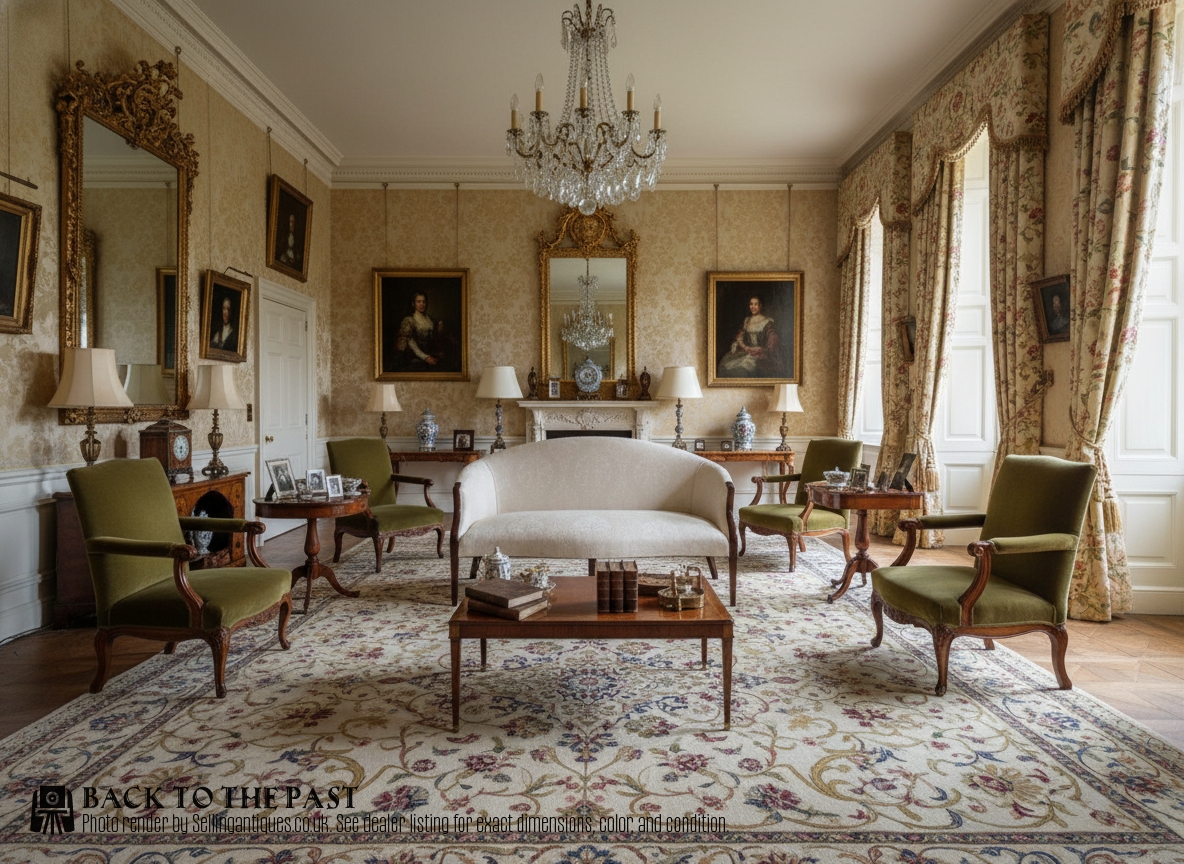
These settees work well in formal living rooms, large hallways, or spacious bedrooms where their decorative profile can be viewed from multiple angles. Their traditional proportions make them suitable as central seating arrangements.
Because of their arched backs, they often sit comfortably in front of windows without obstructing light or views into the room.
What fabrics were traditionally used?
Period upholstery frequently involved woven textiles such as silk damask, heavy velvets, and patterned fabrics designed to complement the formal nature of the furniture. Jute and traditional webbing formed the internal support layers beneath the fabric.
Many surviving pieces have been re-upholstered over time to preserve the fabric while maintaining the traditional silhouette of the frame.