


Cream Border Rug
A cream border rug anchors a room with structured warmth, offering centuries of regional weaving traditions for everyday floors.
Cream Border Rug
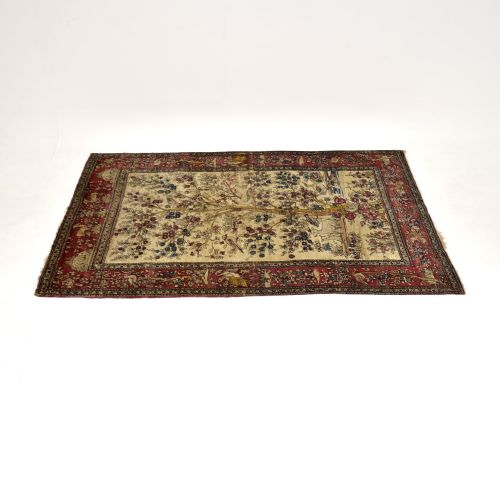
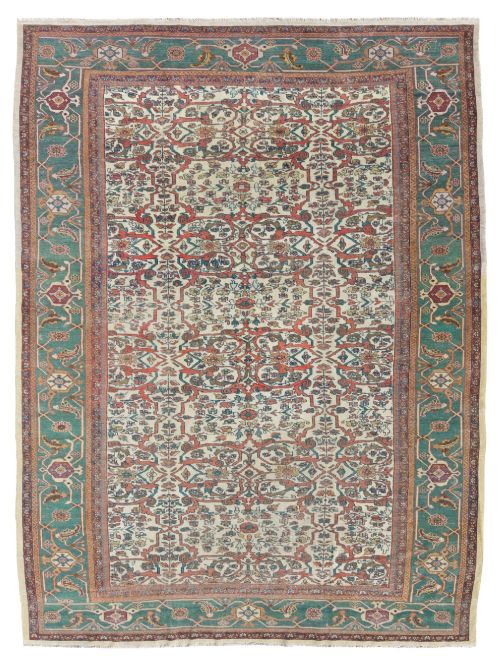
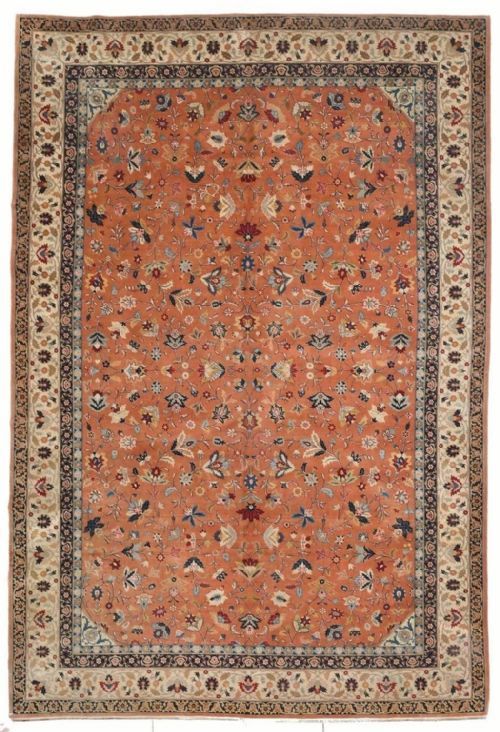
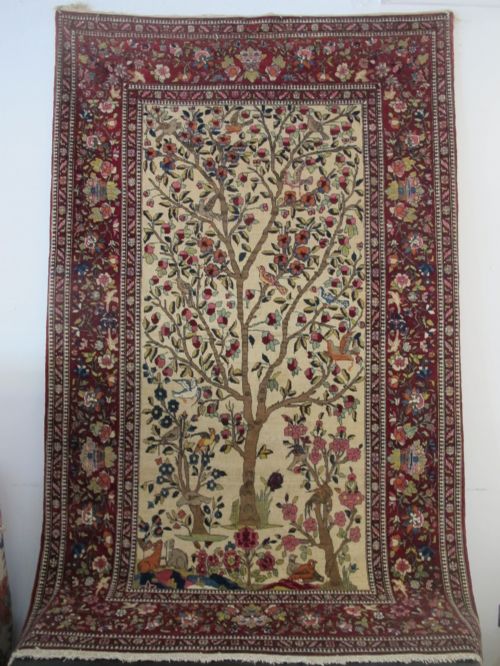
A cream border rug brings together room-size carpets, corridor runners, and tribal textiles originating primarily from Persian weaving centres alongside Bessarabian and Nepalese traditions. Buyers searching for a cream border rug encounter foundational room coverings dating from the late nineteenth century through to the early decades of the twentieth century. These pieces encompass specific regional styles such as Tabriz, Sultanabad, Ziegler, and Senneh, each defined by characteristic formats.
The selection centres heavily on Persian workshops and tribal regions, spanning grand city carpets from Tabriz, Isfahan, and Qum alongside village productions from Bakshiash, Ferahan, and Hamadan. Alongside these large carpets, buyers meet specific textile forms including prayer rugs, yurt bands, and kilims. This variety ensures that a cream border rug can serve as either a commanding central room element or a focused textile accent.
Materials and Construction
The pieces listed utilise natural fibres predominantly, with wool forming the structural pile and foundation across the vast majority of Persian and regional textiles. Cotton appears frequently for the warp and weft foundations of city and village carpets, providing stability and crisp structural geometry. Silk is also utilised in select finer pieces, contributing a distinct lustre and allowing for greater intricacy in curvilinear designs.
Weaving techniques vary between knotted pile carpets and flatwoven kilims or tent bands, reflecting the diverse cultural origins of the textiles. Artisans employed hand-spun materials and traditional dying methods, resulting in the rich colour palettes that frame the characteristic light borders of these rugs. The construction methods ensure longevity, allowing antique textiles to endure generations of use.
Listings span production dates from the 1870s through the 1930s, utilising wool, cotton, and silk across Persian, Bessarabian, and Nepalese traditions.
Evaluating the Weave
Quality in these textiles rests upon the density of the knotting and the precision with which regional designs are executed across the field and border. Finer examples display meticulous handling of curvilinear or geometric motifs, where the structural integrity of the foundation supports an even, resilient pile. The choice of materials dictates much of this refinement, with superior wool or the integration of silk yielding sharper detail and a more supple drape.
The distinction between top-tier regional productions and standard village work lies in the harmony of the composition and the depth of the dye work. Master workshops in centres like Tabriz or Isfahan achieved a level of pictorial balance that elevates utilitarian floor coverings into sophisticated decorative art. Conversely, tribal and village pieces derive their character from spontaneous local expression and robust, straightforward construction.
The Cream Border Rug Glossary
- Kilim
- A flatwoven textile produced without a pile, used traditionally for floor coverings, wall hangings, and horse covers across various regions. These pieces rely entirely on the interweaving of warp and weft threads to form geometric patterns.
- Warp
- The vertical threads stretched lengthwise on a loom before the weaving process begins. The foundation threads carry the tension and receive the knots or weft passes.
- Weft
- The horizontal threads passed alternately over and under the warp threads to bind the structure together. In pile carpets, weft shots secure the rows of knots in place.
- Pile
- The dense, vertical surface of cut yarn that forms the usable upper layer of a rug. Pile height and density vary significantly between fine city carpets and rustic tribal pieces.
- Prayer rug
- A small format textile featuring a mihrab or arch design indicating the direction of prayer. These pieces were historically utilised for personal devotion.
Cream Border Rug: Frequently Asked Questions
How do I clean an antique rug?
Antique textiles require gentle, professional care rather than aggressive domestic cleaning methods. Surface dust should be removed regularly through careful, low-suction vacuuming without a rotating brush.
For deeper maintenance, specialist textile conservators should be consulted to prevent dye bleeding or structural damage to natural wool and cotton fibres.
Where were these rugs made?
The pieces originate primarily from historical weaving centres and tribal regions across Persia, including Tabriz, Isfahan, Sultanabad, and Hamadan. Other examples stem from Bessarabian and Nepalese traditions.
Each region developed distinct palettes, weaving structures, and border motifs that identify their specific geographical provenance.
Are these rugs suitable for daily foot traffic?
Wool and cotton pile carpets from the nineteenth and early twentieth centuries were built for enduring utility. Their robust natural materials handle regular domestic use well when placed over a quality underlay.
Delicate flatweaves or silk pieces benefit from placement in lower-traffic areas to preserve their structural integrity over time.
How do I determine the age?
Dating relies on stylistic analysis, material composition, structural characteristics, and regional weaving traits recorded across historical examples. Variations in knotting density and dye palettes offer key indicators.
Comparing pieces against documented examples from specific decades helps narrow down the period of manufacture.