




Floral Flatweave Carpet
A floral flatweave carpet brings botanical motifs into a room through flat-woven textiles created across Eastern Europe, Persia, and France.
Floral Flatweave Carpet
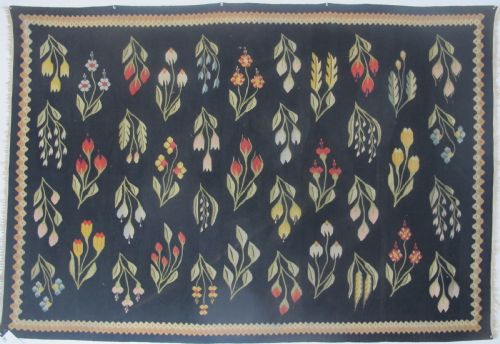
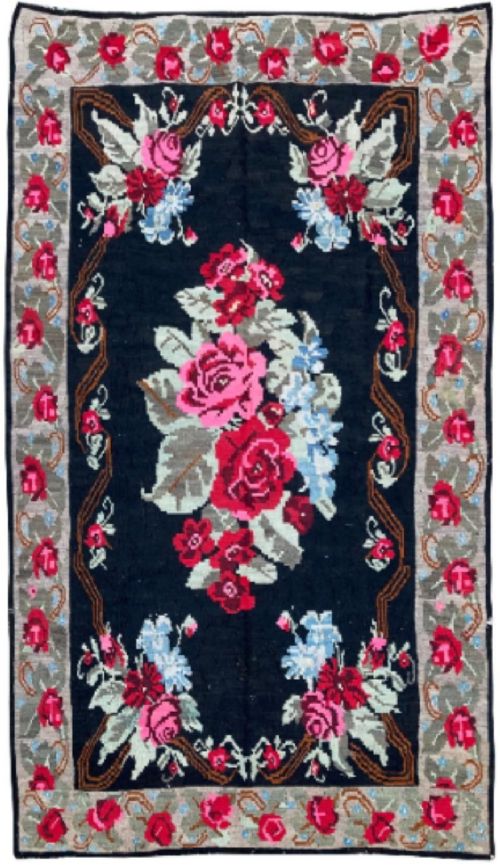
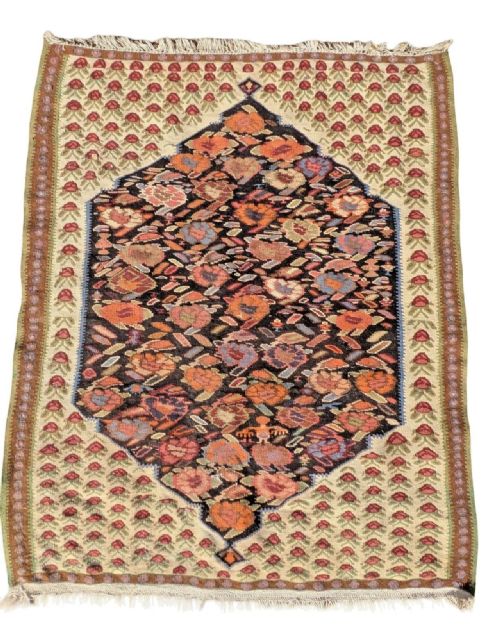
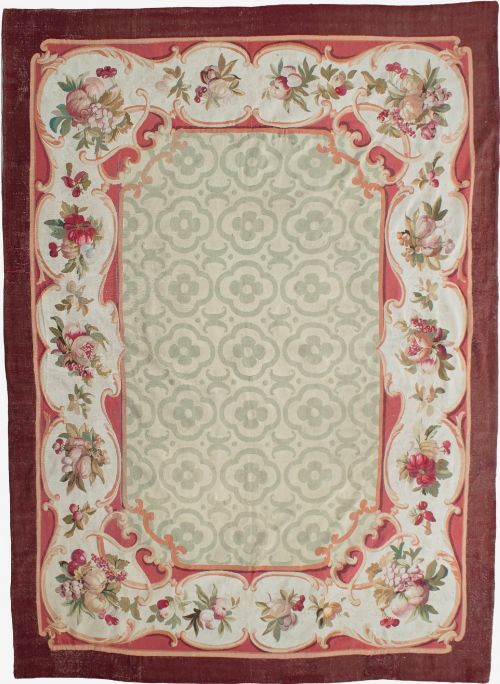
A floral flatweave carpet encompasses kilims, tapestries, and needlepoint rugs displaying floral designs. These pieces arrive from regions including Eastern Europe, Portugal, Persia, and France, spanning from the nineteenth century into the mid-twentieth century.
The most common examples on this page are antique Bessarabian kilims featuring woven floral patterns alongside French Aubusson carpets and needlepoint rugs. Buyers encounter flat-woven formats alongside tapestry weaves and chain-stitch variations.
These textiles function as floor coverings or wall hangings, bringing floral compositions into domestic spaces through distinct regional weaving traditions.
How they were made
These carpets rely on wool, cotton, and canvas substrates, utilising flat-weaving techniques alongside tapestry methods, needlepoint, and chain-stitch embroidery. Artisans constructed them by hand, working wool yarns into durable flat surfaces or stitching detailed floral designs onto existing canvases.
Regional workshops employed specific structural methods, from traditional kilim slit-weave construction in Eastern European pieces to fine needlework in Portuguese and French examples.
Floral Flatweave Carpet Retail Price Guide 2026
Typical asking prices for floral flatweave carpet among the pieces listed under this phrase on Sellingantiques today, from the lower quarter to the upper quarter. They describe what is for sale here now, not the wider market.
Even a humble wool kilim manages to smuggle an entire English garden onto a cold wooden floor.
What varies in quality
Quality rests in the precision of the botanical drawing and the complexity of the colour palette within the floral motifs. Master weavers achieved greater depth and naturalism in floral rendering, whereas simpler pieces rely on stylised folk art interpretations.
The integrity of the flat-weave structure and the preservation of the original wool or cotton yarns determine the overall standard of each textile.
The Floral Flatweave Carpet Glossary
- Kilim
- A flat-woven carpet or rug produced without a pile by tightly interweaving warp and weft strands. This technique creates a smooth, durable surface suited for both floors and walls.
- Aubusson
- A style of carpet or tapestry originating from the French town of the same name, known for classical floral and architectural motifs. These pieces employ tapestry weave techniques rather than knotted piles.
- Needlepoint
- A type of embroidery stitched onto a canvas mesh ground to form dense floral patterns. Portuguese and French makers utilised this technique for decorative carpets.
- Tapestry
- A form of textile art woven by hand on a loom, displaying pictorial or floral designs. Historical examples often double as wall hangings or substantial floor coverings.
Floral Flatweave Carpet: Frequently Asked Questions
How do I clean a floral flatweave carpet?
These flat-woven textiles require gentle care, typically limited to professional specialist cleaning designed for antique wool and cotton.
Regular light vacuuming without a rotating brush helps remove surface dust without damaging the weave.
Can I use these carpets on the floor?
Most pieces function well as floor coverings in areas with moderate foot traffic, provided a suitable underlay is used to prevent slipping.
Lighter needlepoint and tapestry pieces are sometimes better suited to low-traffic spaces or wall mounting.
What is the difference between a kilim and an Aubusson?
Kilims are flat-woven using interlocking weft techniques rooted in Eastern European and Persian traditions, often displaying geometric or stylised floral patterns.
Aubusson carpets originate from France and utilise tapestry weaves to render classical, naturalistic floral designs.
How do I date an antique floral carpet?
Dating relies on stylistic evidence, regional weaving characteristics, and the types of wool or cotton yarns employed by the makers.
Comparing structural details against documented nineteenth and early twentieth-century examples helps narrow the period of origin.