




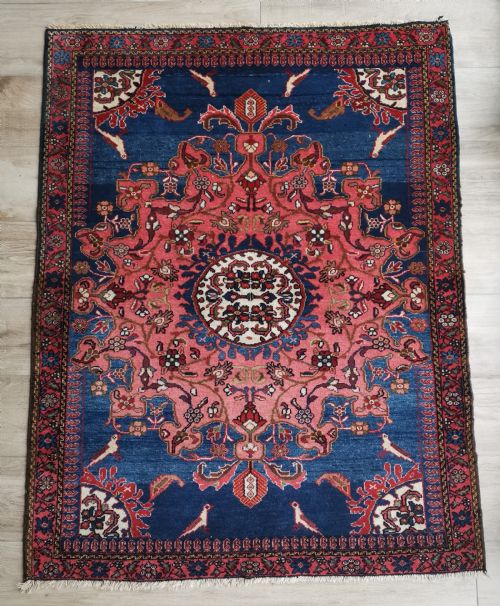


Floral Motif Area Carpet
A floral motif area carpet brings warmth and pattern to a room, drawing on traditions of wool, cotton, and silk weaving.
Floral Motif Area Carpet
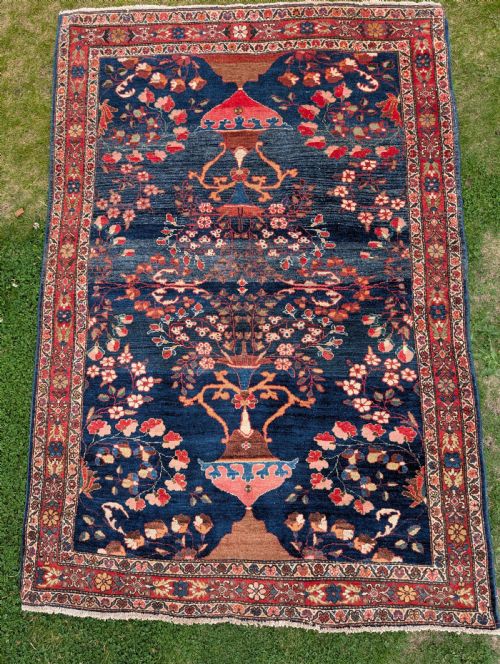
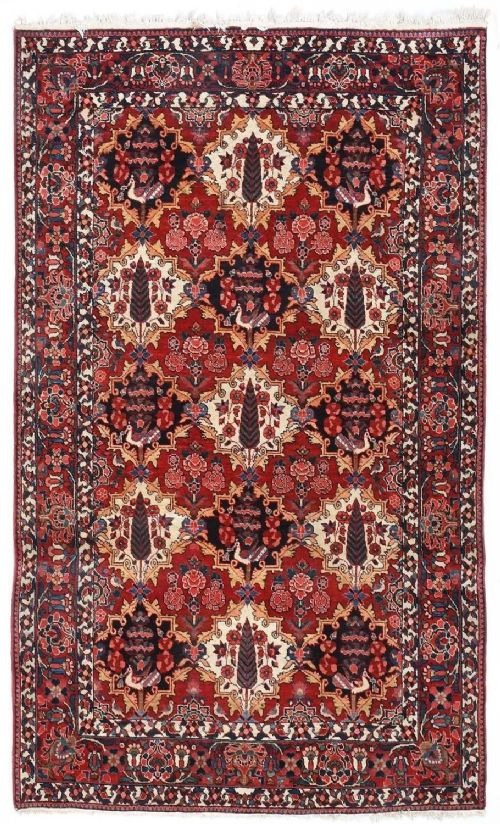
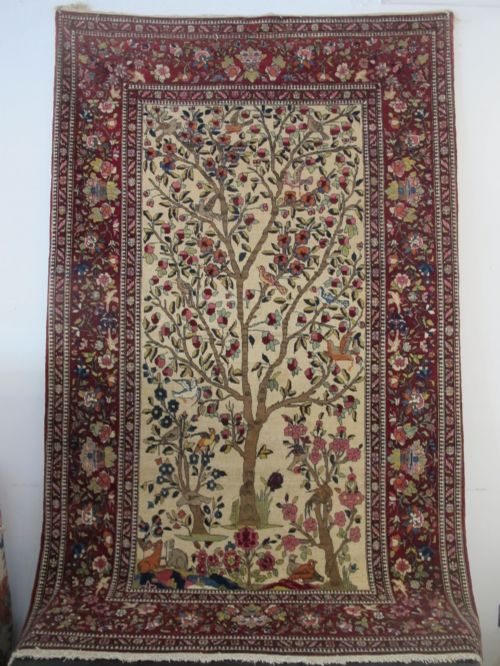
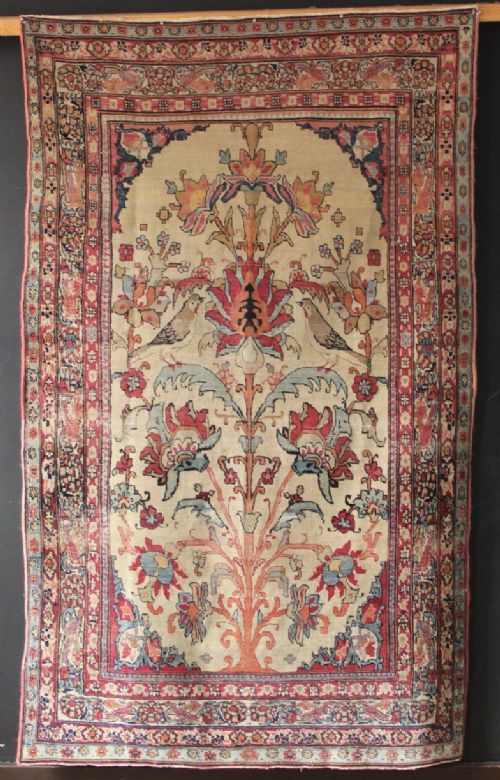
A floral motif area carpet brings structured botanical design to a floor space, utilising traditional patterns that span the nineteenth and twentieth centuries. These pieces appear in forms such as area rugs and kilim rugs, originating from workshops and regions including Persia, Anatolia, and Bessarabia.
The version most commonly encountered on this page is the Persian carpet or rug, often featuring intricate floral sprays, boteh designs, or central medallions. Examples date from the late nineteenth century through to the 1930s, reflecting diverse weaving traditions from centres like Kashan, Isfahan, Kirman, and Sultanabad.
Alongside Persian weaving, buyers encounter flatwoven Bessarabian kilims and Ottoman Anatolian pieces, which display distinct regional interpretations of floral motifs. These floor coverings vary in scale from compact scatter sizes to large room-sized carpets designed for country houses and formal interiors.
Materials and construction
These floor coverings are constructed primarily from wool pile knotted onto cotton or wool foundations, utilising natural dyes that develop a rich patina over decades of use. Silk also appears in finer pieces, adding a reflective sheen and allowing for greater detail in the floral rendering.
Flatwoven examples such as Bessarabian kilims employ tapestry weaving techniques with wool and cotton, creating smooth surfaces without a raised pile. Canvas backing and support structures are utilised in specific needlepoint formats, ensuring structural integrity across diverse regional traditions.
Floral Motif Area Carpet Retail Price Guide 2026
Typical asking prices for floral motif area carpet among the pieces listed under this phrase on Sellingantiques today, from the lower quarter to the upper quarter. They describe what is for sale here now, not the wider market.
Among the botanical displays, certain Luri rugs manage to smuggle cheerful little birds straight into the flowerbeds.
Evaluating quality and execution
The quality of a floral motif area carpet depends on the density of the knotting or weave, which dictates the sharpness and clarity of the botanical patterns. Finer execution allows complex curves in floral sprays and boteh motifs to render with precision.
Materials dictate the upper tier of the range, where lustrous wool or the inclusion of silk elevates both handle and visual depth. The handling of natural dyes and the balance of the central field against the border system further separate standard production from exceptional examples.
Mohtasham Kashan·Ahmadi Isfahan
The Floral Motif Area Carpet Glossary
- Boteh
- A stylised floral or almond-shaped motif representing a seed, leaf, or flame. It appears frequently as a repeating element across Persian fields.
- Kilim
- A flatwoven textile produced without a pile by tightly interweaving warp and weft threads. These pieces offer geometric and floral designs with a smooth surface.
- Medallion
- A symmetrical central ornament placed in the middle of the carpet field. It serves as the focal point around which the floral motifs arrange themselves.
- Pile
- The upright yarn loops or tufts that form the raised surface of a knotted carpet. Dense pile improves durability and cushions the foot.
- Warp
- The stationary vertical or longitudinal threads stretched on a loom before weaving begins. Weft threads pass horizontally over and under the warp to hold the knots in place.
Floral Motif Area Carpet: Frequently Asked Questions
How do I choose the right size?
Measure the floor space carefully, ensuring the rug leaves an appropriate margin of exposed flooring around the perimeter of the room. Large format carpets anchor seating areas, while smaller rugs suit entryways or hearths.
Consider how furniture placement interacts with the dimensions. Dining tables require a rug large enough to keep chairs on the surface even when pulled out.
Are these carpets suitable for heavy traffic?
Wool pile construction on sturdy cotton foundations provides natural resilience for everyday use in living spaces. Regular placement in appropriate zones ensures the textile wears evenly over time.
Finer silk pieces or flatwoven kilims benefit from placement in lower-traffic areas to preserve their delicate structures and flat surfaces.
How should I clean my carpet?
Gentle professional cleaning by specialists in antique textiles preserves the natural dyes and wool fibres. Vacuuming with a suction-only attachment prevents damage to the pile and fringe.
Avoid harsh chemical treatments or mechanical agitation, which can strip lanolin from the wool and weaken the foundation threads.
How do I identify the origin?
Regional characteristics in the border design, palette, and floral drawing indicate where a piece was woven. Persian centres like Kirman, Isfahan, and Kashan display distinct knotting densities and stylistic signatures.
Flatwoven Bessarabian kilims and Anatolian rugs present entirely different structural profiles and colour schemes compared to classical Persian workshops.