

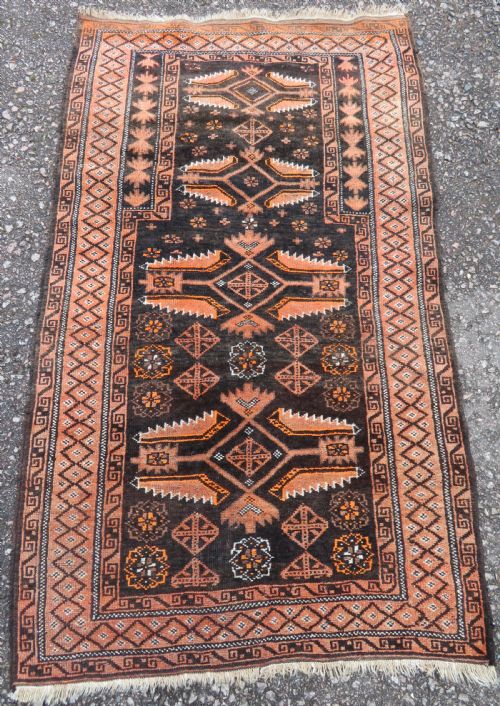


Dark Brown Area Rug
These dark brown area rugs bring tribal wool weaving from Persian, Afghan, and Caucasian regions directly to your floors.
Dark Brown Area Rug
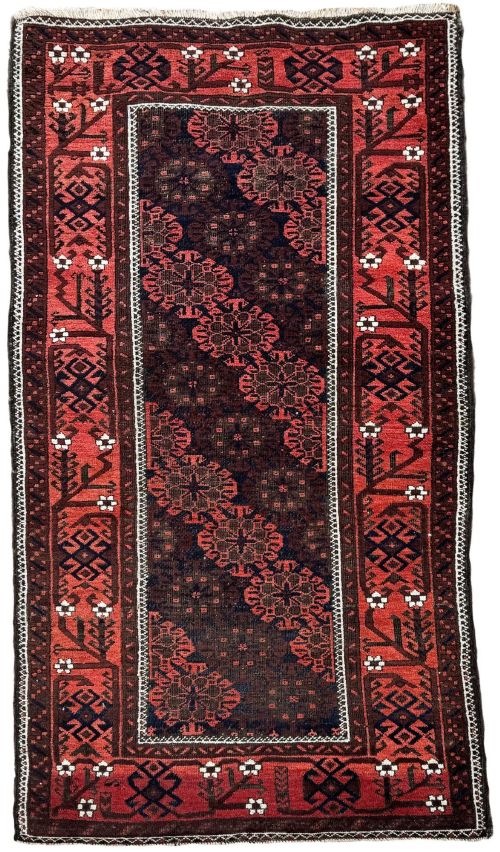
A dark brown area rug on this page typically originates from tribal and nomadic traditions in Persia, Afghanistan, and surrounding regions, spanning the late nineteenth and early twentieth centuries. These pieces manifest as small rugs, long rugs, prayer rugs, and main carpets created by makers such as the Baluch, Kurdish, and Yomut Turkmen groups. When you search for a dark brown area rug, you encounter hand-knotted and flat-woven floor coverings featuring regional motifs like guls, lattice patterns, and prayer mihrabs.
The format varies from compact prayer rugs and small mats measuring under two metres to substantial main carpets and long kelleh rugs exceeding three metres. Tribal weaving traditions dictate the specific geometry and border designs, linking each piece to communities such as the Timuri, Mahdad Khani, and Salar Khani tribes. Wool remains the primary medium, shaped by nomadic weavers who produced functional floor coverings for domestic use.
Materials and construction methods
Weavers relied on wool and hand-spun wool for the pile and foundation yarns, paired with cotton in specific structural elements. Natural dyes provided the deep brown, ivory, and secondary palette characteristic of these tribal and nomadic carpets.
The construction involves manual knotting and flat-weaving techniques executed on portable or stationary looms. Skilled hands built up dense piles and geometric patterns, ensuring durability across generations of daily domestic use.
Dark Brown Area Rug Retail Price Guide 2026
Typical asking prices for dark brown area rug among the pieces listed under this phrase on Sellingantiques today, from the lower quarter to the upper quarter. They describe what is for sale here now, not the wider market.
Assessing quality in antique tribal carpets
Quality rests upon the fineness of the wool spin, the complexity and clarity of the tribal motifs such as guls or lattice designs, and the stability of the natural dyes. Tighter knot densities and precise geometric execution separate finer tribal main carpets from standard utilitarian mats.
Preservation of the original borders, structural integrity along the selvedges, and evenness of the wool pile determine the preservation state of each carpet. Examples retaining crisp drawing in the borders and minimal pile loss demonstrate superior longevity from their original nomadic context.
The Dark Brown Area Rug Glossary
- Gul
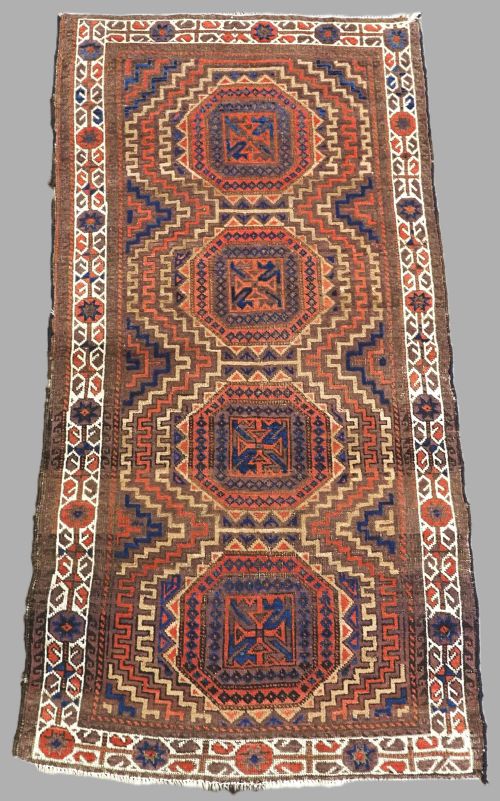
- A repeating primary medallion motif commonly found in Turkmen and Baluch tribal rugs. These octagonal or gabled medallions often indicate the specific tribal origin of the weaver.
- Kilim
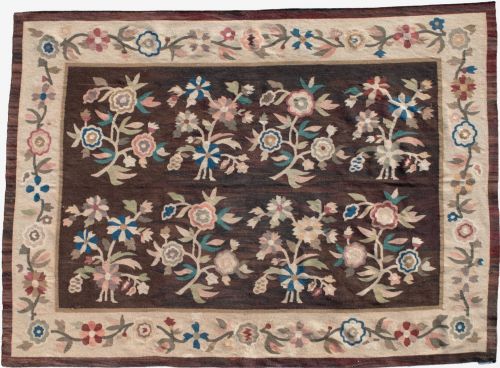
- A flat-woven carpet or rug made without a pile by tightly interweaving warp and weft strands. Bessarabian and Ukrainian examples utilise this technique to create smooth surfaces with distinct floral or geometric compositions.
- Mihrab
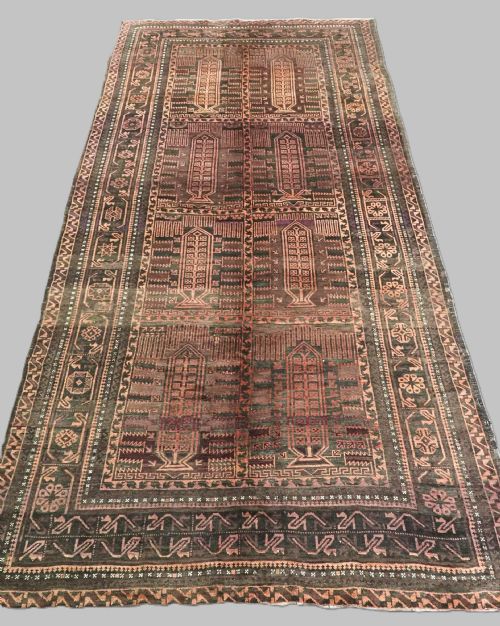
- A arched niche design used primarily in prayer rugs to direct the placement of the worshipper. Multiple arches, known as seh mihrab, appear in specific Afghan and Baluch weaving traditions.
- Kelleh
- A large rectangular long rug format traditionally utilised in Persian interiors. These pieces offer extended proportions suited for corridors or substantial living spaces.
Dark Brown Area Rug: Frequently Asked Questions
How do I clean an antique wool rug?
Gentle surface brushing and professional specialist cleaning suited for antique textiles maintain the wool fibres without damaging natural dyes. Avoid aggressive mechanical scrubbing or immersion in water.
Regular light vacuuming without a rotating power head prevents dust accumulation within the pile foundation.
Where were these tribal carpets made?
These carpets originate from nomadic and village communities across Afghanistan, Western Afghanistan, Khorasan, and North West Persia. Weavers from specific groups such as the Baluch, Kurdish, and Yomut tribes produced them on traditional looms.
Each regional centre developed distinct colour palettes, notably rich dark browns, alongside characteristic geometric lattice and gul arrangements.
Are these rugs suitable for high traffic?
Hand-spun wool construction provides natural resilience and elasticity, allowing these rugs to withstand everyday walking in residential spaces. Placing a quality underlay beneath the carpet prevents slipping and reduces fibre wear.
Main carpets and heavy tribal rugs handle heavy usage better than delicate flat-woven kilims or small prayer formats.