
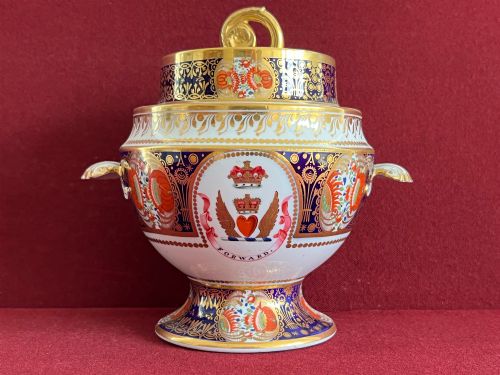
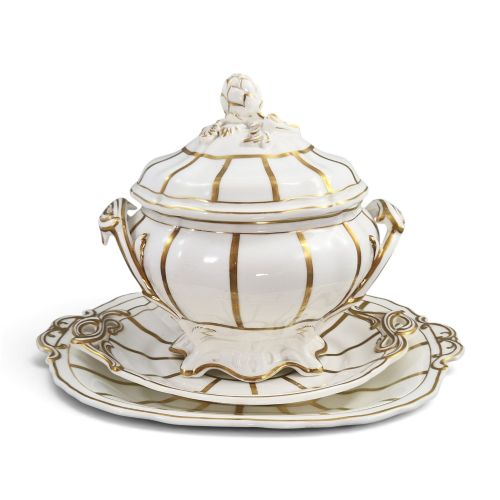
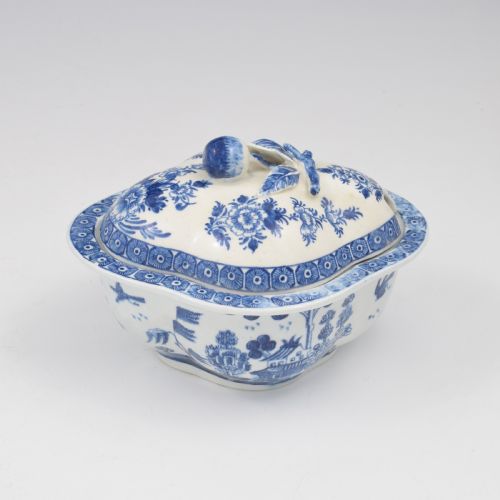
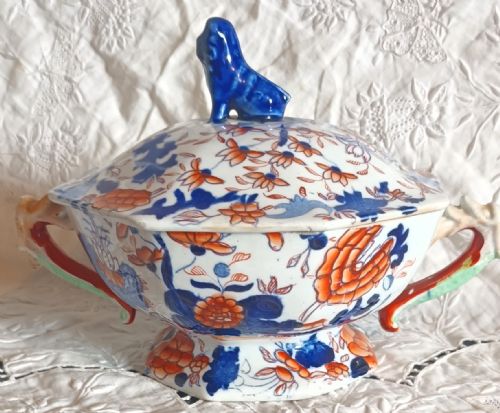



Covered Sauce Dish
These covered sauce dish vessels are practical table ceramics and silver from past centuries, offering distinct period charm for modern dining tables.
Covered Sauce Dish
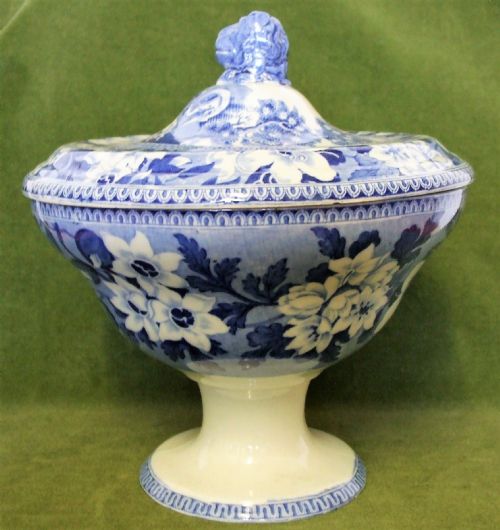
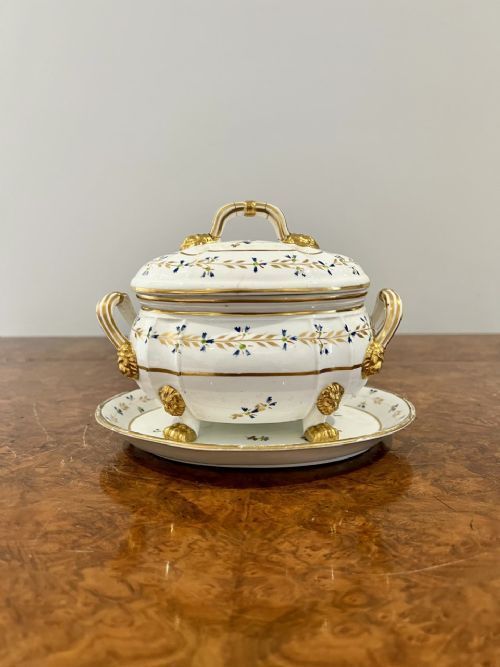
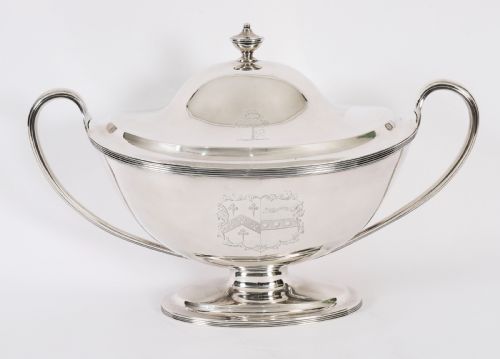
A covered sauce dish, often found as a sauce tureen or dessert cream tureen, provides a dedicated vessel for serving table sauces and gravies. These pieces appear across Georgian, Regency, and Victorian periods in various serving forms.
The pieces on this page span earthenware, ironstone, porcelain, and sterling silver, reflecting centuries of dining customs. Formats range from simple botanical patterns to elaborate blue and white transfer designs.
Makers utilised ceramic bodies like bone china and pearlware alongside silver and Old Sheffield Plate. Most examples date from the eighteenth and nineteenth centuries, including works from prominent factories.
How they were made
Makers shaped ceramic covered sauce dish pieces using porcelain, bone china, earthenware, and ironstone, frequently applying glaze, enamel, and gold leaf highlights. Transfer printing techniques allowed intricate motifs such as the elephant pattern to appear consistently across pottery surfaces.
Silversmiths constructed metal variants from sterling silver and Old Sheffield Plate, shaping the metal into handled tureens and stands. Potters formed intricate quatrefoil and pedestal profiles by hand or mould, firing them in kilns before hand-painting decorative details.
Listings feature eighteenth and nineteenth-century periods, incorporating materials such as porcelain, ironstone, sterling silver, and glaze.
What varies in quality
The distinction between standard and exceptional covered sauce dish items lies in the crispness of the moulding and the execution of hand-painted or transfer-printed decoration. Finer ceramic examples show precise alignment of enamel colours and gilding, while silver pieces display crisp hallmark impressions and balanced weight.
Factory attribution also influences standing, with pieces originating from established works like Derby, Worcester, or Mason's exhibiting superior paste quality and glazing stability.
John Rogers and Son·Flight Barr and Barr·William Bennett·William Grundy·Doulton Burslem
The Covered Sauce Dish Glossary
- Ironstone
- A dense, durable type of earthenware patented in the nineteenth century. It resists chipping better than standard pottery and serves as a sturdy base for transfer-printed designs.
- Pearlware
- A refined earthenware developed in the late eighteenth century featuring a faint bluish glaze that pooled in recesses. It bridges the gap between creamware and later white ironstone.
- Transfer printing
- A decoration technique where an engraved copper plate transfers a design onto paper and then onto the ceramic surface before glazing. This method enabled complex repeating patterns like blue and white landscapes.
- Old Sheffield Plate
- A composite material made by fusing a thin sheet of silver to a thicker copper base. It was widely used for tableware before modern electroplating techniques were developed.
- Quatrefoil
- A symmetrical shape composed of four partially overlapping lobes, often used for the rims and bases of serving vessels. This outline adds architectural interest to tableware.
Covered Sauce Dish: Frequently Asked Questions
What is a covered sauce dish used for?
These vessels served gravies, custards, and drawn butter at formal dining tables, keeping liquids warm with their fitted lids.
Today, they function well as decorative serving pieces or standalone display items on sideboards.
How do I date a ceramic tureen?
Dating relies on maker marks, ceramic bodies such as pearlware versus ironstone, and decorative styles like Georgian transfer prints.
Examining the foot rim and glaze characteristics also provides clues to the manufacturing decade.
Are silver and ceramic tureens fragile?
Silver versions are robust but require gentle polishing to maintain their finish, whereas ceramic and porcelain pieces demand careful handling.
Hand washing in warm soapy water keeps both materials safe from modern dishwashers.
What makes ironstone different from porcelain?
Ironstone is a heavy, opaque earthenware designed for durability in busy nineteenth-century households.
Porcelain is finer, more translucent, and rings when tapped gently.