




19th Century Tureen
A 19th century tureen brings the rich weight of Georgian and Victorian dining tables directly into modern interiors as a sculptural serving vessel.
19th Century Tureen
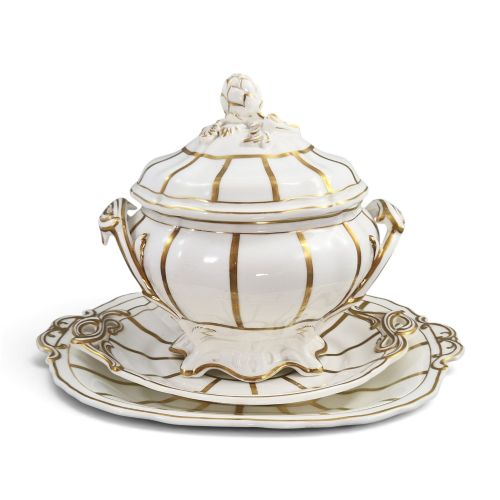
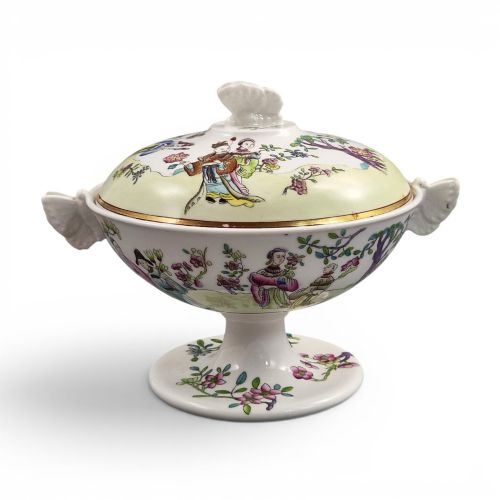
When browsing for a 19th century tureen, buyers encounter a diverse range of forms, from small sauce tureens and cream tureens to large soup tureens and entree dishes. These vessels served functional roles in formal dining services, designed to hold broth, vegetables, or meats at the table.
The pieces on this page span several distinct periods within the hundred-year span, including Georgian, Regency, and Victorian eras. Ceramic iterations often feature printed patterns or hand-painted details, while metal versions rely on classical silhouettes and crests for distinction.
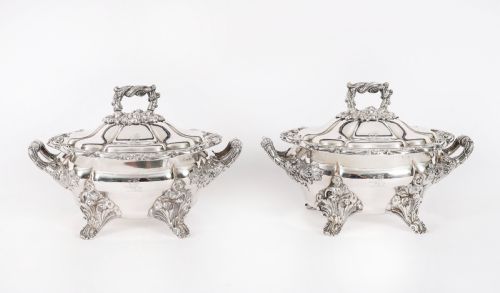
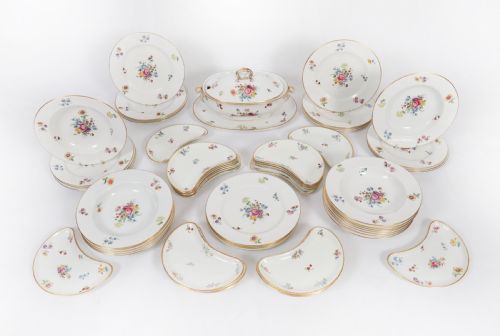
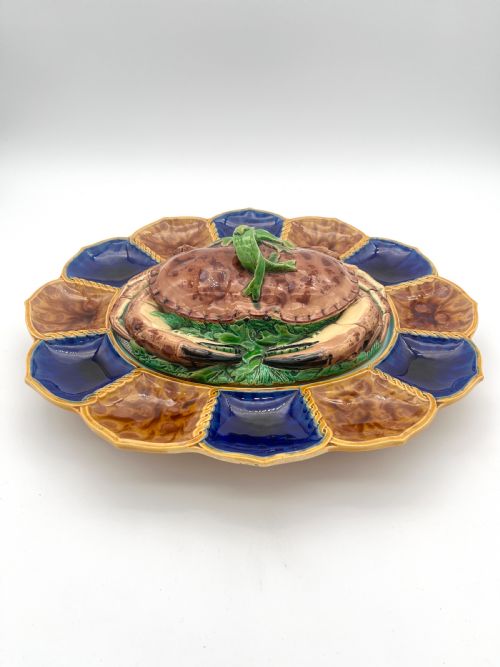
Serveware and tableware from this epoch frequently appear as matched pairs or part of larger dinner services, accompanied by original stands, covers, and ladles. Forms range from straightforward oval shapes to naturalistic majolica creations modelled as animals or leaves.
Materials and methods
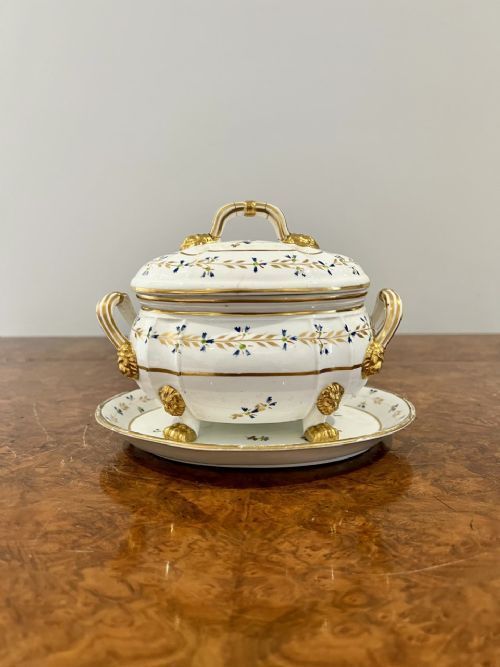
Potteries utilised bone china, earthenware, porcelain, and heavy ironstone to form the body of ceramic tureens, often applying vibrant blue and white transfer printing, enamel colours, or gold leaf gilding. Ironstone offered durability for heavy daily use, whereas felspar porcelain and bone china provided a finer, translucent finish for display pieces.
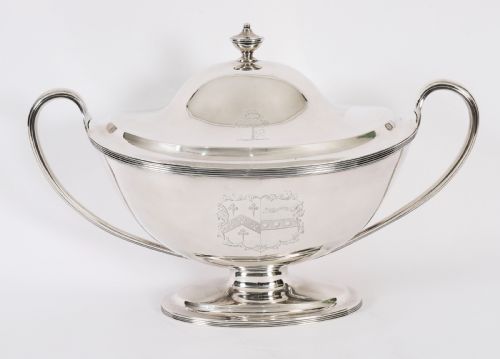
Metal vessels relied on sterling silver, silver plate, and Old Sheffield plate, shaping sheets over copper bases or casting handles and feet separately. Makers decorated these metal surfaces with applied crests, fluted panels, and hand-engraved motifs reflecting neo-classical or rococo revivals.
Crab claws and butterfly wings emerge as whimsical ceramic handles, reminding diners that nineteenth-century tables embraced playful marine and insect life.
Evaluating craftsmanship and condition
Quality rests in the crispness of the modelling, the precision of the hand-painted or transfer-printed decoration, and the preservation of original gilding and surfaces. Master potters and silversmiths achieved sharper relief in moulded details and cleaner alignment between covers and bases.
Complete sets featuring matching stands, lids, and ladles command greater architectural and historical coherence than solitary vessels. The presence of crisp factory marks, impressed ciphers, and noble family crests indicates higher workshop origin.
Davenport·Spode·Coalport·Minton·Crown Derby·William Bennett·Flight Barr And Barr·Masons Ironstone·Daniel And Arter·Wedgwood·Richard Ginori·Elkington·Matthew Linwood·William Hutton And Sons·Cresswick·Dan Holy·Copeland And Garrett·Mappin Bros·Henry Atkins
The 19th Century Tureen Glossary
- Ironstone
- A dense, durable type of earthenware patented in the early nineteenth century to mimic porcelain. It resists chipping and formed the sturdy base for many heavy kitchen and dining wares.
- Old Sheffield Plate
- A composite material made by fusing a thin sheet of silver to a thicker copper core. This technique predates modern electroplating and leaves a distinctive copper seam visible on edges.
- Majolica
- A colourful, lead-glazed earthenware popular during the Victorian period. It typically depicts naturalistic forms such as animals, vegetables, and foliage with vibrant coloured glazes.
- Sauce Tureen
- A miniature version of a soup tureen designed specifically for gravies and sauces. These often sit upon an integrated ceramic stand and include a matching ladle.
- Caneware
- A fine stoneware body with a warm, buff-coloured tone resembling the shade of bamboo or pale biscuit. It saw frequent use for game pie dishes and serving vessels.
19th Century Tureen: Frequently Asked Questions
What was a 19th century tureen used for?
These vessels held hot soups, sauces, gravies, and meats at the dining table during formal meals. They kept food warm with fitted lids while allowing servants to serve portions.
Larger pieces sat centrally on the table as part of an extensive dinner service, while smaller sauce versions accompanied specific dishes. Many doubled as decorative centrepiece bowls when not in active use.
How do I date a ceramic tureen?
Dating relies on factory backstamps, impressed potters' marks, and stylistic clues such as the shift from Georgian neo-classicism to vibrant Victorian majolica. Transfer print styles and colour palettes also change across the decades.
Matching the pattern number or shape against known factory production windows narrows the manufacture date further. Unmarked pieces require comparison of paste composition and glaze characteristics with documented examples.
Can I use silver plated tureens for food?
Many silver plated and Old Sheffield plate vessels remain structurally sound for serving dry foods or warmed items at modern gatherings. Care must be taken to avoid acidic foods that might react with aged metal surfaces.
Hand washing with mild detergents preserves the remaining silver plating and prevents damage to soldered handles or applied crests. Displaying them as decorative objects protects the historical finish from daily wear.
Why do some tureens include stands?
Integrated stands protected polished wooden dining tables from heat and stray drips during the serving of hot liquids. They also balanced the visual proportions of the footed vessel above.
These matching underplates completed the formal silhouette of the service and prevented spills from reaching fine table linens. Surviving together as a matched pair adds historical completeness to the set.