
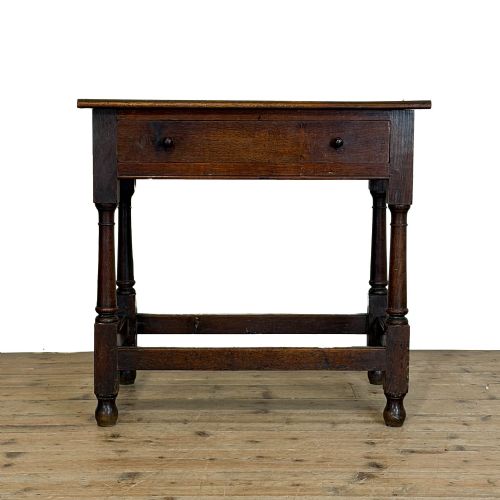
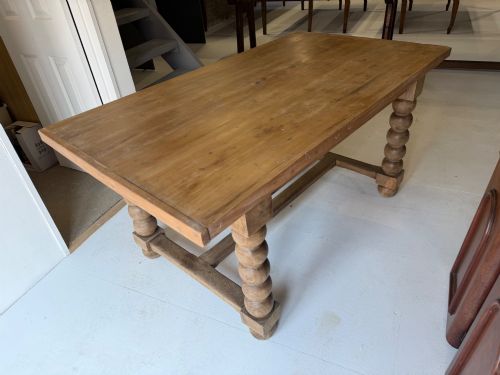
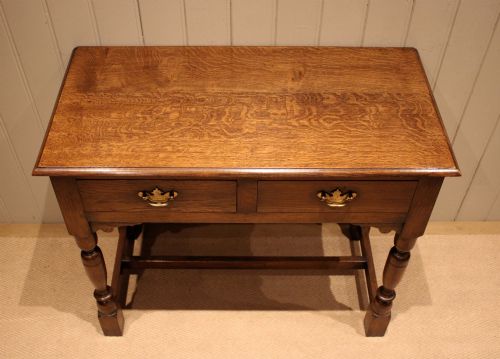
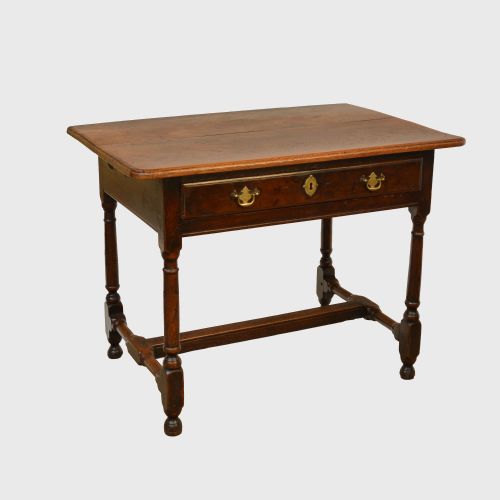
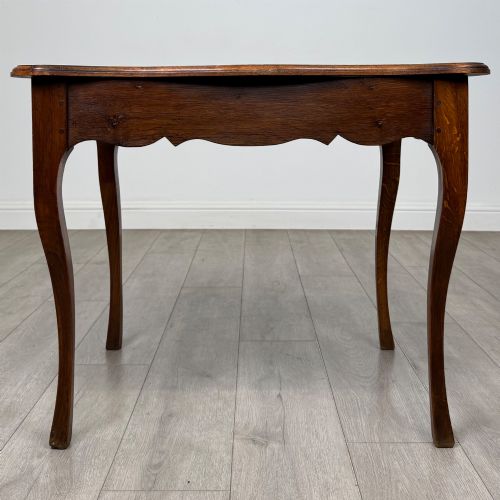
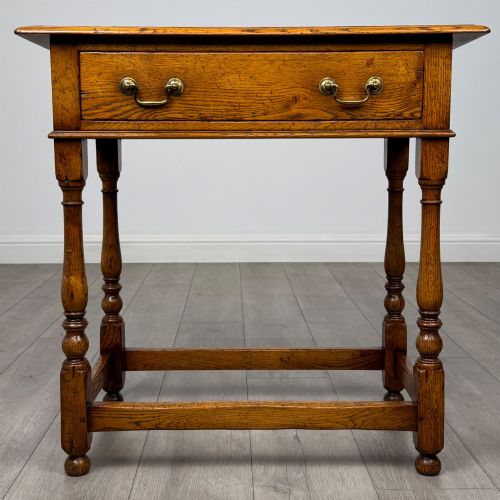
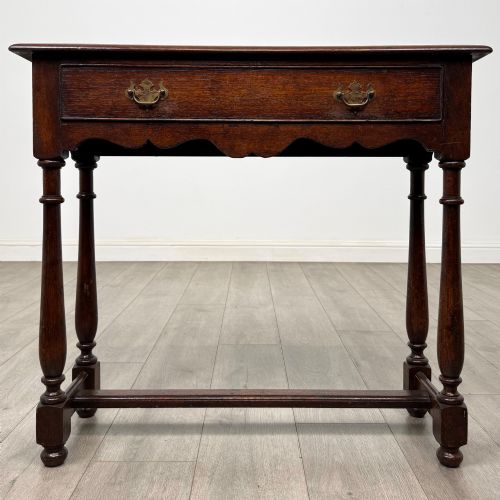
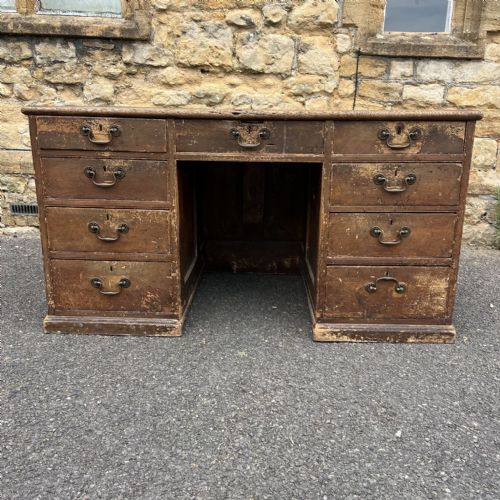


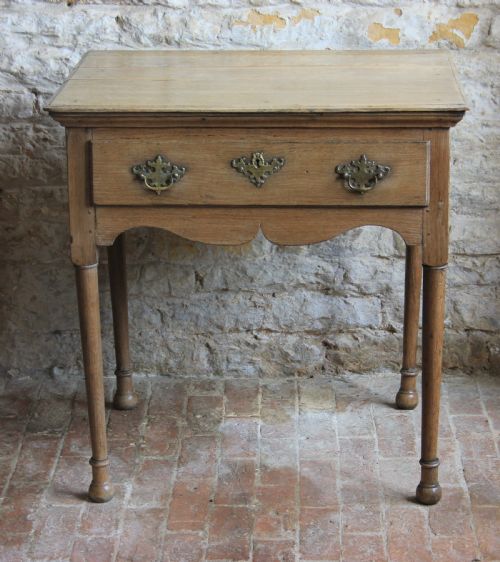

Country Oak Writing Table
A country oak writing table brings utilitarian warmth to a room, offering practical surface space rooted in centuries of domestic provincial craft.
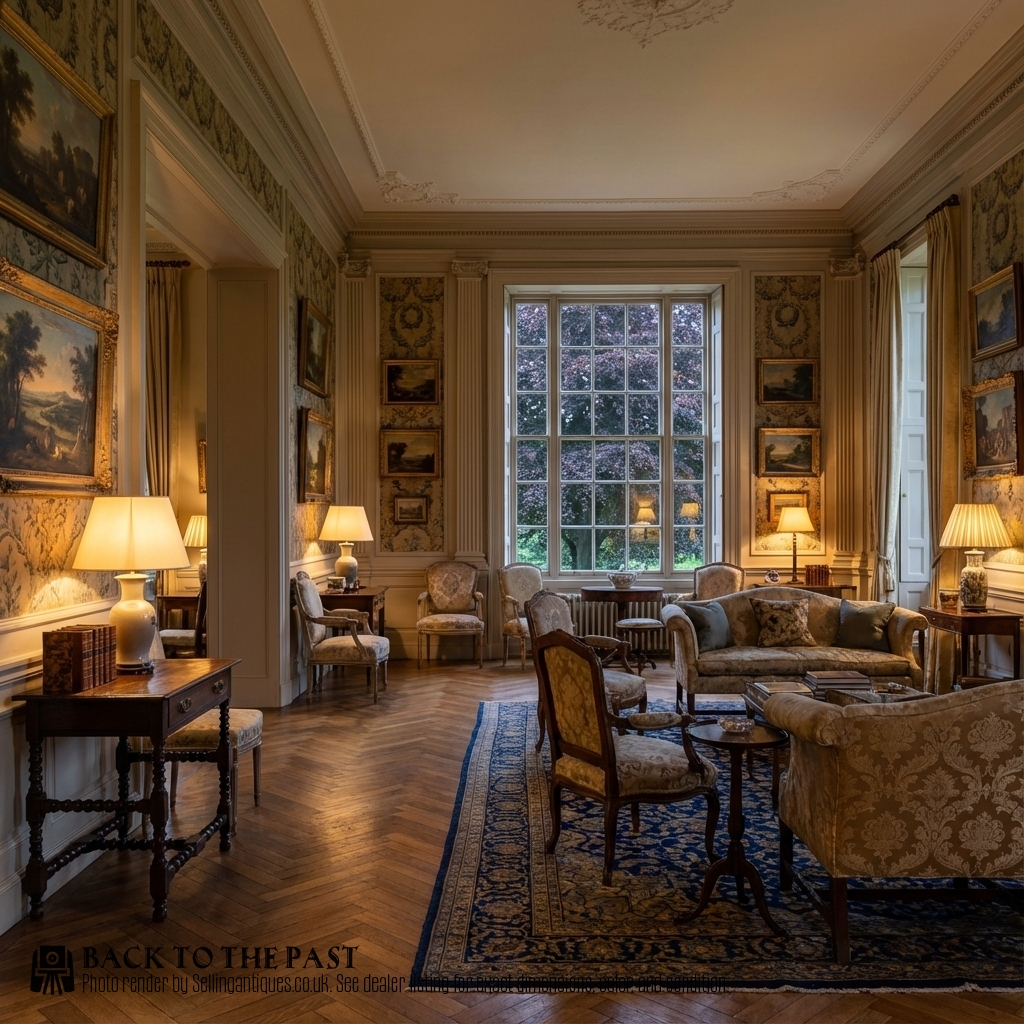
Country Oak Writing Table
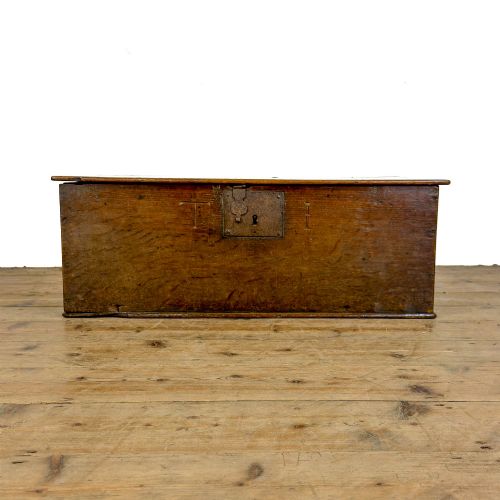
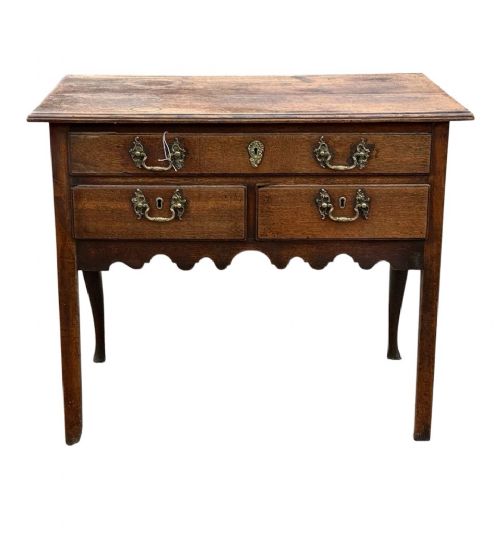
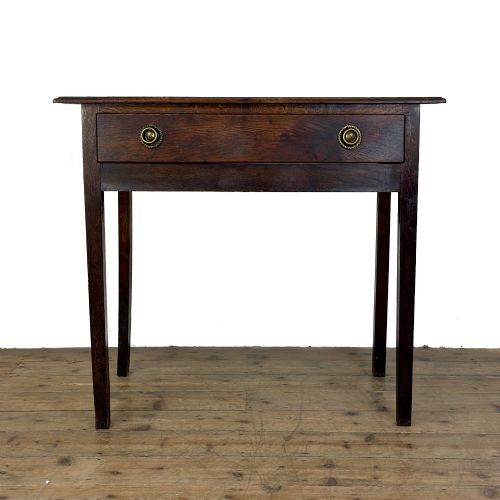
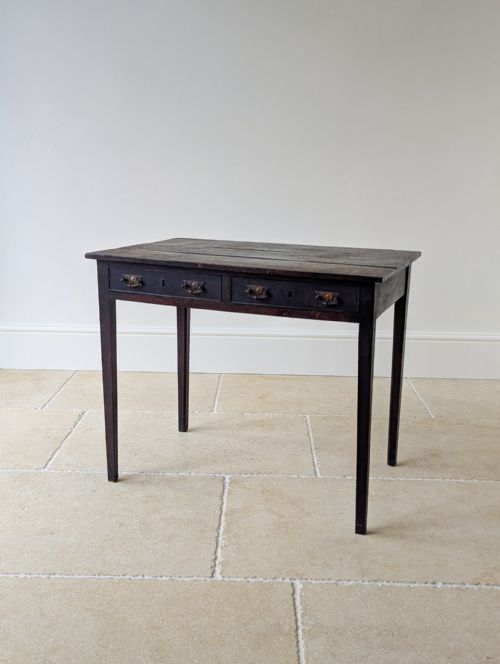
A country oak writing table is a sturdy domestic surface designed for daily correspondence and household administration, drawing on forms from the eighteenth and nineteenth centuries. These pieces encompass regional side tables, lowboys with drawers, and vernacular desks created for everyday use in country houses and farmhouses.
The versions most commonly met on this page span Georgian periods alongside later nineteenth-century interpretations and early twentieth-century examples. They frequently double as side tables or lowboys, reflecting the versatile layout of provincial interiors where furniture served multiple household duties.
Makers working within English country, rustic farmhouse, and French provincial traditions constructed these tables with honest utility in mind. The results are straightforward proportions, visible grain, and unpretentious designs that prioritize function over decorative excess.
What varies in quality
Quality rests in the integrity of the timber selection and the retention of original surfaces, such as early bleached finishes or rich patinated oak. Tables that display harmonious proportions and honest timber matching stand apart from heavily altered examples.
The degree of hand-craftsmanship in drawer construction and leg turning dictates the refinement of a piece. Subtle details like bobbin legs, well-proportioned frieze drawers, and minimal timber replacement separate everyday utilitarian benches from finer provincial cabinet work.
Listings feature oak alongside elm, pine, fruitwood, beech, and yew across Georgian, Victorian, and Edwardian periods.
The Country Oak Writing Table Glossary
- Lowboy
- A small dressing or writing table with one or more rows of drawers, commonly supported on slender legs. They originated in the late seventeenth century and remained popular throughout the Georgian era.
- Side table
- A functional surface designed to stand against a wall, frequently utilised for storage or display in domestic interiors. These pieces range from simple plank-top tables to drawer-fitted designs.
- Bobbin leg
- A turned furniture leg shaped to resemble a series of bobbins or spools strung together. This decorative turning technique appears frequently on seventeenth and nineteenth-century pieces.
- Kneehole desk
- A formal writing desk featuring a central recessed space for the legs, flanked by pedestals of drawers. Estate manager and country house variations prioritize robust utility.
Country Oak Writing Table: Frequently Asked Questions
How do I use a country oak writing table today?
These tables adapt easily to modern rooms as compact writing desks, hallway consoles, or bedside surfaces. Their modest proportions allow them to fit into tight spaces where large modern furniture overwhelms the floor plan.
Keep them away from direct heat sources and excessive moisture to protect the historic timber. Regular dusting with a dry cloth preserves the natural patina without stripping the surface oils.
How do I tell an eighteenth-century table from a nineteenth-century one?
Examine the construction methods and the tool marks visible on the underside and drawer linings. Eighteenth-century examples often display hand-sawn boards and irregular dovetails, reflecting manual workshop practices.
Nineteenth-century interpretations tend to feature more uniform machining and denser, sometimes redder oak. Comparing the wear patterns around the drawer pulls and leg bases also clarifies the age of the piece.
Why are secondary woods used in these tables?
Regional cabinetmakers utilised whatever local timber was available for internal components, drawer sides, and backs. Elm, beech, and pine offered structural strength and affordability where oak was unnecessary.
This mix of materials is a hallmark of vernacular furniture and confirms country construction methods. It demonstrates how makers maximised local resources to build durable household goods.