
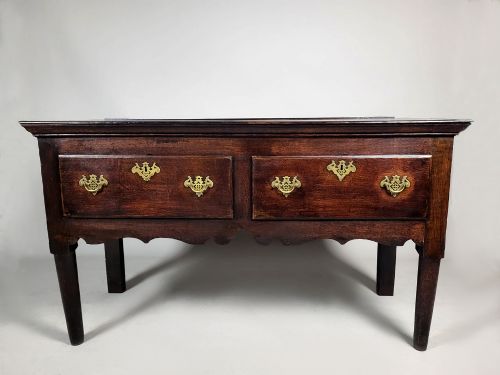
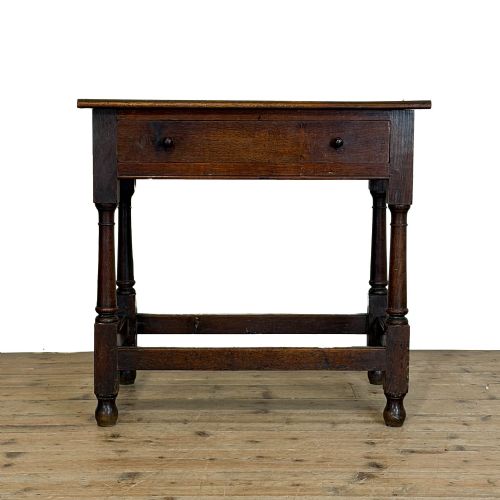
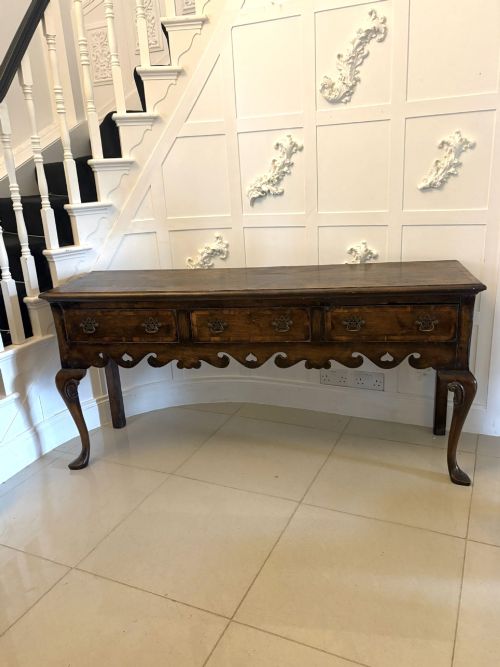
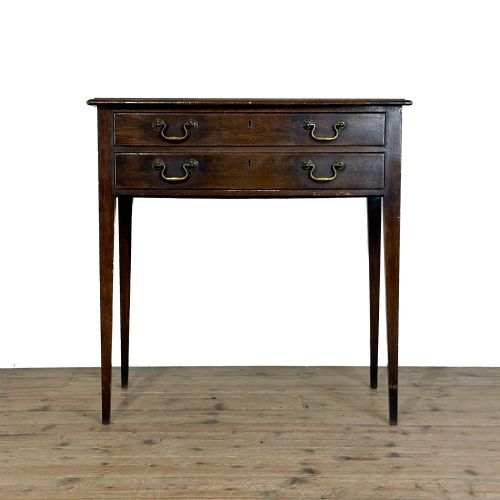

Country Oak Server
A country oak server brings practical surface space and centuries of solid domestic craft straight into a modern dining room.
Country Oak Server
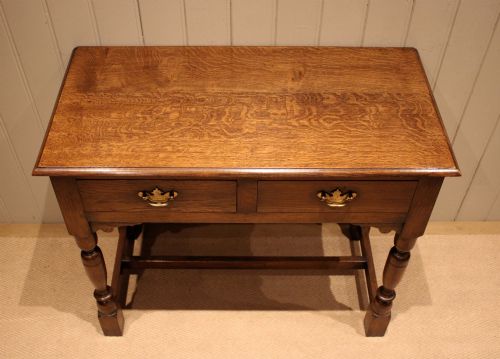
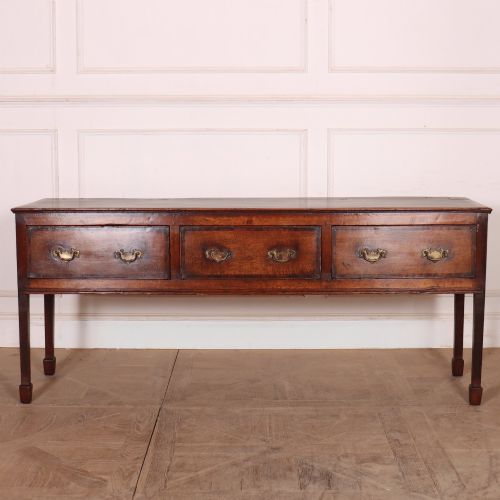
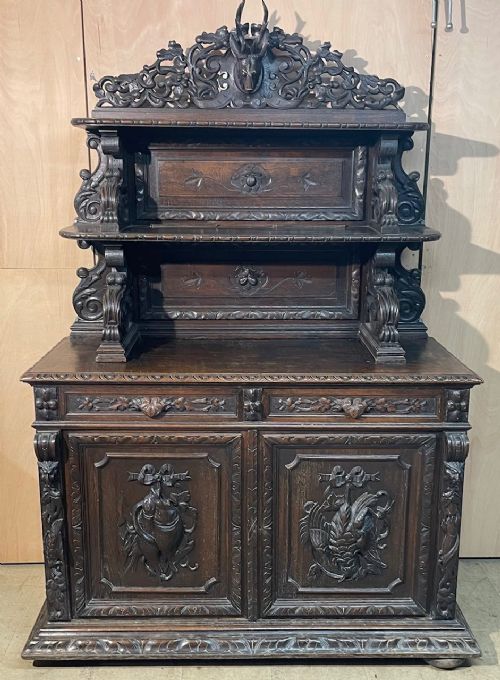
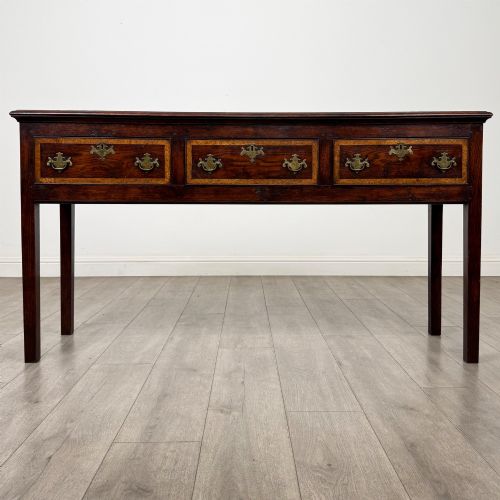
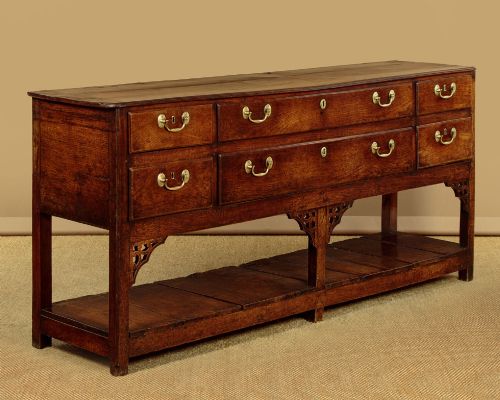
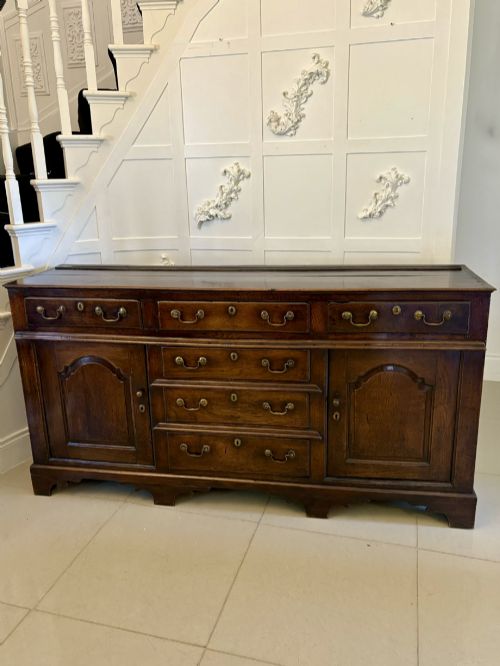
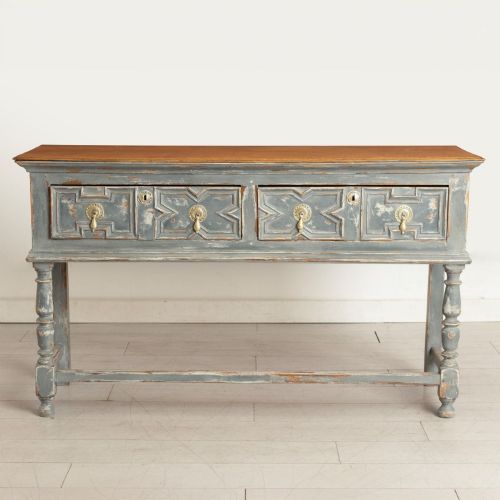
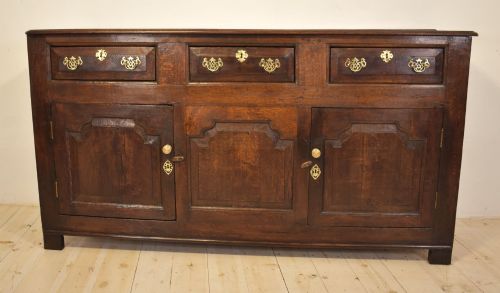
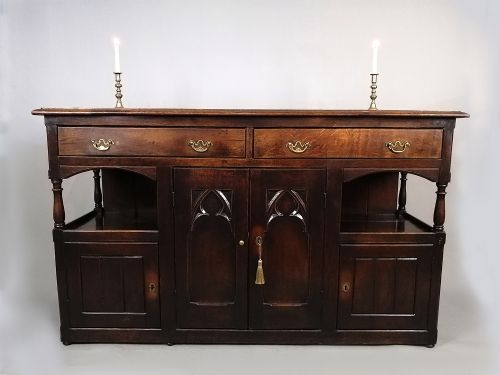
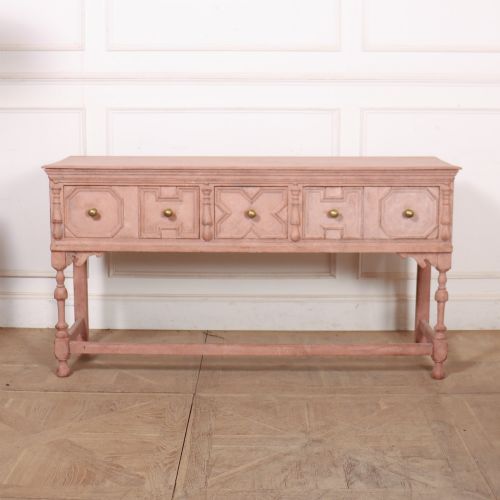
When searching for a country oak server, buyers encounter sturdy lowboards, dresser bases, and sideboards designed originally for food preparation and service. These items emerge primarily from the eighteenth and nineteenth centuries, carrying the straightforward proportions typical of regional British and French workshops.
The most common form on this page is the dresser base, often fitted with deep drawers above an open potboard or panelled cupboards. Pieces span various regional styles, including Welsh vernacular, Georgian, and French provincial interpretations.
Makers built these pieces for heavy daily use in kitchens and halls, relying on generous timber boards rather than delicate veneers. Such utilitarian origins mean proportions remain functional, offering long surfaces and deep storage suited to contemporary living.
Assessing quality and proportion
Quality separates pieces by the integrity of their timber retention and the subtlety of their original proportions. Superior examples retain thick, unwarped top boards and original brass hardware, whereas lesser pieces suffer from excessive later timber replacement or clumsy height alterations.
The sophistication of the drawer construction and the crispness of any carved detailing also mark the difference between standard utilitarian workshop output and finer country house commissions. Patina accumulated through generations of daily service gives the best pieces a rich surface texture that chemical stripping destroys.
The inventory combines regional English vernucular forms with French provincial buffets and serving tables.
The Country Oak Server Glossary
- Potboard
- A lower open shelf built between the legs of a dresser base, traditionally used for storing pots and earthenware. It provides structural bracing while offering visible display space.
- Lowboy
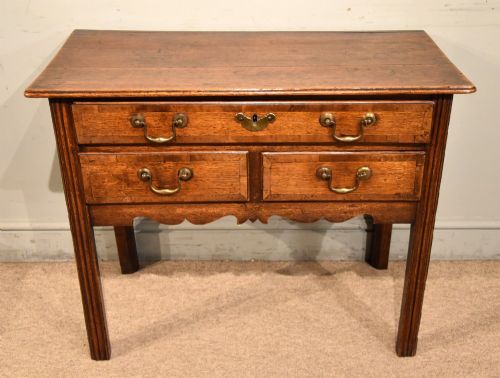
- A small side table featuring one or more rows of drawers raised on relatively tall legs. These functional pieces served as dressing tables or serving surfaces in domestic settings.
- Dresser base
- The lower section of a kitchen dresser featuring surface boards above drawers and cupboards, often found standing independently without its upper plate rack.
- Vernacular
- Furniture designed and built by local country joiners using regional traditions rather than urban pattern books. These objects prioritise local utility over academic stylistic rules.
- Quarter-sawn
- A method of cutting logs radially across the growth rings that produces stable boards with distinctive medullary ray flecks. This cut minimises board warping in daily use.
Country Oak Server: Frequently Asked Questions
How do I style a country oak server at home?
Position your server against a dining room or hallway wall to anchor the room with natural timber texture. Use the top surface to display ceramic tableware, stacked books, or simple lamps without cluttering the grain.
Utilise the internal drawers and cupboards to store table linens, cutlery, or everyday dining accessories. The robust construction allows the piece to function as an active serving station during meals.
Are these servers suitable for daily kitchen use?
These pieces were originally constructed for heavy domestic work and easily withstand contemporary daily use. Solid oak surfaces tolerate normal household tasks provided excessive moisture is wiped away promptly.
Protect the timber with traditional beeswax rather than modern synthetic varnishes to maintain the historical finish. Regular feeding keeps the wood nourished and preserves the natural surface sheen.
How can I tell an eighteenth century piece from a later copy?
Examine the drawer construction for hand-cut dovetails and irregular board thicknesses that reveal manual timber preparation. Eighteenth-century surfaces display characteristic tool marks and a soft, undulating patina built up over generations.
Check timber shrinkage patterns and fixings to ensure components match the period claims of the listing. Later nineteenth-century revivals often feature tighter, more uniform machine-sawn components and different fastener types.
What maintenance does antique oak require?
Keep wooden furniture away from direct heat sources and drastic humidity changes to prevent timber splitting. Apply a clear beeswax polish occasionally and buff with a soft cloth to nourish the grain.
Avoid abrasive chemical cleaners that strip the historic surface finish and remove accumulated patina. Gentle dusting with a dry cloth keeps the timber safe during regular weekly maintenance.