

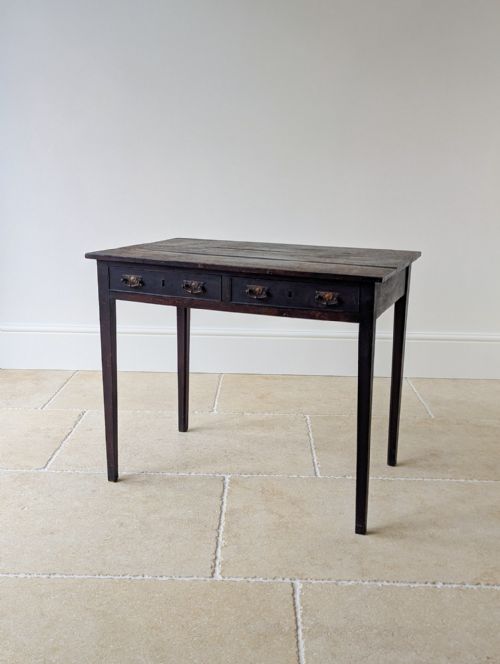
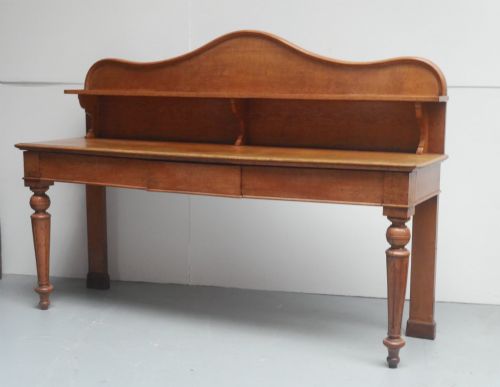

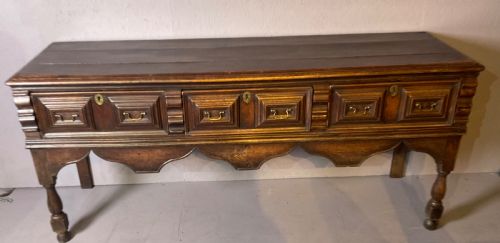


Oak Serving Table Furniture
These oak serving table furniture pieces combine utility and solid timber construction, offering practical surfaces for dining rooms and hallways alike.
Oak Serving Table Furniture
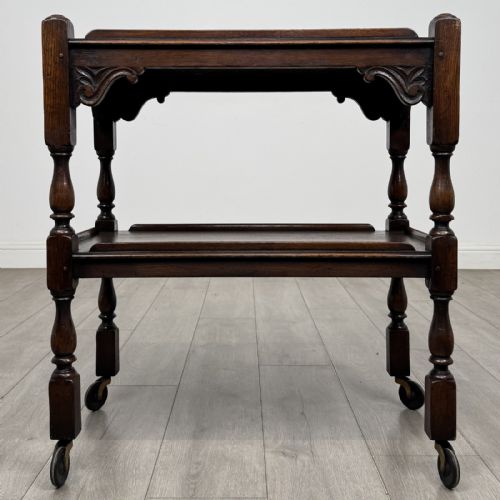
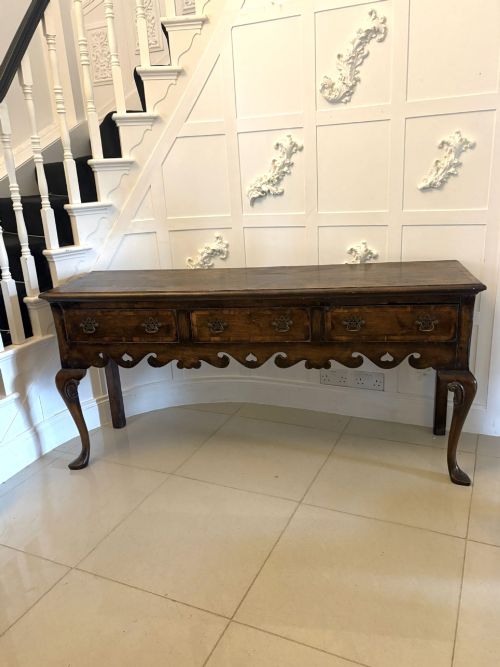
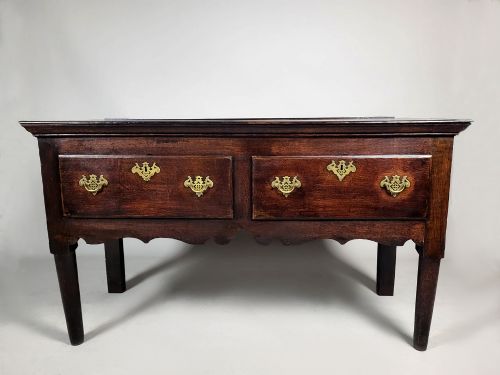
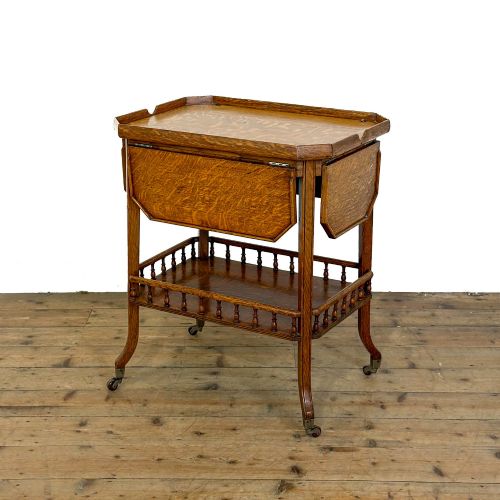
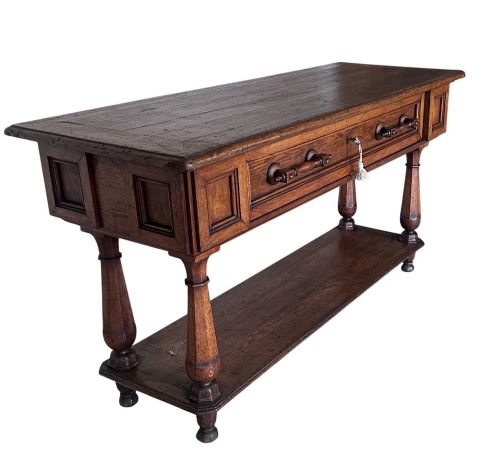
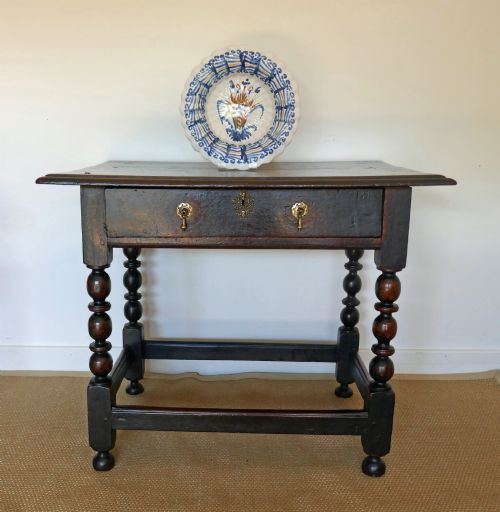
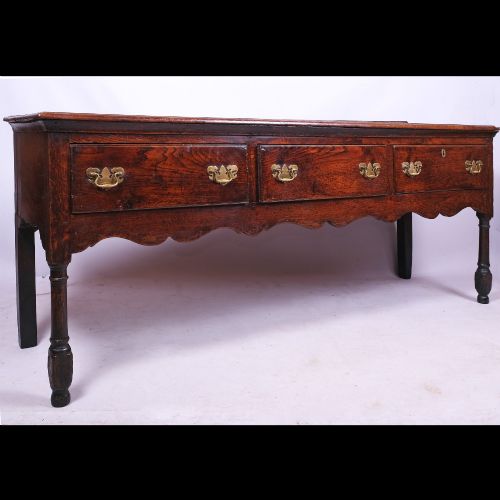
When searching for oak serving table furniture, buyers encounter a diverse selection of forms spanning multiple centuries. The inventory comprises serving tables, sideboards, dressers, lowboys, and dumb waiters designed for food preparation, display, and storage.
The most common examples on this page date from the seventeenth, eighteenth, and nineteenth centuries. These include regional pieces from Wales, Scotland, and France, alongside English items in Georgian, Victorian, and Gothic Revival styles.
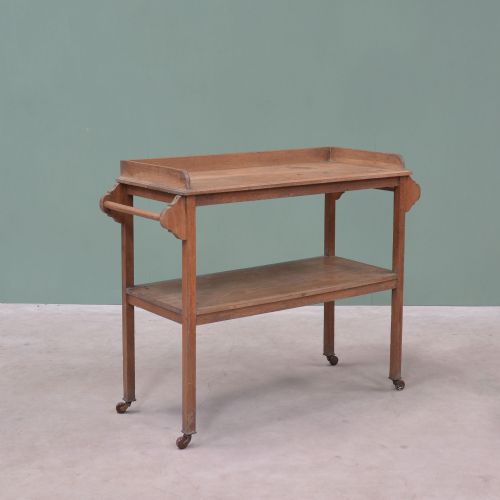
Forms vary from robust seventeenth-century dresser bases of bold proportions to lighter Edwardian trolleys and multi-tiered buffets. Buyers frequently choose these pieces for their generous timber tops and practical under-tier shelving or drawer space.
Assessing quality in antique oak pieces
Superior quality in these items rests upon timber selection, surface patination, and structural integrity. Denser grain patterns and well-matched boards on the top surface distinguish finer examples from standard utility pieces.
Original brasses and untouched surface finishes elevate the desirability of eighteenth and nineteenth-century forms. The crispness of hand-carving on panels and legs indicates the skill level of the original workshop.
Oak Serving Table Furniture Retail Price Guide 2026
Typical asking prices for oak serving table furniture among the pieces listed under this phrase on Sellingantiques today, from the lower quarter to the upper quarter. They describe what is for sale here now, not the wider market.
Object configurations include side tables, console tables, dressers, serving trolleys, buffets, and credence tables representing English, French, Spanish, and Scottish origins.
PHILLIPS BRISTOL·A W N Pugin
The Oak Serving Table Furniture Glossary
- Dresser base
- A low wooden sideboard fitted with drawers and sometimes lower shelves, historically used for food preparation and serving. These pieces often feature substantial oak tops and panelled doors.
- Lowboy
- A small eighteenth-century table with one or more tiers of drawers, standing on relatively tall legs. They served variously as dressing tables or small serving surfaces.
- Dumb waiter
- A tiered serving stand, often revolving or fitted with shelves, designed to hold dishes near a dining table without servant attendance. Examples range from simple two-tier trolleys to rise-and-fift mechanisms.
- Lowboy
- A small eighteenth-century table with one or more tiers of drawers, standing on relatively tall legs. They served variously as dressing tables or small serving surfaces.
- Credence table
- A folding table or small sideboard historically used in ecclesiastical settings or domestic dining rooms for holding communion elements or serving dishes. They frequently incorporate Gothic or Renaissance carved motifs.
Oak Serving Table Furniture: Frequently Asked Questions
What is the difference between a lowboy and a serving table?
A lowboy is a compact table featuring drawers and relatively tall legs, typically used in smaller spaces or as a dressing surface.
Serving tables and dresser bases are generally longer and broader, designed specifically to hold platters and dining accessories in a dining room.
How do I care for antique oak furniture?
Maintain oak surfaces by dusting regularly with a soft, dry cloth and avoiding placement near direct heat sources or strong sunlight.
Apply natural beeswax periodically to nourish the timber and preserve the historic finish without sealing the grain.
Can I use an antique dumb waiter for serving food today?
These multi-tiered tables offer sturdy shelving that remains entirely practical for holding drinks, plates, or decorative items during modern gatherings.
Ensure that you check the weight distribution on older rotating or rise-and-fall mechanisms to protect the antique joints.
How do I distinguish a Georgian oak table from a Victorian revival piece?
Georgian pieces from the eighteenth century typically exhibit restrained lines, pegged joinery, and natural timber ageing associated with daily domestic use.
Victorian and later revival pieces often display heavier machine-cut elements, deeper factory-style carving, and styles such as Gothic Revival or Reformed Gothic.