
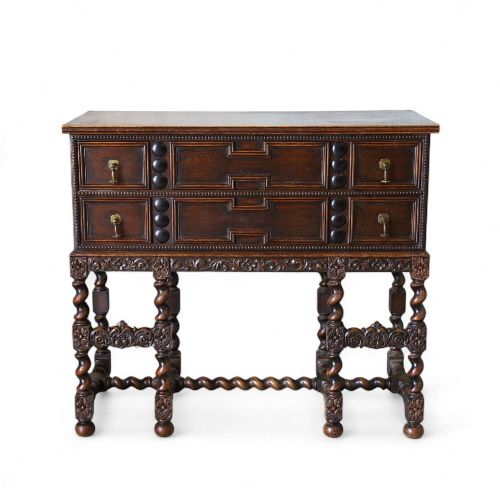


Oak Dining Room Server
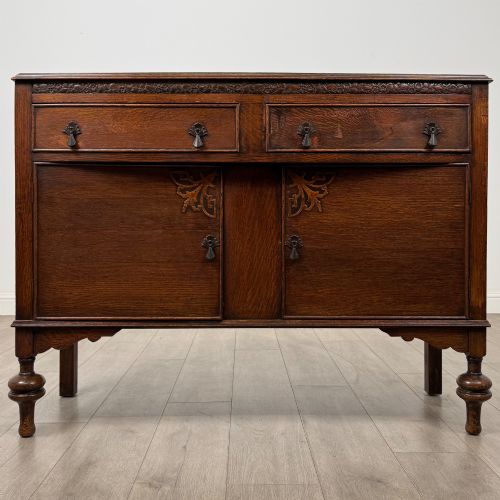
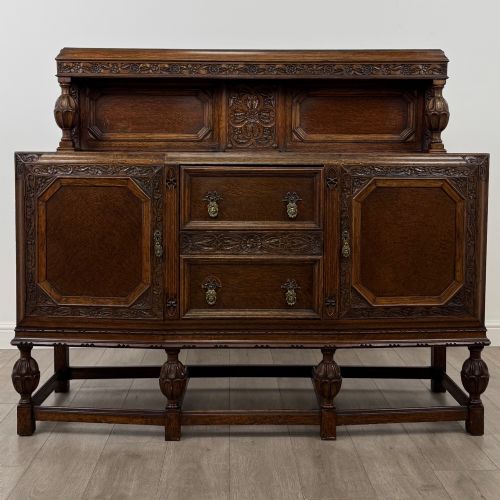
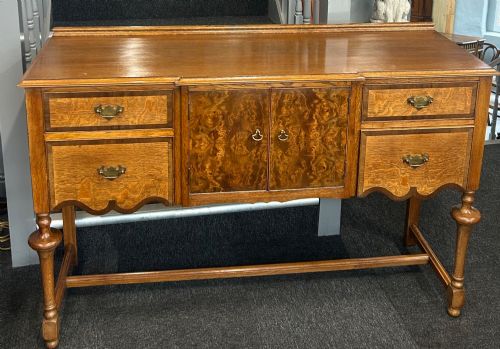
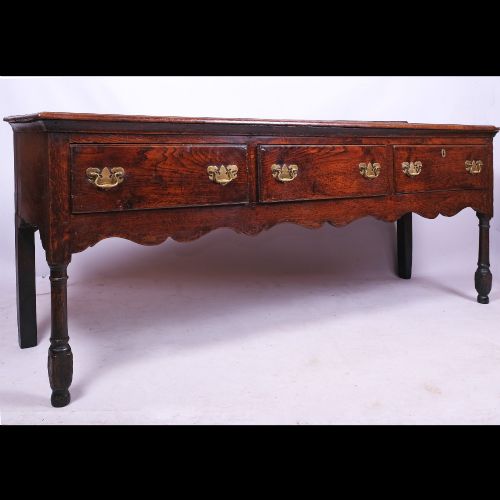
An oak dining room server stands ready to anchor a dining space, bringing heavy timber presence and practical surface space for meals.
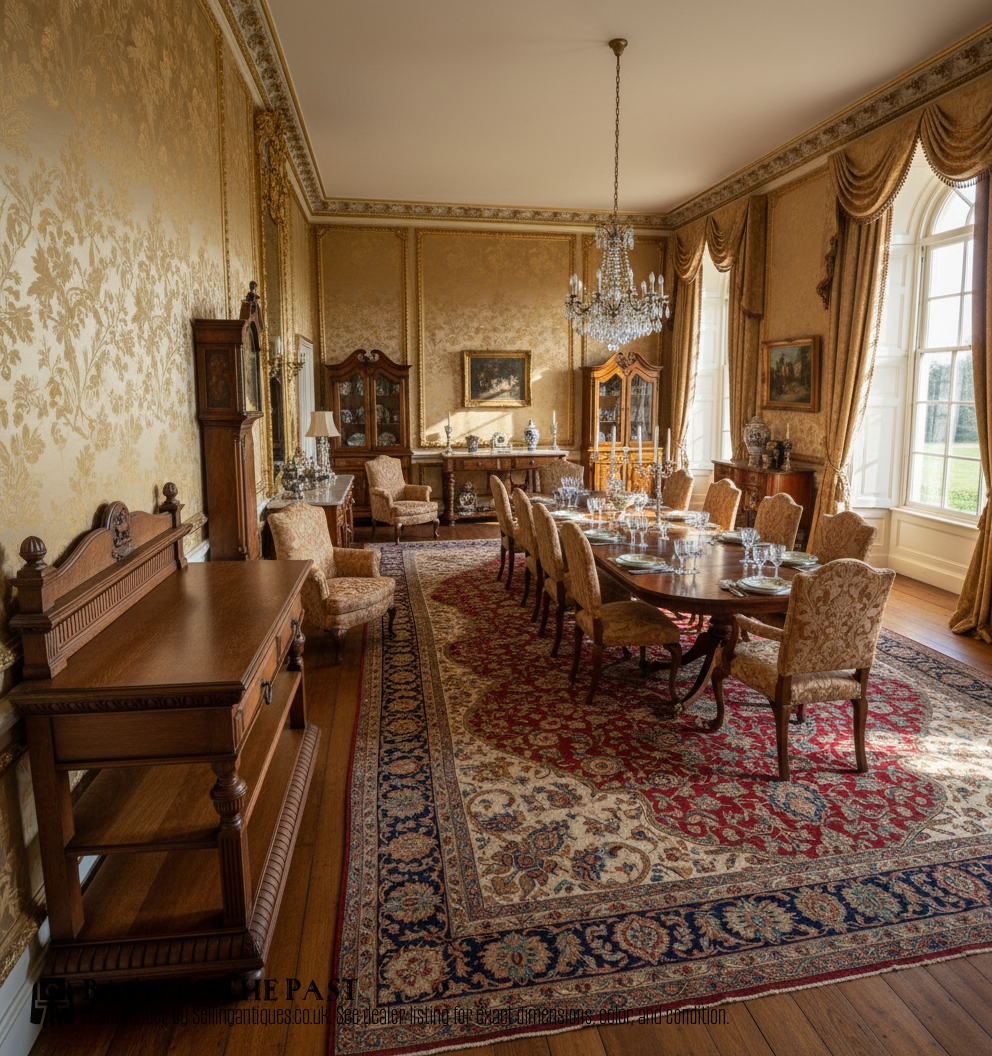
Oak Dining Room Server
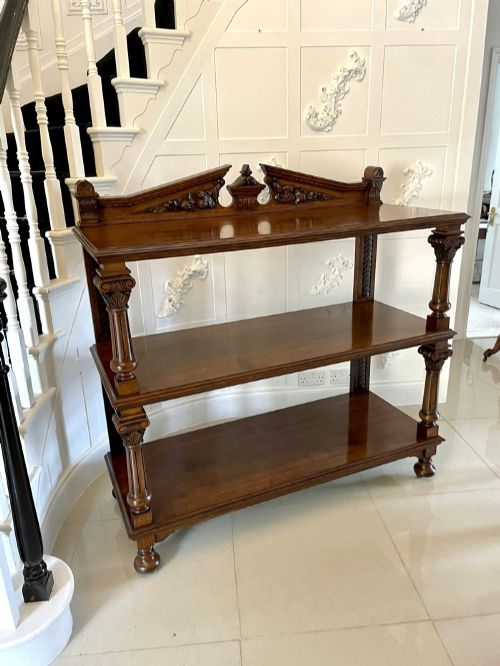
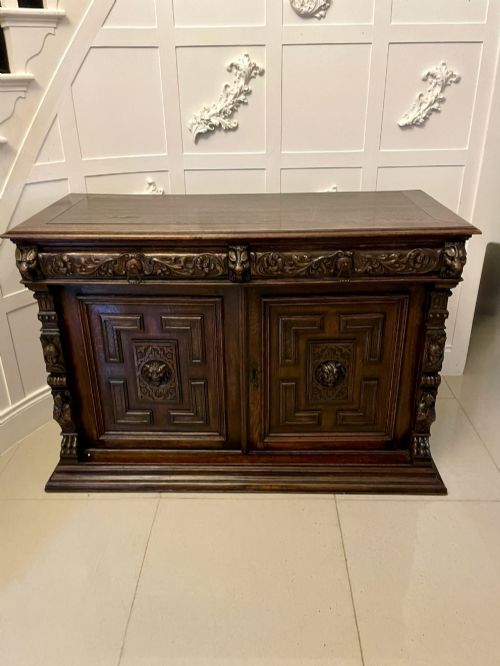
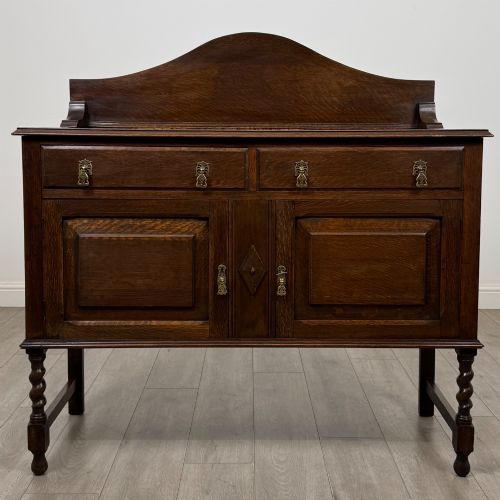
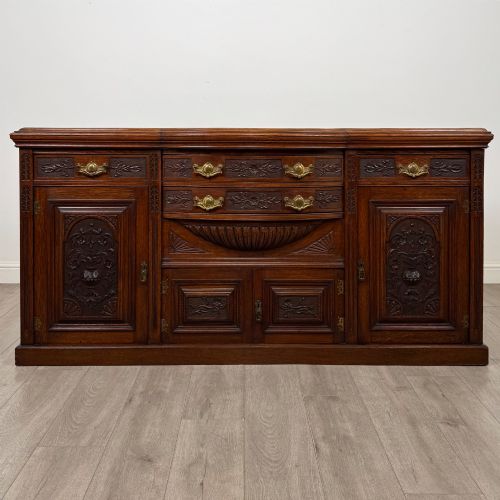
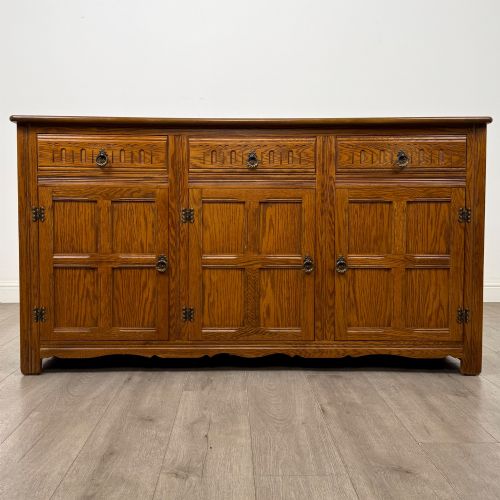
An oak dining room server combines the utility of storage and surface space, appearing across this selection in forms such as sideboards, buffets, serving tables, and dumbwaiters. These pieces originate predominantly from the Victorian and Edwardian eras, alongside examples from the decades spanning the late nineteenth and early twentieth centuries.
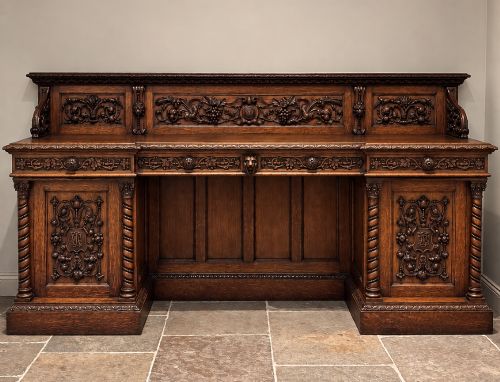
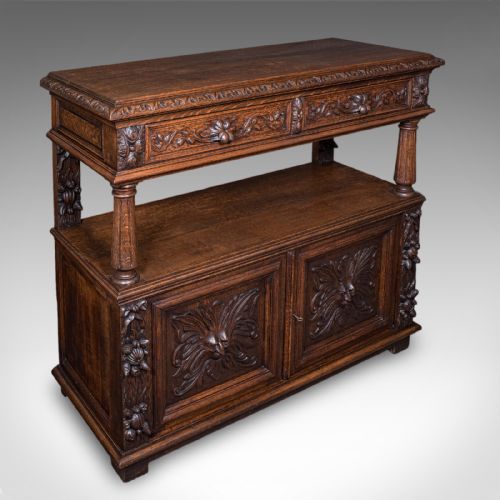
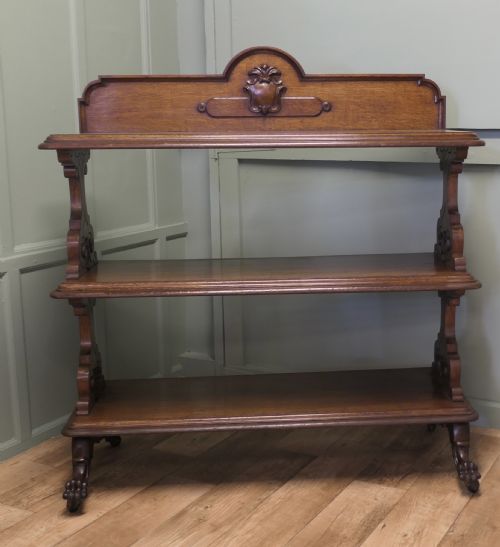
Buyers seeking an oak dining room server encounter heavy carved woodwork, mirrorbacks, and tiered serving surfaces designed for formal dining rooms. The forms range from compact dumbwaiters to large Scottish and continental buffet cabinets.
The aesthetic vocabulary spans Jacobean Revival, Gothic Revival, Arts and Crafts, and Carolean styles, reflecting the eclectic tastes of nineteenth and twentieth-century cabinet makers.
Materials and construction methods
The primary material across these pieces is solid oak, frequently paired with decorative veneers such as pollard oak and burr walnut to create contrasting grain patterns on drawer fronts and door panels. Supplementary woods and structural elements incorporate brass handles, glass doors, and iron hardware.
Joinery techniques rely on traditional solid timber framing, hand-carved ornamentation, and structural turning such as barley-twist supports. Parquetry tops and raised panel construction demonstrate the mechanical skill applied to these dining room servers.
Some Victorian servers include hidden wine racks built right into the pedestal base for secret vintages.
Assessing quality in antique servers
Quality rests in the depth and crispness of the hand-carving, the selection of figured timbers like pollard oak or burr walnut, and the integrity of the structural joins. Pieces featuring secondary woods of equal grade and integrated architectural elements display superior workshop origin.
Proportion and decorative restraint separate standard production items from exceptional cabinet work. The integration of movement-specific details, such as those found in Arts and Crafts or Gothic Revival examples, dictates the distinction between ordinary utility furniture and high-status dining pieces.
Maple and Co·T Simpson and Son
The Oak Dining Room Server Glossary
- Dumbwaiter
- A tiered serving table or stand used for holding dishes and food without the need for attendants. These items allow discrete service during dining.
- Pollard oak
- Oak timber taken from pollarded trees, exhibiting dense, knotty, and highly figured growth rings. Cabinet makers prized this material for decorative veneer panels.
- Barley-twist
- A turned wooden support resembling a spiral rope or column. This decorative feature appears frequently on legs and gallery supports during the Victorian and revival periods.
- Court cupboard
- An antique form of enclosed storage furniture featuring upper and lower recessed tiers. These cabinets provide enclosed space for tableware.
- Mirrorback
- A wooden sideboard superstructure incorporating an integrated mirror plate. This design reflects dining room light and displays decorative objects.
Oak Dining Room Server: Frequently Asked Questions
What is an oak dining room server used for?
An oak dining room server functions as a heavy timber surface for staging food, serving dishes, and pouring drinks during formal meals. Below the top surface, cabinets and drawers provide dedicated storage for cutlery, linen, and tableware.
Historically, these pieces kept serving implements close to the dining table to ease the workflow of household staff or hosts. Today, they serve a similar practical role while anchoring the visual weight of a dining room.
How do I tell Victorian from Edwardian servers?
Victorian servers generally display darker finishes, heavier proportions, and dense, deep-relief carving influenced by Gothic or Renaissance revival styles. These pieces often feature massive mirrorbacks and imposing cornices.
Edwardian servers tend toward lighter golden oak tones, cleaner lines, and simplified Arts and Crafts or Georgian revival influences. The carving is often sparser, relying on the natural grain of the timber rather than heavy ornamentation.
What is a dumbwaiter server?
A dumbwaiter is a multi-tiered serving table designed to hold dishes, glassware, and serving platters near the dining table. They appear in both standing cabinet forms and revolving tiered formats.
These compact pieces allow hosts to manage courses independently by keeping auxiliary plates and cutlery within arm reach during a meal.
How do I care for antique oak furniture?
Antique oak benefits from stable indoor humidity and protection from direct sunlight to prevent the solid timber and veneers from drying out or splitting. Regular dusting with a soft, dry cloth preserves the polished finish.
Applying a traditional beeswax polish periodically helps nourish the wood grain and maintains the natural lustre of the antique surface without sealing it in modern synthetics.