



Victorian Carved Buffet Table
These heavy timber surfaces bring serious dining room presence, and a victorian carved buffet table offers the right tier for serious service.
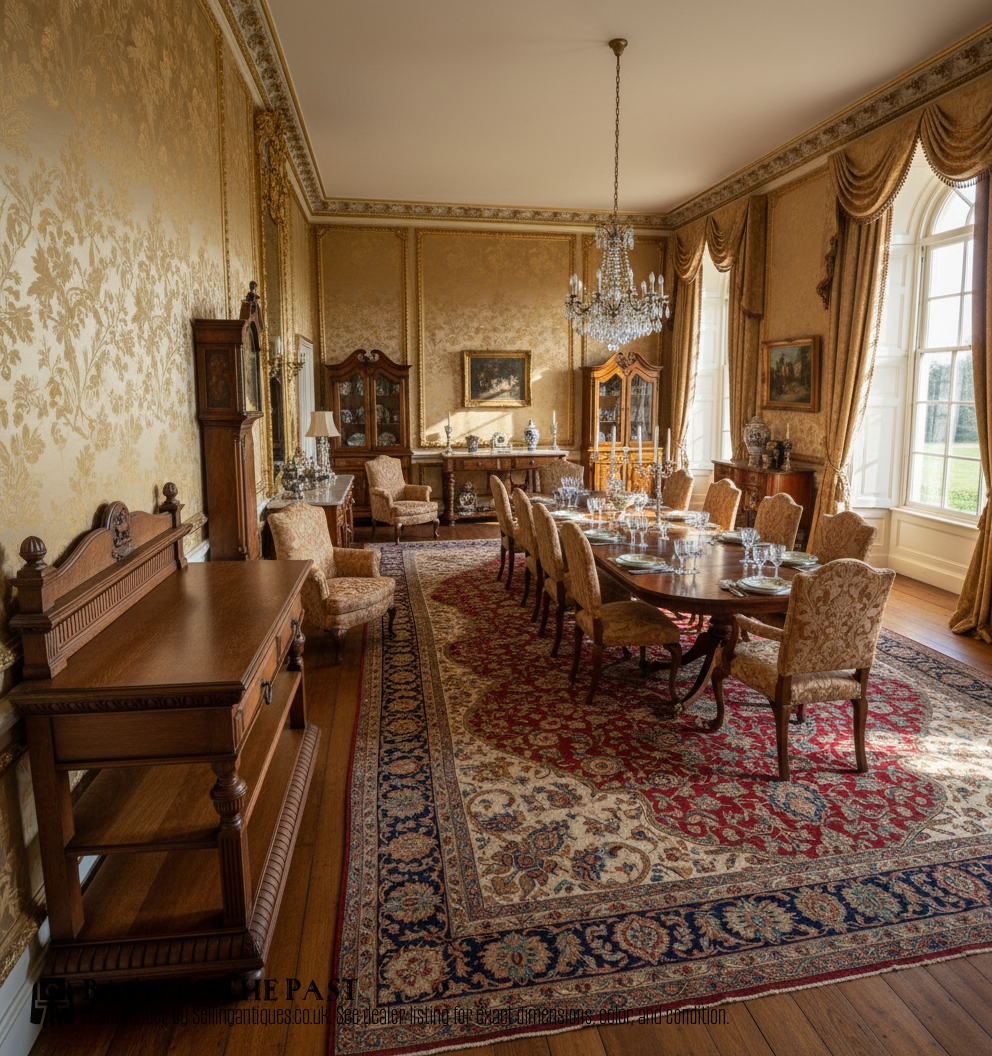
Victorian Carved Buffet Table
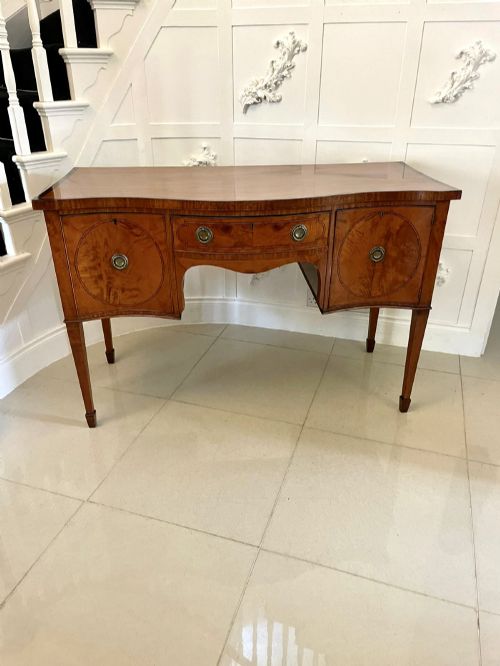
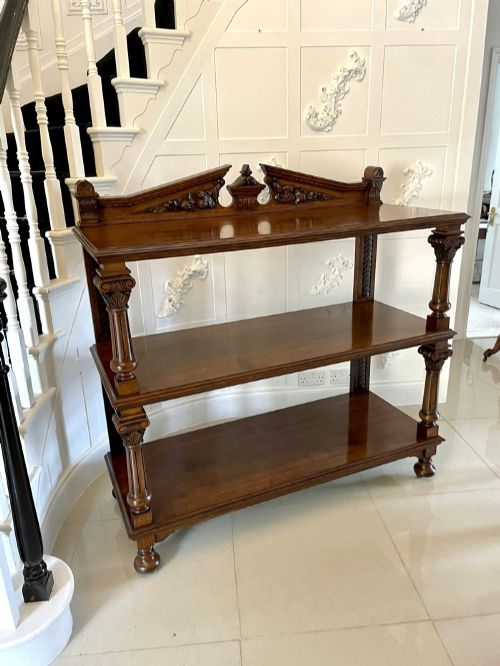
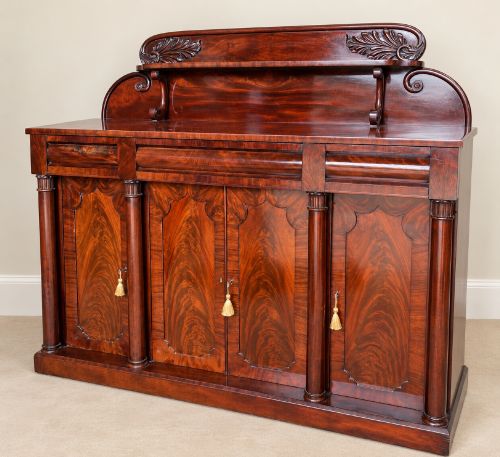
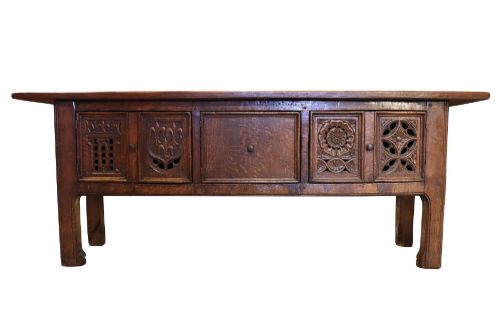
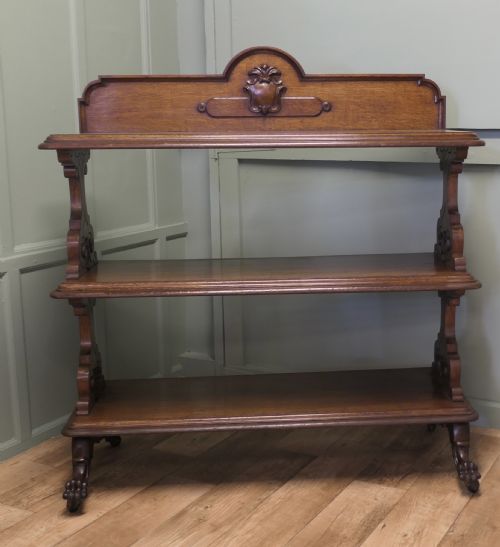
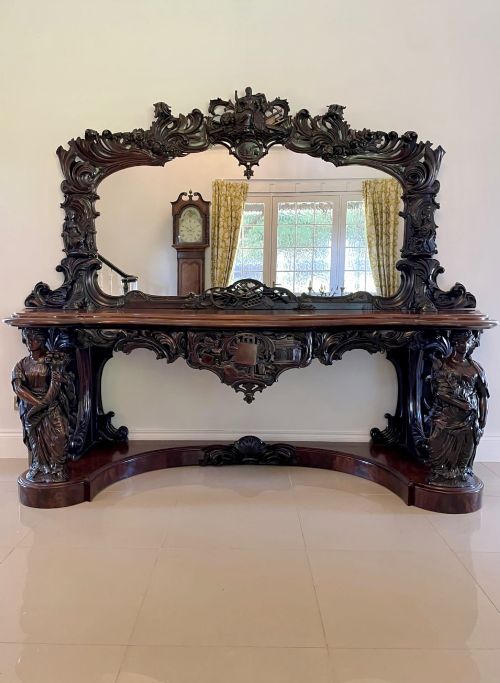
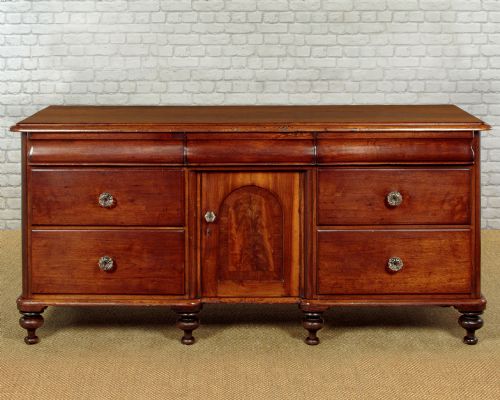
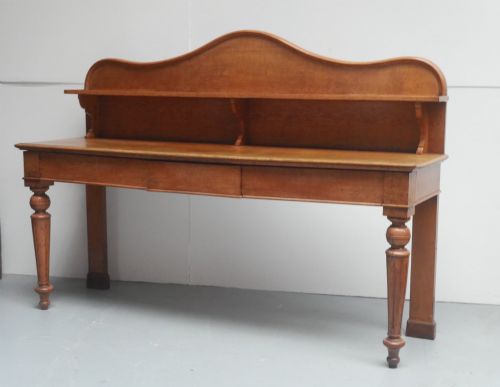
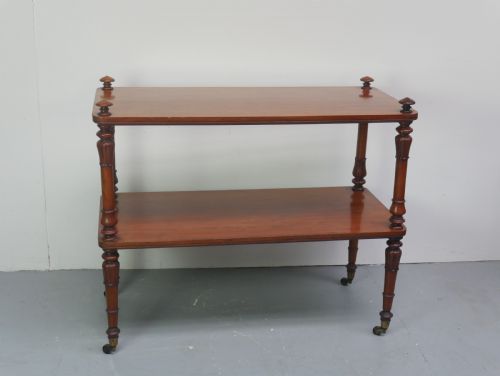
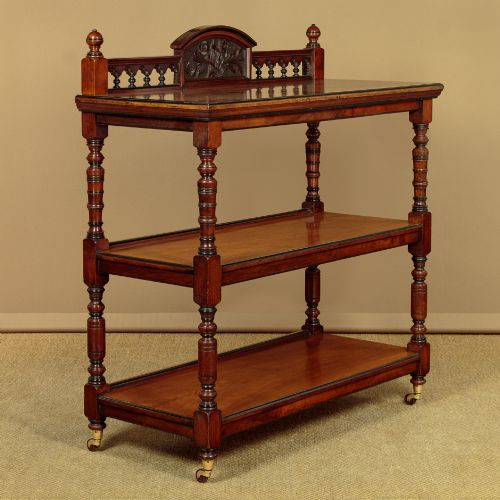
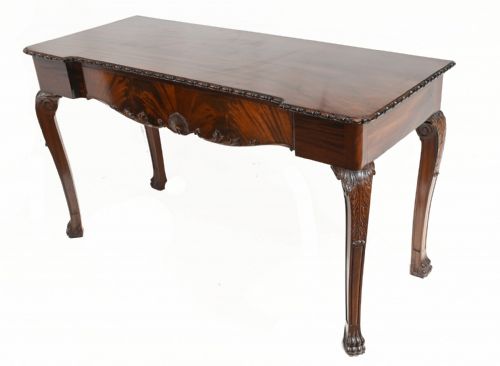
A victorian carved buffet table serves as a substantial dining room server, combining display shelves with closed storage beneath. The examples met most often span the nineteenth century, adopting forms from standard serving tables to tiered dumb waiters and narrow dresser bases.
Makers drew on various design vocabularies across the period, producing pieces that range from heavy gothic oak to figured mahogany and warm walnut. These items functioned primarily to hold dishes during large meals or to display silver and glass in the principal rooms of a Victorian home.
Defining Quality
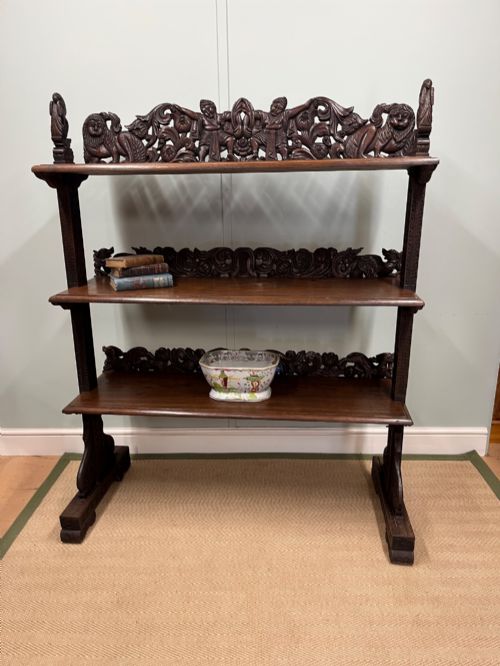
Quality rests on the depth and crispness of the hand carving, where sharp, undercut foliage and figures separate superior workshops from routine commercial production. The choice of timber also dictates value, with heavily figured pollard oak or well-matched flame mahogany veneer marking out the better pieces.
Proportion and structural integrity distinguish finer examples, particularly in multi-tiered tables where upright supports must remain rigid without wobble. Superior pieces often exhibit thoughtful detailing such as finely turned gallery spindles, substantial brass castors, and well-fitted drawer linings.
Listings feature oak, mahogany, walnut, and pollard oak across the nineteenth century, from plain serving tables to tiered gothic servers.
Gillows of Lancaster and London·Robert Strahan & Co
The Victorian Carved Buffet Table Glossary
- Buffet
- A sideboard or serving table designed for holding food and tableware during meals. These items frequently incorporate multiple tiers or back panels.
- Dumb waiter
- A tiered serving table fitted with revolving or stationary shelves, used to hold dishes without requiring servants at the table. They often stand on a central tripod base with castors.
- Pollard oak
- Oak timber taken from pollarded trees, producing a dense, highly figured grain with clustered knots. Cabinetmakers prized this wood for its decorative surface pattern.
- Gothic Revival
- A nineteenth-century style drawing inspiration from medieval architecture, characterised by pointed arches, tracery, and heavy carved details. This style appears frequently on oak dining furniture.
- Flame mahogany veneer
- A sliced wood veneer showing a distinct torch-like pattern created by cutting across the bough fork of the tree. It was applied to primary surfaces for visual impact.
Victorian Carved Buffet Table: Frequently Asked Questions
What is a Victorian buffet table used for?
These pieces served as auxiliary furniture in dining rooms, holding platters, serving dishes, and silverware during large meals. They also functioned as display surfaces for decorative ceramics and glassware when not in active use.
Today, they suit modern dining rooms or large hallways as serving stations or console tables, providing deep surface space and enclosed storage for table linen.
How do I tell an 1850 buffet from an 1890 one?
Mid-century pieces from around 1850 often favour smoother mahogany surfaces with restrained classical or early Victorian proportions. Later examples from the 1880s and 1890s frequently embrace heavier Gothic Revival carving, structural oak, or Aesthetic Movement walnut.
Examining the secondary timbers inside drawers and the style of the hardware provides further clues to the decade of manufacture. Earlier pieces tended to use hand-cut dovetails, while machine assistance crept into later Victorian cabinet shops.
Are these tables sturdy enough for daily use?
The dense hardwoods used in these pieces, such as oak and mahogany, provide exceptional structural strength. Most are built to bear significant weight across multiple shelves without flexing.
Routine care involves keeping timber nourished with appropriate wax and avoiding placement near direct heat sources. The original castors, where present, should be checked to ensure they roll freely without straining the legs.
What is the difference between a buffet and a dumb waiter?
A buffet is typically a static sideboard featuring cupboards, drawers, or serving surfaces designed to stand against a wall. A dumb waiter generally consists of multiple circular or square rotating tiers supported by a central pillar or tripod base.
While both served dining functions, dumb waiters were lighter and often moved closer to the table during a meal. Buffets remained stationary anchor pieces against the dining room wall.