




Two Tier Oak Sideboard
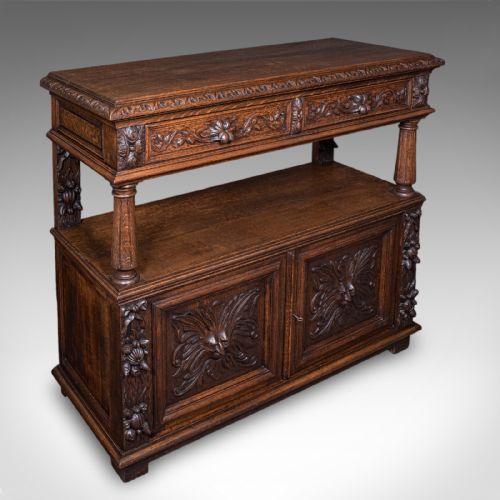
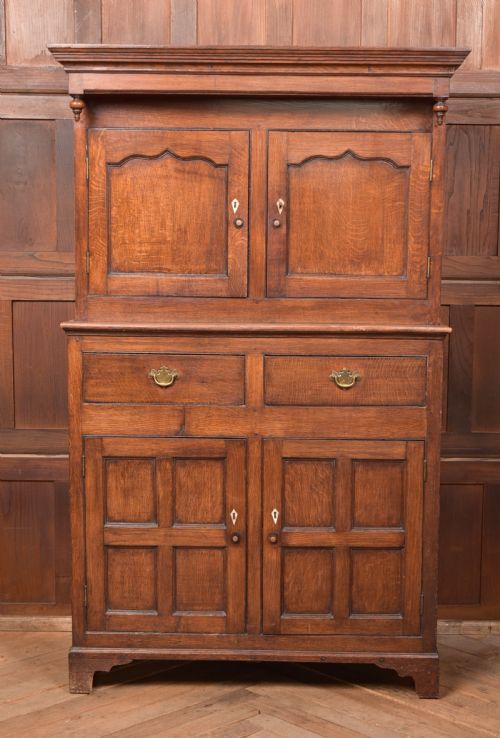
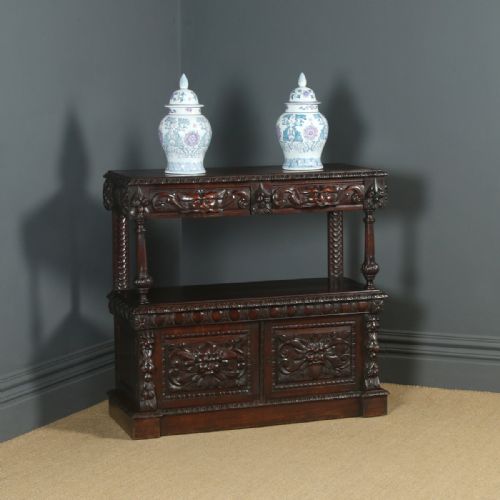
These two tier oak sideboard pieces offer substantial timber construction and shelved display storage, built to last for generations of daily use.
Two Tier Oak Sideboard
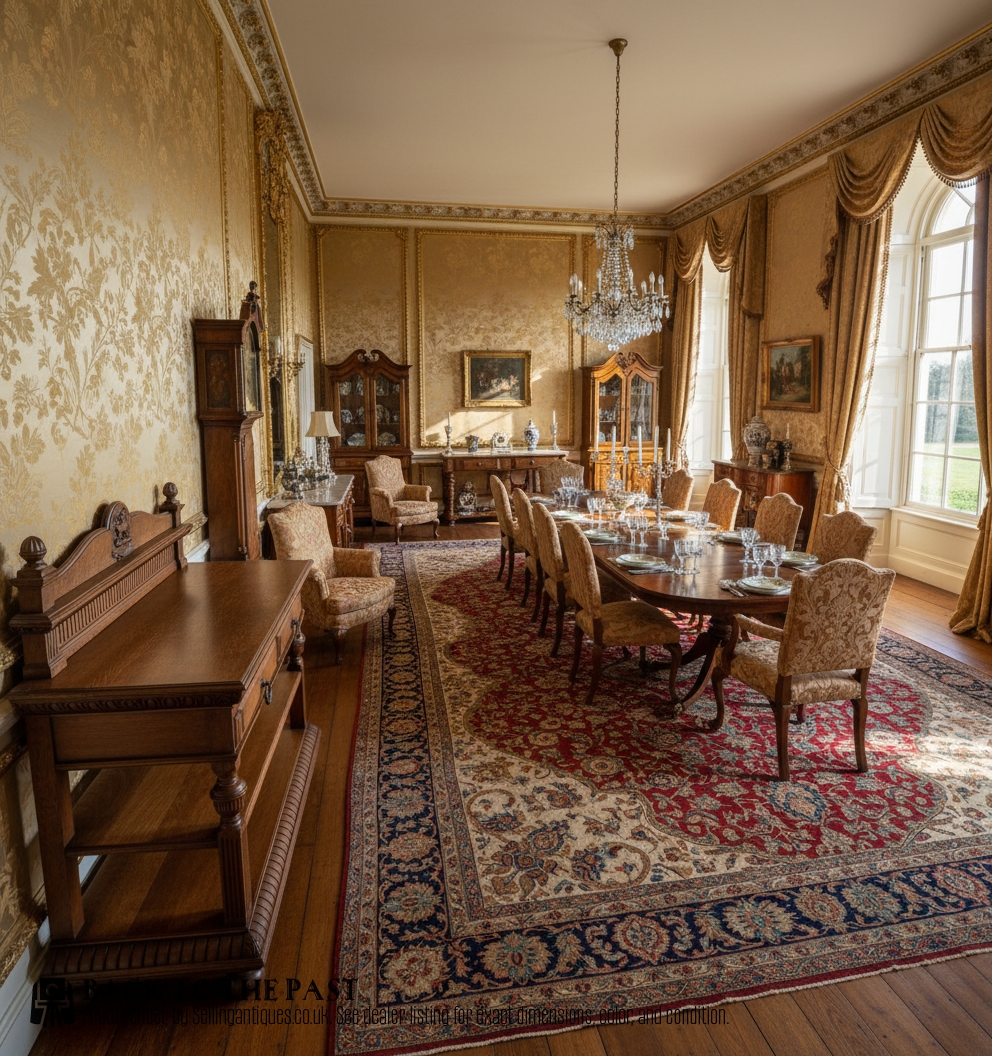
A two tier oak sideboard brings together sturdy timber storage and open surface display across multiple levels, serving as both a functional server and a statement of craft. Buyers searching for a two tier oak sideboard encounter substantial case furniture originating from British, Welsh, Scottish, and continental European workshops.
The pieces appearing on this page span several centuries, reaching back to mid-eighteenth-century Welsh regional forms such as the cwpwrdd deuddarn and extending through Victorian revivals and twentieth-century utility. Forms range from low serving tables and buffet servers to towering two-part court cupboards and panelled buffet a deux corps.
Regional variations shape the character of these items, with Welsh country pieces displaying traditional joinery and vernacular proportions, whilst French provincial examples introduce deep relief carving and architectural cornices. Whether the layout involves an open lower tier for display or enclosed cupboards topped by a serving surface, each version prioritises robust utility.
Assessing quality and proportion
The depth and crispness of hand carving distinguish standard production from exceptional examples, particularly on pieces influenced by Gothic Revival, French Renaissance, or Arts and Crafts movements. Finer specimens exhibit carefully selected timber grain matching across large panel expanses and drawers, rather than erratic board placement.
Structural integrity rests on the preservation of original timber framing and the tightness of joints where the two tiers meet. Altered heights, replaced hardware, and mismatched secondary woods separate workshop-original items from those subjected to later modifications.
Two Tier Oak Sideboard Retail Price Guide 2026
Typical asking prices for two tier oak sideboard among the pieces listed under this phrase on Sellingantiques today, from the lower quarter to the upper quarter. They describe what is for sale here now, not the wider market.
Listings span periods from mid-eighteenth-century Welsh pieces to nineteenth-century Victorian Gothic revivals and early twentieth-century utility oak.
Edwards and Roberts
The Two Tier Oak Sideboard Glossary
- Cwpwrdd Deuddarn
- A traditional Welsh two-tier press cupboard or sideboard featuring enclosed upper and lower compartments. This vernacular form often displays distinctive panel layout and regional carving.
- Buffet a Deux Corps
- A substantial two-section continental storage piece comprising a lower sideboard base beneath an upper cabinet structure. These architectural forms frequently showcase elaborate raised panels and cornice moulding.
- Pollard Oak
- Timber harvested from trees that have been pollarded, producing tightly clustered growth rings and decorative burr patterns. Cabinetmakers utilised these veneers on prominent doors and drawer fronts for visual contrast.
- Court Cupboard
- An antique two-tier storage unit featuring an open or enclosed lower section beneath a recessed upper stage. The upper tier is typically supported on carved columns or bulbous cup-and-cover posts.
- Green Man
- A sculptural architectural motif depicting a human face emerging from or entwined with foliage and vines. This decorative carving appears frequently on nineteenth-century revival buffets and serving tables.
Two Tier Oak Sideboard: Frequently Asked Questions
What is a two tier oak sideboard used for?
These pieces served historically for storing dining silver, serving food during large gatherings, and displaying valued ceramics across their multiple tiers. Today they function effectively in dining rooms, large kitchens, and hallways for general storage and surface display.
The separation between tiers allows for both hidden storage behind panelled doors and open display space for tableware or decorative objects. Their robust timber build ensures they handle everyday domestic loads with ease.
How do I tell an 18th-century piece from a Victorian revival?
Eighteenth-century examples, such as Welsh deuddarns, typically display hand-planed surfaces, vernacular joinery, and patination acquired through centuries of use. Their proportions tend to reflect regional building traditions rather than strict academic styles.
Victorian revival pieces often incorporate heavier machine-sawn elements and deep, highly stylised carving reflecting Gothic or Renaissance tastes. The hardware and interior construction methods generally point towards industrial-era workshop production.
How do I care for antique oak furniture?
Maintain a stable indoor humidity level to prevent the solid oak timbers from drying out, cracking, or warping over time. Keep the furniture away from direct heat sources and strong sunlight that can fade the finish.
Dust regularly with a dry cloth and occasionally apply a quality beeswax to nourish the wood surface and preserve its natural sheen. Avoid silicone-based sprays, which can penetrate the pores and damage the historic polish.
Where does French provincial style differ from Welsh country oak?
French provincial sideboards and buffets frequently feature voluminous fruitwood or oak frames with sweeping cabriole lines, deep fielded panels, and prominent scrolling apron rails. Their decorative vocabulary draws heavily on continental classical motifs.
Welsh country furniture prioritises rectilinear proportions, sturdy pegged joinery, and functional internal shelving layouts suited to rural domestic life. The decorative elements are sparser, focusing instead on the honest display of figured timber.