

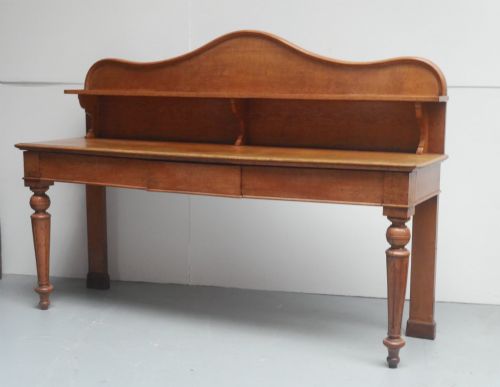


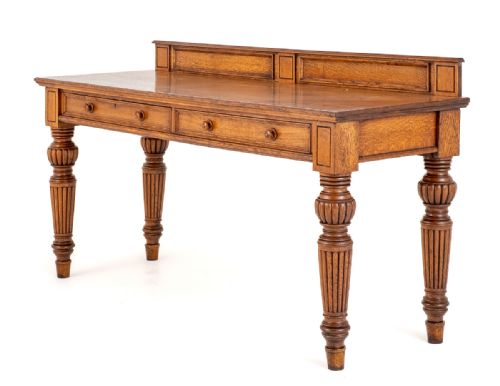


Victorian Oak Serving Sideboard
A victorian oak serving sideboard brings heavy timber and formal utility to a dining room, offering sturdy surface space for food and display.
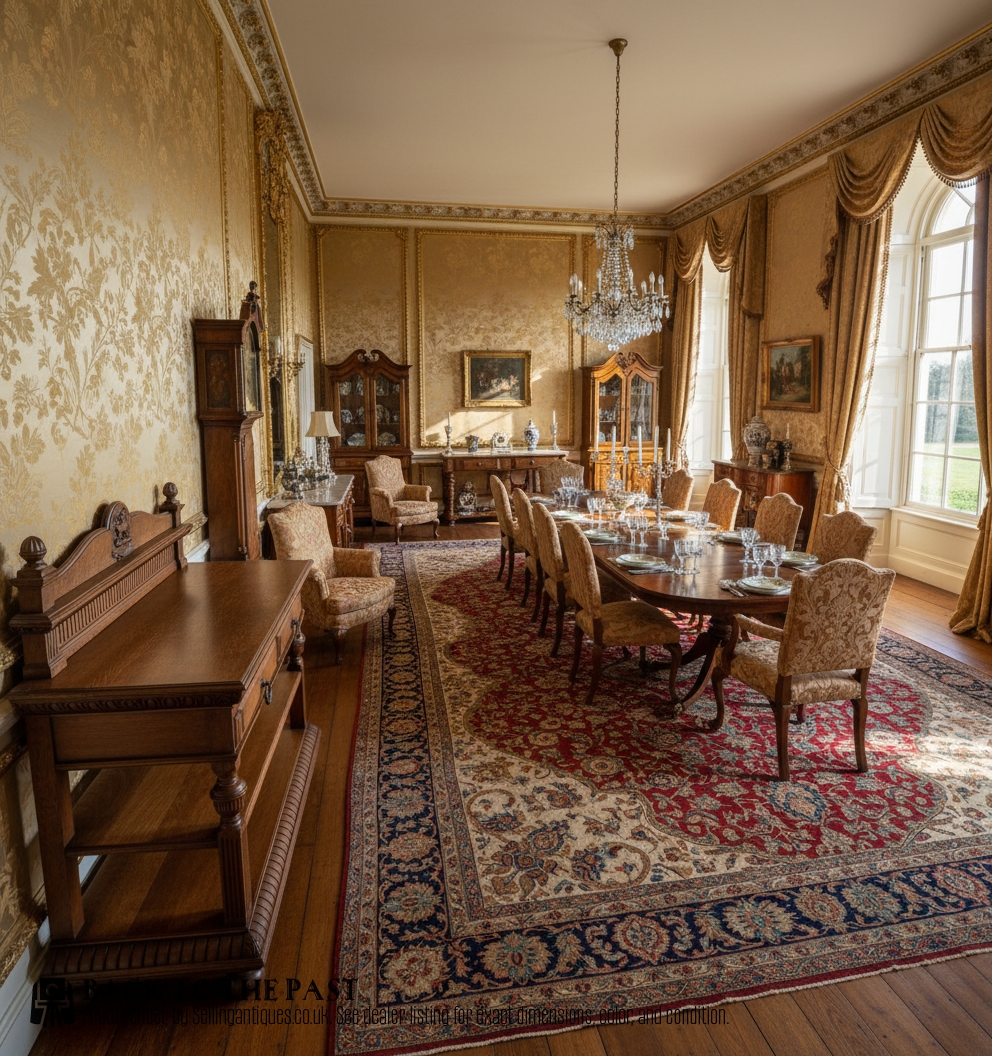
Victorian Oak Serving Sideboard
A victorian oak serving sideboard encompasses heavy serving tables, multi-tier buffets, and servers found across nineteenth-century English country houses. These pieces provide substantial timber construction designed primarily for dining room use and formal service.
The versions most commonly met on this page date from the middle to the late nineteenth century, spanning decades such as eighteen-fifty, eighteen-sixty, and eighteen-eighty. They appear in styles ranging from plain English country house forms to ornate Gothic Revival designs.
Makers and workshops produced these servers in large proportions, often incorporating carved details, tiers, and cupboards. Buyers encounter various formats, including hall serving tables, dumb waiters, and geometric dressers.
Materials and construction
Cabinet makers utilised solid oak, pollard oak, walnut, and ash to build these robust sideboards. These timbers provided the heavy structural integrity required for daily dining room service and large platters.
Construction techniques relied on deep carving and multi-tier assembly, frequently complemented by brass hardware. Workshops shaped the dense grain of the wood into architectural panels, raised edges, and structural supports.
Victorian Oak Serving Sideboard Retail Price Guide 2026
Typical asking prices for victorian oak serving sideboard among the pieces listed under this phrase on Sellingantiques today, from the lower quarter to the upper quarter. They describe what is for sale here now, not the wider market.
Listings feature nineteenth-century items utilising solid oak, pollard oak, walnut, ash, and brass across various Gothic Revival and English Country House styles.
Judging quality in construction and design
Quality separates simple utility furniture from masterwork production through the depth and execution of the carving. Profuse, crisp detailing on solid timber indicates a higher workshop standard than plain, machine-cut surfaces.
The choice of secondary timbers, such as pollard oak or figured walnut veneers applied over solid oak frames, elevates a piece. Heavier gauge brass hardware and stable, multi-tiered structural framing distinguish superior dining room servers.
PHILLIPS BRISTOL
The Victorian Oak Serving Sideboard Glossary
- Buffet
- A piece of dining room furniture used for food service and storage. These often feature multiple tiers or cupboards below the main top surface.
- Gothic Revival
- A nineteenth-century design style inspired by medieval architecture. It incorporates pointed arches, trefoils, and heavy geometric carving into wooden furniture.
- Pollard Oak
- Timber taken from trees that were cut back to promote a dense branch growth, producing a highly figured grain. Cabinet makers used this wood for decorative veneer panels.
- Dumb Waiter
- A tiered serving stand or table used to hold dishes without needing extra servants at the table. These items typically feature graduated shelves supported by turned columns.
Victorian Oak Serving Sideboard: Frequently Asked Questions
What is a serving sideboard?
A serving sideboard is a heavy wooden table or cabinet designed for the dining room. It held dishes and food during large meals.
These pieces provided surfaces for carving meat and displaying silver platters before service.
How do I date a piece?
Dating relies on stylistic clues like Gothic Revival motifs and recorded production decades such as eighteen-fifty to eighteen-eighty. Construction methods and timber choices also point to specific Victorian periods.
Examine the hardware and the depth of the hand carving to place the item within the nineteenth century.
Where were they used?
They stood primarily in large Victorian dining rooms and entrance halls of English country houses. Servants used them to stage meals.
The sturdy oak construction handled the weight of heavy ceramic plates and silver dishes.
How do I clean oak furniture?
Maintenance requires gentle dusting with a dry or slightly damp cloth to protect the nineteenth-century finish. Avoid harsh chemical polishes that strip the old surface.
Applying a traditional beeswax helps nourish dry oak and preserves the natural grain.