



Barley Twist Server
A barley twist server is a serving piece defined by its spiralled turned wooden supports, offering both practical storage and traditional presence for a dining room.
Barley Twist Server
A barley twist server encompasses a variety of serving furniture including sideboards, side tables, buffets, and cabinets on stands. When searching for a barley twist server, buyers typically encounter pieces originating from the nineteenth century, the Edwardian era, and the nineteen-twenties and nineteen-thirties.
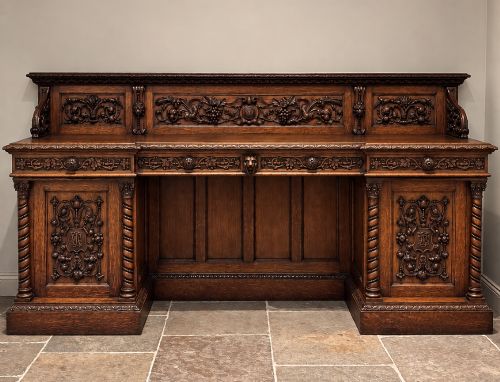
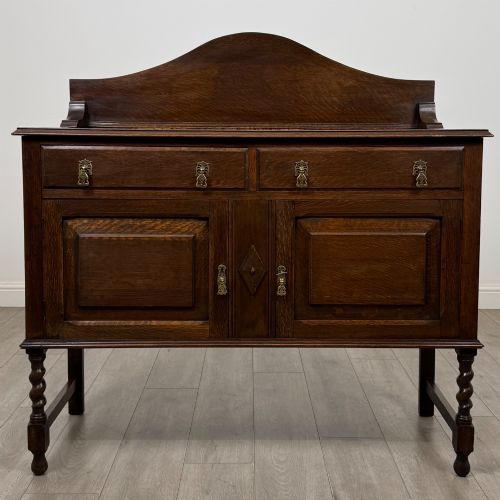
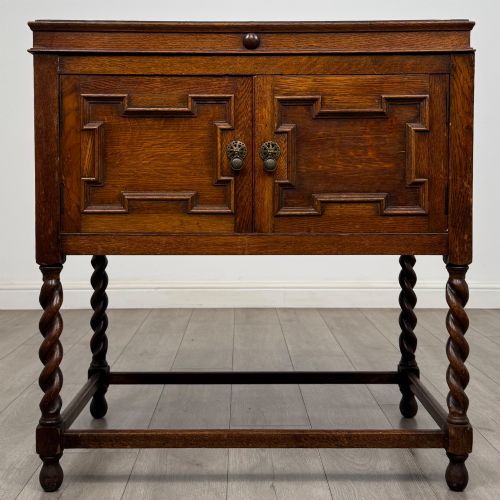
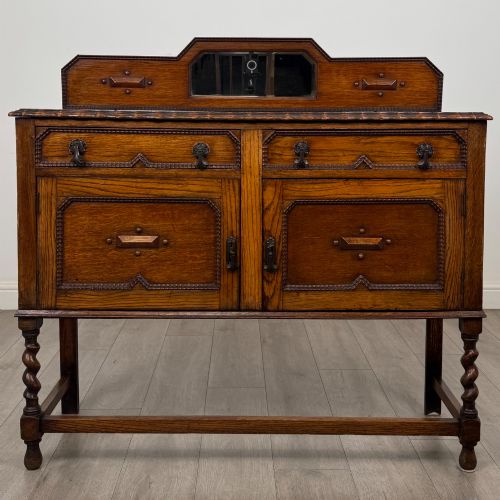
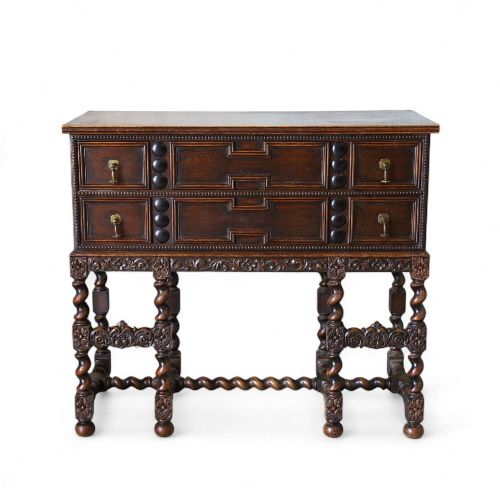
The dominant forms on this page include oak and mahogany sideboards, cabinets, and console tables featuring distinctive turned supports. Stylistic influences span Jacobean revival, Carolean revival, Flemish Renaissance revival, and Victorian designs.
These servers serve as dining room or hallway storage pieces, combining surface display space with cupboards or drawers beneath. The character of each piece derives directly from the period of its manufacture, whether heavy Victorian carving or simpler Edwardian golden oak.
Materials and construction
Solid and veneered timbers form the structural core of these pieces, with oak and mahogany appearing most frequently alongside walnut and burr walnut. Woodworkers shaped the signature twist supports using manual turning lathes and hand-chisels to achieve the crisp spiralling profiles.
Decorative elements rely heavily upon hand-carved motifs, including lion masks, green man carvings, and geometric panels applied to drawer fronts and door frames. Brass hardware such as handles, hinges, and lock escutcheons finish the construction of the larger sideboards and cabinets.
Forms range from compact three-drawer side tables to large mirrorback sideboards and double bow-front cocktail cabinets.
Evaluating quality and craftsmanship
The distinction between standard examples and finer items rests upon the depth and precision of the wood carving and the execution of the turned barley twists. Sharply defined spirals and deeply undercut foliage indicate superior workshop standards compared to softer, shallower machine-cut details.
Timber selection also dictates overall grade, with heavily figured burr walnut, rich golden oak, and well-grained mahogany representing the higher end of the range. Original brass fittings, sound structural joinery, and well-fitted drawers further separate standard production items from exceptional cabinetwork.
The Barley Twist Server Glossary
- Barley twist
- A type of turning where a piece of wood is shaped into a continuous spiral resembling a stalk of barley. This decorative column form appears on table legs, sideboard supports, and structural framing.
- Chiffonier
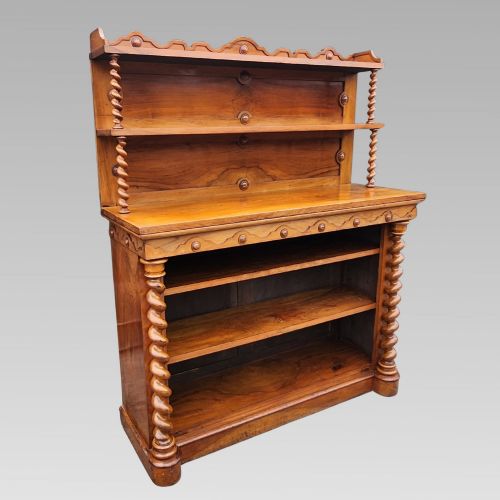
- A compact wooden sideboard or serving cabinet developed during the nineteenth century, often featuring a raised back shelf or mirror. These pieces provide enclosed cupboard storage combined with a top surface for serving food or displaying items.
- Carolean revival
- A nineteenth-century and twentieth-century design style emulating the exuberant furnishings of the seventeenth-century reign of King Charles the Second. Pieces in this manner frequently utilise rich carved ornamentation and barley twist members.
- Burr walnut
- A specialised wood veneer taken from the growth growths or burls of walnut trees, prized for its swirling, highly figured grain patterns. Cabinetmakers applied this veneer to prominent surfaces such as cabinet doors and drawer fronts.
- Flemish Renaissance revival
- An architectural and furniture style drawing upon sixteenth-century Flemish design, characterised by robust proportions, figural carving, and heavy mouldings. Such items often incorporate bold lion masks and architectural panels.
Barley Twist Server: Frequently Asked Questions
What is a barley twist server?
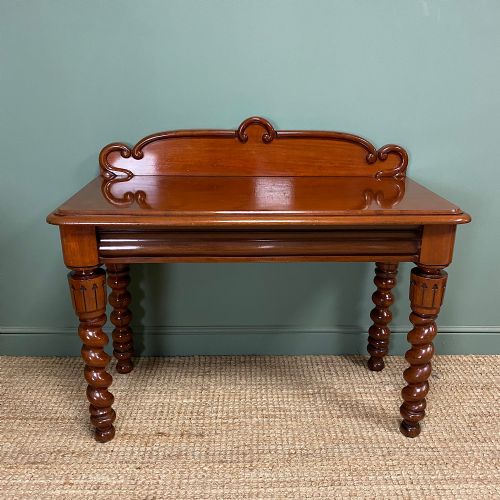
A barley twist server is a serving piece such as a sideboard, buffet, or side table distinguished by spiralled turned wooden legs or supports. These items provide surface space for serving alongside enclosed storage.
They emerged strongly during revival periods drawing on seventeenth-century aesthetics, appearing frequently in oak and mahogany across nineteenth and twentieth-century British and European furniture.
How do I date a barley twist server?
Dating relies upon examining the timber selection, construction methods, and stylistic revival influences present in the piece. Heavy carved oak often points toward Victorian or Edwardian revivalism, whilst lighter golden tones or specific structural cues suggest later periods.
Secondary woods inside drawers and the style of hinges and handles also provide reliable indicators of whether a piece dates to the mid-nineteenth century or the interwar decades.
Where should I place a server in my home?
These servers fit naturally into dining rooms to hold tableware, linens, or serving dishes while providing a surface for food presentation. They also function effectively in hallways or living spaces as console tables or side cabinets.
The distinct turned supports and rich wood tones allow the furniture to serve as a strong focal point against plain walls.
What wood types are most common?
Oak is the predominant timber found on these pieces, appearing in dark finishes, golden tones, and unpolished surfaces. Mahogany and walnut, including figured burr walnut veneers, also feature prominently across the various sideboards and tables.
Brass hardware frequently accompanies these woods, adding metallic contrast to the drawer pulls and door escutcheons.