



Oak Open Shelf Sideboard
These oak open shelf sideboard designs bridge storage and display, bringing solid timber work into everyday rooms.
Oak Open Shelf Sideboard
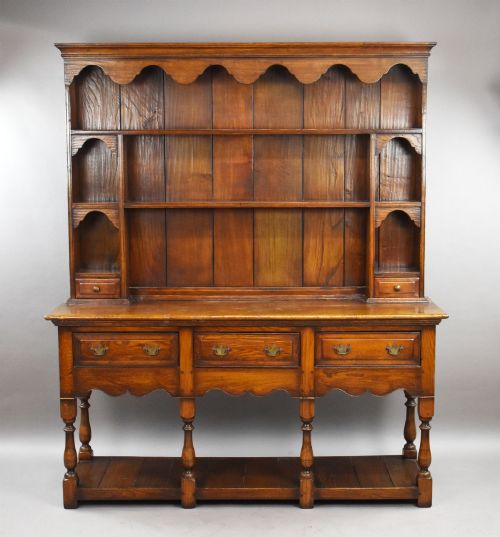
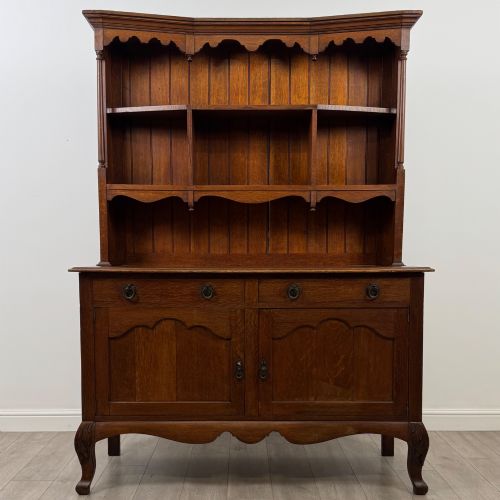
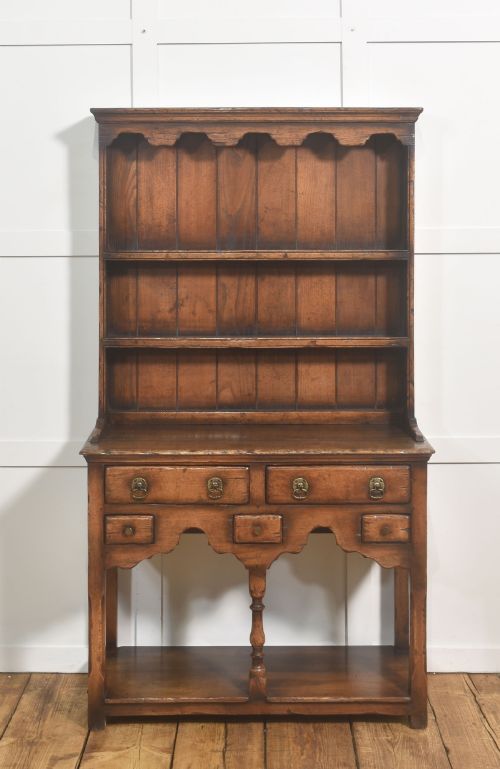
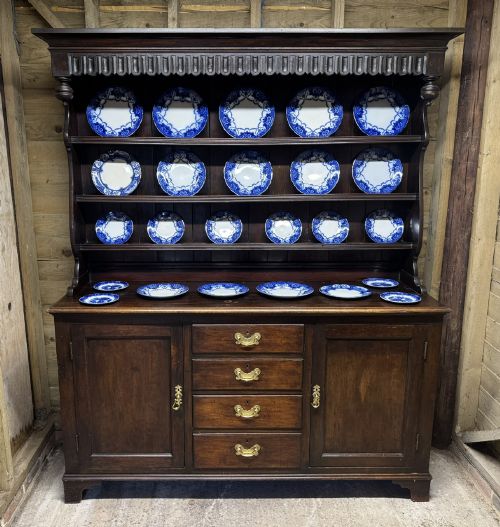
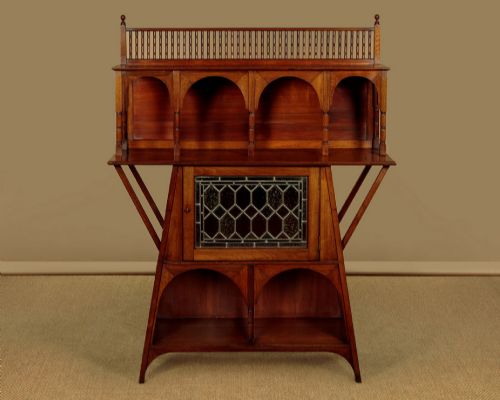
An oak open shelf sideboard combines a low serving base with upper display tiers, drawing from traditions of Welsh dressers, country buffets and arts and crafts cabinets. These pieces serve primarily to store dining ware while exhibiting ceramics or silver on open timber ledges.
Most examples found here date from the eighteenth century through the Edwardian period and the early nineteen-tens, reflecting regional British craftsmanship alongside continental and arts and crafts workshops. Forms range from compact cottage dressers with pot boards to grander multi-part display cabinets.
The dominant material across these listings is solid oak, often paired with brass hardware, glass panels and occasionally burr walnut or elm highlights. Buyers encounter everything from rustic country styles to formal Georgian and gothic revival interpretations.
Materials and construction methods
Makers utilised solid oak for the primary carcass, shelves and structural panels, frequently selecting quartersawn timber to reveal distinct medullary rays. Secondary timbers like elm or multi-wood veneers appear in specific decorative sections.
Construction relied on traditional joinery techniques such as mortise and tenon frames, hand-cut dovetails for drawer boxes and pegged joints. Iron hinges, brass drop handles and leaded glass elements complete the structural assembly.
Oak Open Shelf Sideboard Retail Price Guide 2026
Typical asking prices for oak open shelf sideboard among the pieces listed under this phrase on Sellingantiques today, from the lower quarter to the upper quarter. They describe what is for sale here now, not the wider market.
Some nineteenth-century makers incorporated secret compartments behind carved panels, hiding small treasures away from prying eyes.
Evaluating craftsmanship and proportion
Superior pieces display thoughtful integration between the lower sideboard base and the upper plate rack, maintaining balanced proportions and harmonious timber selection throughout. Lesser examples show mismatched wood grains or awkward scaling between components.
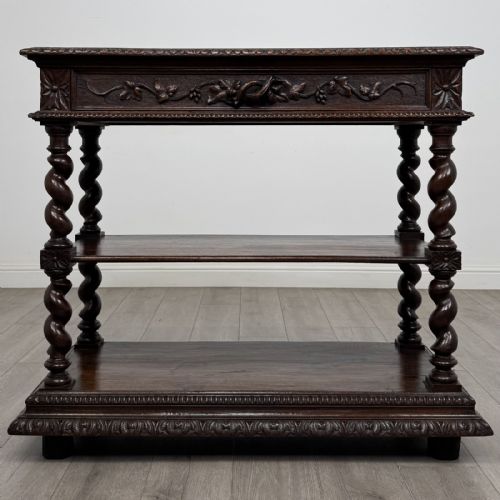
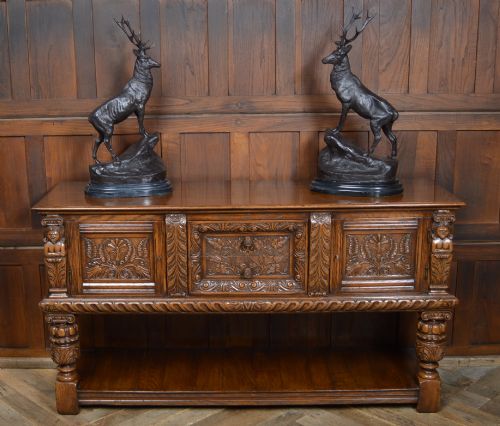
The refinement of carved details, such as barley twist supports or applied ornamentation, distinguishes standard workshop production from distinctive maker pieces. Original hardware, undisturbed surface patination and tight joinery elevate the standing of any piece.
Liberty and Co.·Krieger of Paris
The Oak Open Shelf Sideboard Glossary
- Pot board
- A low slatted or solid lower shelf positioned between the legs of a dresser, traditionally used for storing pots and pans.
- Plate rack
- The upper tiered framework featuring open shelves and plate grooves designed for displaying ceramic tableware.
- Barley twist
- A type of turning shaped to resemble a spiral rope, commonly found on the legs and upright supports of seventeenth and nineteenth century furniture.
- Quartersawn oak
- Timber cut radially from the log, producing a stable board with distinctive figuring known as medullary rays.
Oak Open Shelf Sideboard: Frequently Asked Questions
What is an oak open shelf sideboard?
An oak open shelf sideboard is a dual-purpose furniture form that combines a lower storage cabinet or buffet base with upper open display shelving for ceramics and glassware.
These pieces draw heavily from British country furniture traditions, particularly Welsh dressers and regional sideboards made from solid oak.
How do I date an antique oak dresser?
Dating relies on examining construction methods, tool marks, hardware styles and the overall proportion of the piece. Hand-cut dovetails, pegged joints and timber selection provide key clues to whether a piece originates in the eighteenth, nineteenth or early twentieth century.
Stylistic shifts, such as arts and crafts simplicity or victorian carving, further help narrow down the period of manufacture.
How do I care for antique oak furniture?
Antique oak benefits from stable indoor humidity levels away from direct heat sources and strong sunlight, which can dry out and split the timber. Regular dusting with a dry, soft cloth and occasional application of traditional beeswax preserves the natural finish and surface patina.
Avoid silicone-based sprays, as they can build up on the wood and damage the historic polish over time.
Are these pieces suitable for modern kitchens?
These sideboards provide substantial storage and display capacity that suits contemporary dining rooms, large kitchens and open-plan living spaces. The open shelves allow for everyday practical use while exhibiting tableware and decorative items.
Their sturdy timber construction ensures they handle daily utility just as well as they did in historic homes.