
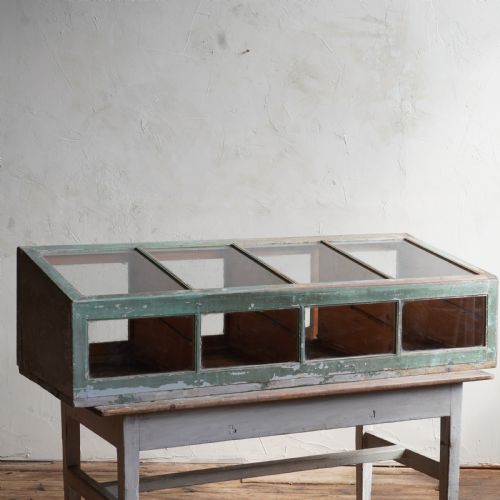


Countertop Glass Case
A countertop glass case turns small treasures and daily curiosities into a proper exhibition, sitting squarely on a shop counter or side table.
Countertop Glass Case
When you search for a countertop glass case, you encounter functional shopfittings and display boxes designed to showcase merchandise or private collections at eye level. These pieces span the Victorian, Edwardian, and Art Deco periods, drawing on commercial origins from the late nineteenth and early twentieth centuries.
You are most likely to meet oak and mahogany table top cabinets, often bearing the original makers' names or later sign-written advertising for confectionery and household goods. Formats range from simple glazed boxes to compartmented display cabinets featuring fitted drawers and brass framing.
The enduring appeal lies in the clear visibility afforded by glass panels combined with sturdy timber frames. Whether housed in a domestic hallway or a retail setting, a countertop glass case offers compact storage that keeps dust away while maintaining a complete view of the contents.
Materials and construction
Makers built these frames primarily from dense hardwoods like mahogany and oak, supplemented by ebonised finishes, brass structures, and occasional metal framing. Timber sections were joined with traditional cabinet-making methods to support heavy glass panels and withstand frequent commercial handling.
Glazing forms the primary surface area, secured within wooden rebates or metal channels to provide all-around visibility for the objects displayed inside. Interiors frequently incorporate mirror glass backs, wooden shelving, and linings of felt or velvet to cushion delicate items.
Sign-writing and hand-painted advertising lettering appear directly on the glass or timber fascias, applied originally for product promotion or added later by merchants. Brass hardware such as hinges, latches, and pulls complete the construction, offering durability and a finished appearance.
Listings feature pieces spanning from the 1870s through the 1930s, constructed predominantly in oak and mahogany with glass and brass elements.
What separates better examples
The distinction between standard utility boxes and finer display pieces rests in the selection of timbers and the sophistication of the joinery. Superior cabinets utilise dense, well-figured mahogany or quarter-sawn oak with tight, precise joints that maintain structural integrity over decades of use.
Original hardware, including maker-stamped brass fittings, lock mechanisms, and intact mirror plates, elevates a piece above those altered or repaired with modern replacements. The presence of authentic period glass and crisp, period lettering adds considerable character and integrity.
Proportion and internal arrangement also separate the ordinary from the exceptional. Well-designed interiors feature adjustable shelving, working drawers with neat dovetails, and balanced proportions that sit comfortably on a counter without appearing heavy.
John Stow Ltd of Bradford·F. Sage & Co. London
The Countertop Glass Case Glossary
- Ebonised
- Wood treated with a dark stain or finish to imitate ebony. This technique was popular in the late nineteenth and early twentieth centuries for a sleek, formal appearance.
- Shopfitting
- The trade and practice of manufacturing and installing fixtures and fittings for retail premises. These cabinets were originally produced as commercial shopfittings before entering the domestic market.
- Sign-written
- Lettering applied by hand using traditional sign-writing brushes and paint. Many surviving cabinets display original or later advertising for confectionery and grocery brands.
- Rebate
- A recess or groove cut into the edge of a timber piece to hold a glass panel flush. This joinery technique ensures a secure fit without visible exterior fixings.
- Quarter-sawn
- Timber cut radially from the growth rings, producing a stable board with a characteristic striped grain pattern. This method was frequently employed in quality oak cabinet-making.
Countertop Glass Case: Frequently Asked Questions
How were countertop glass cases used originally?
Merchants placed these cabinets on shop counters to display small, high-value goods like jewellery, tobacco, and confectionery directly to customers. The glass kept items clean and secure while allowing shoppers to inspect the merchandise closely.
Over time, many of these commercial fittings found their way into domestic spaces where collectors use them to exhibit small items, pocket watches, and curiosities.
How do I date a countertop glass case?
Dating relies on observing the timber types, construction methods, and hardware style. Victorian examples often feature solid mahogany and hand-cut dovetails, while 1920s pieces may incorporate brass framing or Art Deco geometry.
Makers' plates, patent numbers, and authentic sign-written advertising provide further clues to the exact decade of manufacture.
Are the advertising signs on these cabinets original?
Some cabinets retain their factory-original advertising for brands like Fry's or Rowntree's, while others feature later sign-written decoration applied by subsequent merchants or collectors.
Both original and later decoration contribute to the visual history of the piece, though factory-original applications carry greater historical weight.
Can I place these cabinets on standard furniture?
These pieces are designed specifically to sit atop counters, sideboards, and tables, utilising a compact footprint that requires minimal floor space.
Ensure the supporting surface is level and deep enough to bear the weight of the timber and glass structure safely.