





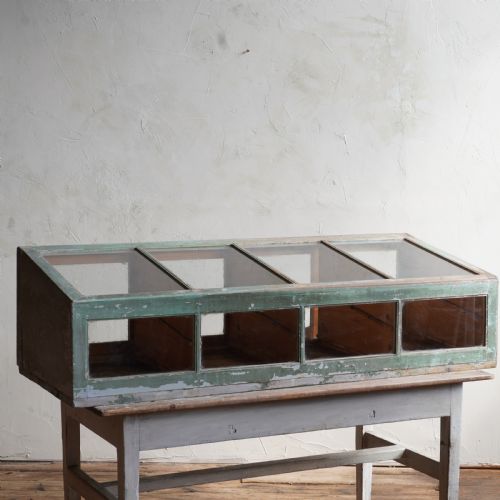


Glazed Counter Cabinet
A glazed counter cabinet brings shop-floor heritage into a home, offering a clear view of small collections behind glass.

Glazed Counter Cabinet
A glazed counter cabinet is a display piece designed originally for retail environments, appearing on shop counters or standing directly on the floor. These items emerge from various periods including the Victorian era, the Edwardian years, and the 1920s or 1930s.
The most common formats on this page are compact tabletops and countertop display cases alongside larger freestanding shop counters. Many examples carry commercial identities such as Fry's Chocolate, Rowntree's, or chemist branding.
Construction materials span mahogany, oak, and cedar paired with glass and sometimes mirrored interiors or velvet linings. Styles range from Victorian commercial and Edwardian to Art Deco and rustic industrial designs.
Materials and construction
Makers utilised timber frames of mahogany, oak, or ebonized wood to build the structural housing for these display units. Glass panels form the viewing windows, sometimes backed by mirrors to reflect light through the interior.
Hardware details incorporate brass fixtures and metal elements alongside wood and velvet linings within the display space. Certain pieces utilise painted finishes, gold leaf, or applied sign-written decoration for commercial advertising.
Glazed Counter Cabinet Retail Price Guide 2026
Typical asking prices for glazed counter cabinet among the pieces listed under this phrase on Sellingantiques today, from the lower quarter to the upper quarter. They describe what is for sale here now, not the wider market.
Listings span from the 1850s to the 1930s, featuring oak, mahogany, and cedar with glass and mirrored elements.
Assessing quality
Quality rests in the timber selection and the integrity of the original framing, where dense hardwoods like mahogany hold superior form compared to softer alternatives. The clarity and thickness of the glass panes also distinguish finer examples from standard commercial units.
Original commercial lettering, intact mirror backs, and functioning brass hardware elevate the character of a piece. Retaining the original finish or authentic painted surfaces matters more than modern restoration work.
F. Sage & Co.·E. Pollard & Co. Ltd.
The Glazed Counter Cabinet Glossary
- Vitrine
- A glass display cabinet used for exhibiting objects of porcelain or curiosities. These cases prioritise visible surface area through extensive use of glass panels.
- Haberdashery cabinet
- A retail storage unit featuring multiple small drawers or compartments with glass fronts. These were utilised in shops for sorting and displaying small sewing goods.
- Ebonized
- Timber treated with a chemical stain or dark finish to imitate ebony. This dark treatment was common on Victorian and later commercial display pieces.
- Bow fronted
- A cabinet featuring a rounded, convex front profile. This curved glass construction allowed better viewing angles for customers in retail shops.
- Countertop display cabinet
- A smaller showcase built to sit upon a shop counter for eye-level customer interaction. These units protected small confectionary or pharmaceutical goods.
Glazed Counter Cabinet: Frequently Asked Questions
What were glazed counter cabinets used for?
These cabinets served in nineteenth and twentieth-century shops to showcase and protect small retail goods. Merchants placed them on counters so customers could view items like chocolate, tea, and pharmacy supplies.
Today, the same enclosed shelving suits domestic displays of small collections, ceramics, or curiosities. The glass protection keeps dust away while maintaining full visibility from the outside.
How do I date a shop display cabinet?
Dating relies on observing the timber types, construction methods, and any commercial branding present on the frame. Victorian and Edwardian examples often feature solid mahogany or oak with traditional joinery.
Later pieces from the 1920s and 1930s introduce Art Deco geometry, ebonized finishes, or specific corporate advertising for brands like Rowntree's and Fry's. Hardware such as brass hinges and catches also offers clues to the decade of manufacture.
Can I use a counter cabinet in a modern kitchen?
These cabinets adapt well to domestic spaces, functioning effectively on kitchen worktops or sideboards. Their shallow depth allows them to sit comfortably without occupying excessive floor or surface room.
They provide practical storage for glassware, spices, or tableware while adding historical character to a room. The glass panels keep everyday items visible yet protected from grease and dust.
What is an advertising display cabinet?
Advertising display cabinets are specialised retail cases featuring painted or sign-written branding for specific historical companies. Names like Cadbury, Terry's of York, and Kemps Pharmacy frequently appear on these pieces.
These commercial markings were applied to promote confectionery, cocoa, or chemist goods directly at the point of sale. Surviving examples retain this original signage as an integral part of their heritage.