
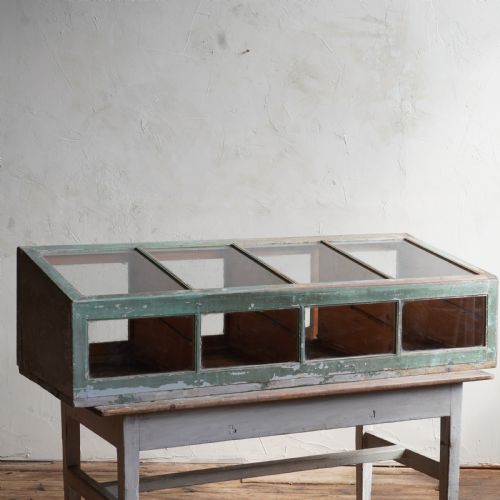


Vintage Countertop Display
A vintage countertop display brings the character of early twentieth-century commerce into a modern room, offering glass and timber cases built to showcase small wares.
Vintage Countertop Display
When you search for a vintage countertop display, you are looking at utilitarian shop fittings created for Victorian and Edwardian merchants, alongside interwar commercial designs from the 1920s and 1930s. These pieces include glazed haberdashery cabinets, tabletop display cases, apothecary drawers, and specialised showcases made to market chocolate, sewing cottons, and perfume.
The version you are most likely to meet on this page is an oak or mahogany countertop cabinet featuring glass panels and hinged doors, reflecting the practical needs of past shopkeepers. Alongside cabinets, the selection includes brass hat stands, jewellery plateaus, paper roll dispensers, and advertising display items tied to historic brands.
What varies in quality
The distinction between standard commercial pieces and superior examples often rests on the integrity of the original materials and the sophistication of the hardware. Cabinets possessing heavy brass hinges, original bevelled glass panes, and intact manufacturer plaques command greater appreciation than those altered with replacement timber or modern glass.
Original advertising signs and period lettering painted onto the wood or glass add distinct commercial value, whereas later or renewed sign-writing alters the historical character. The presence of functional original drawers, felt linings, and specialised internal shelving separates utilitarian boxes from finely appointed jeweller and apothecary fittings.
A sweet shop display cabinet once held chocolates for eager Edwardian children.
Chadwick’s Sewing Cottons·Manoah Rhodes & Sons Ltd·F. Sage & Co. London·Rowntree’s·Fry’s·Cadburys
The Vintage Countertop Display Glossary
- Haberdashery cabinet
- A multi-drawer shop unit originally designed to sort ribbons, buttons, and sewing notions behind glass or timber drawer fronts.
- Apothecary cabinet
- A compact storage case featuring small compartments or drawers intended for medicinal herbs, powders, and pharmacy supplies.
- Plateau mirror
- A mirrored tabletop plateau utilised by jewellers to reflect light upwards onto displayed silver and precious items.
- Sign-written
- Lettering painted by hand onto glass or wood panels to advertise commercial products and shop names to passing customers.
- Ebonised
- Wood treated with chemical stains or dark finishes to imitate the dense, black appearance of ebony.
Vintage Countertop Display: Frequently Asked Questions
What were countertop display cabinets used for originally?
Merchants placed these glass-fronted cases on shop counters to protect small, high-value goods like sewing threads, chocolates, and jewellery from dust and handling while keeping them visible to buyers.
They allowed customers to inspect items closely before purchasing, serving as both storage and point-of-sale advertising for popular brands.
How do I date a vintage shop display?
Dating relies on examining the timber types, construction methods, and hardware styles, alongside any manufacturer stamps or historic brand advertising present on the piece.
Victorian and Edwardian examples typically feature heavier solid oak or mahogany frames, while 1920s and 1930s pieces often show Art Deco geometric lines or ebonised finishes.
Are the advertising signs on these cabinets original?
Some cabinets retain their original hand sign-written lettering applied for historic brands like Fry's, Rowntree's, or Cadbury, while others feature later decorative sign-writing added during restoration.
Close inspection of the paint surface and underlying wear helps distinguish factory-period advertising from subsequent decorative updates.
How should I clean a glass and timber display case?
Dust timber frames gently with a dry, soft cloth and avoid harsh chemical sprays that can strip historic wax or varnish finishes from the wood.
Glass panels can be wiped with standard glass cleaner applied to a cloth first rather than sprayed directly, preventing moisture from seeping into old joints.