







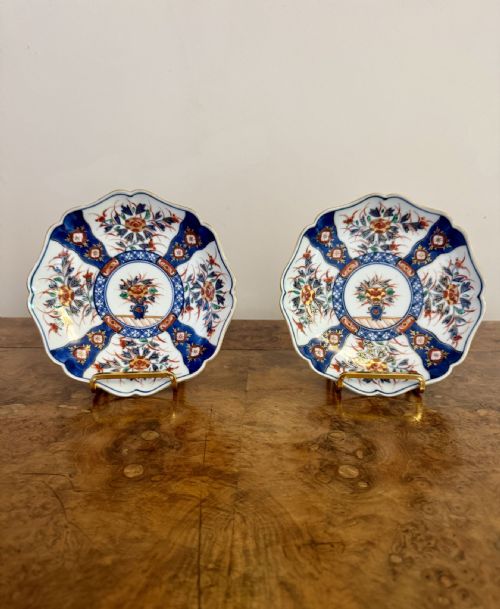
Cobalt Imari Display Dish
A cobalt imari display dish brings rich blue and orange palettes together in porcelain chargers and plates that catch the eye on any wall or cabinet.
Cobalt Imari Display Dish
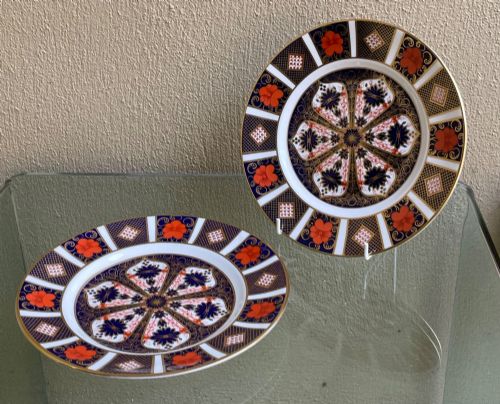
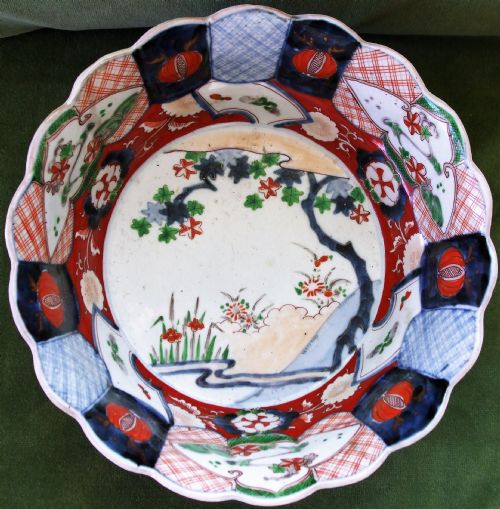
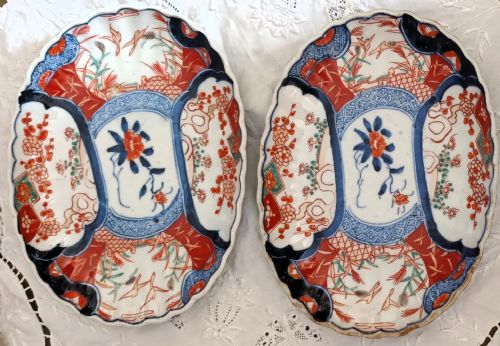
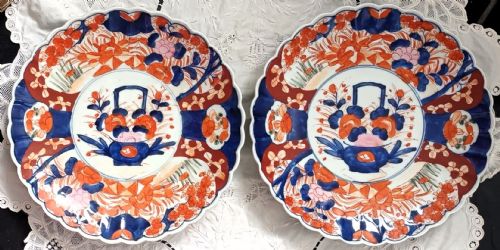
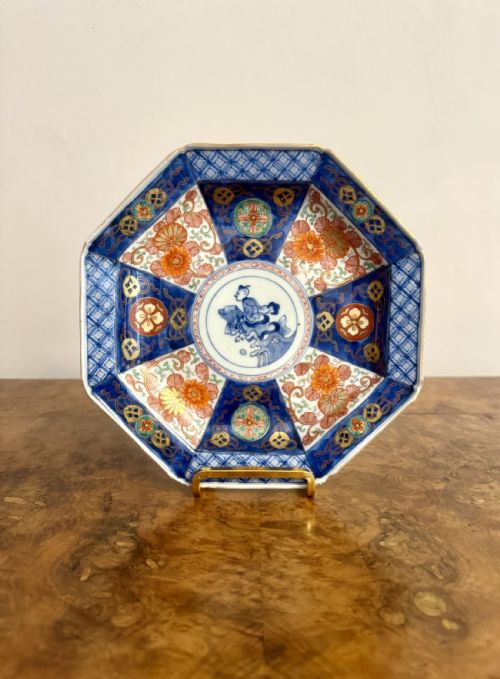
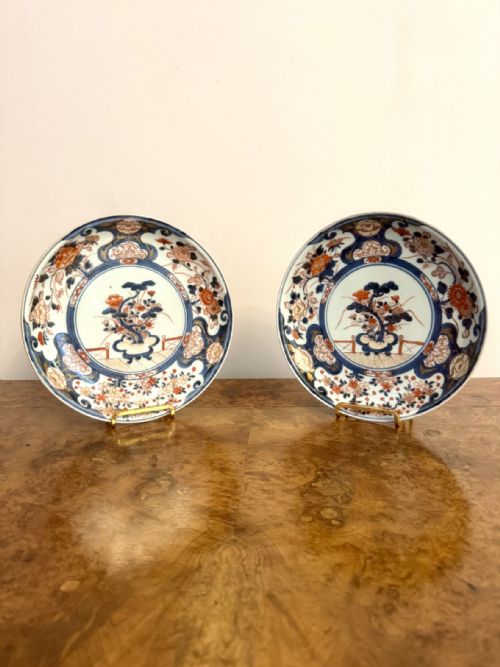
A cobalt imari display dish represents a tradition of ceramic making that spans Japanese export wares and British bone china interpretations. The pieces you encounter most often on this page are Japanese chargers, plates, and bowls originating from the Meiji period and the nineteenth century, alongside later twentieth century British examples such as Royal Crown Derby.
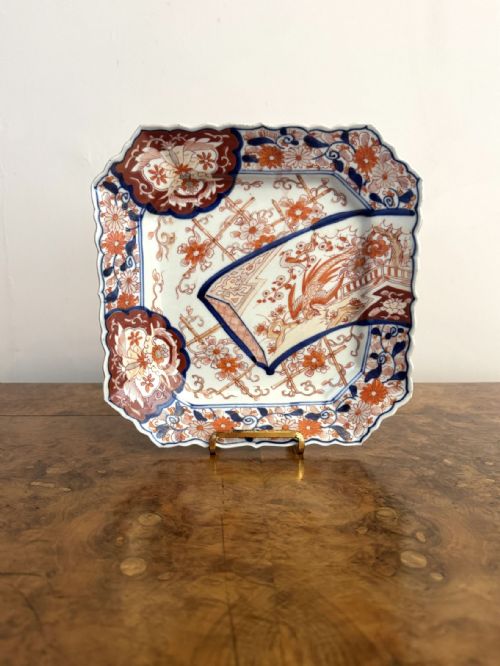
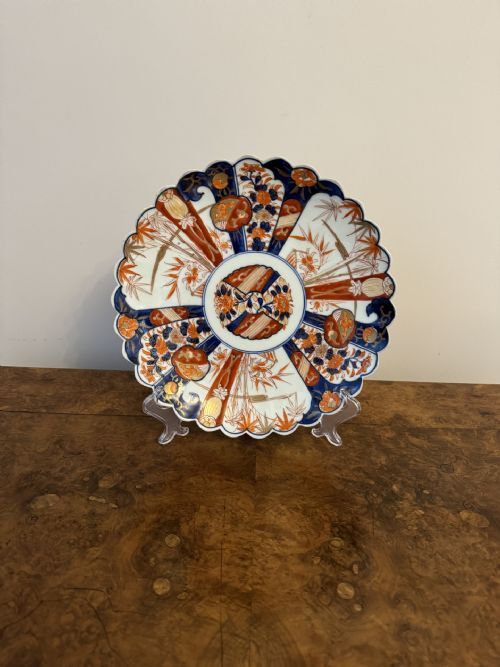
Makers shaped these items into various silhouettes, ranging from standard circular chargers to scalloped edges, hexagonal forms, and square plates. They served primarily for decorative display in homes, utilising bold colour schemes to draw attention across a room.
Assessing quality in imari ceramics
Quality rests in the crispness of the hand-painted brushwork and the precision of the cobalt blue tones beneath the glaze. Superior examples display finely detailed motifs of exotic birds, figures, or floral panels without blurring or pooling in the pigment.
The weight and purity of the porcelain or bone china body also dictate the standard of the piece, alongside the careful application of gold leaf and overglaze enamel details. Form variation, such as cleanly cut scalloped edges or well-defined hexagonal and square shapes, separates standard production items from finer studio output.
Materials recorded across the inventory include porcelain, bone china, enamel, glaze, gilt, and gold leaf.
Royal Crown Derby
The Cobalt Imari Display Dish Glossary
- Imari
- A style of Japanese porcelain originating from the town of Arita, characterised by a palette of cobalt blue, iron red, and gold. This decorative scheme became widely imitated in Europe during later centuries.
- Charger
- A large decorative plate or dish intended for display on a sideboard or wall rather than for serving food at the table. These items measure significantly larger than standard dining plates.
- Meiji Period
- The era in Japanese history spanning from 1868 to 1912, noted for a surge in export ceramics destined for Western markets. Pieces from this time often exhibit elaborate hand-painted decoration.
- Overglaze Enamel
- Pigments applied on top of the fired glaze, requiring a subsequent lower-temperature firing to fuse the colours to the ceramic surface. This technique allows for a broader range of bright hues.
- Bone China
- A type of soft-paste porcelain containing bone ash, developed in Britain to produce a strong, translucent ceramic body. It provides a smooth white ground for cobalt and enamel painting.
Cobalt Imari Display Dish: Frequently Asked Questions
What is a cobalt imari display dish used for?
These items function primarily as decorative art objects rather than functional tableware. Owners place them on walls using plate hangers or display them upright on cabinets and sideboards.
The striking contrast of cobalt blue and iron red makes them focal points in traditional and eclectic interiors alike.
How do you date a Japanese imari charger?
Dating relies on examining the characteristics of the porcelain body, the style of the hand-painted motifs, and the depth of the cobalt blue. Nineteenth-century and Meiji period pieces often exhibit heavier potting and distinct enamel textures.
Comparing the foot ring and glaze characteristics with known export examples helps narrow down the production era.
Are imari plates Japanese or British?
The style originates from Japan, where kilns in Arita produced porcelain for export starting in the Edo period. The tradition continued through the Meiji period with substantial output for international buyers.
At the same time, British potteries such as Royal Crown Derby adopted the aesthetic to create their own bone china versions.
How should I clean antique porcelain?
Cleaning requires only gentle dusting with a soft, dry cloth to prevent accumulation in the textured enamel areas. Avoid soaking or using abrasive detergents that might harm the overglaze enamels and gold leaf.
Handle the pieces by the body rather than the rim, especially on scalloped or thin-walled examples.