

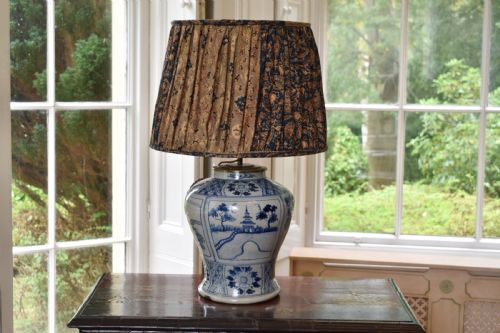
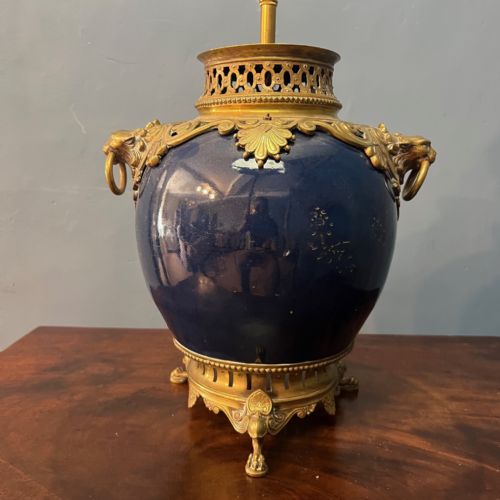
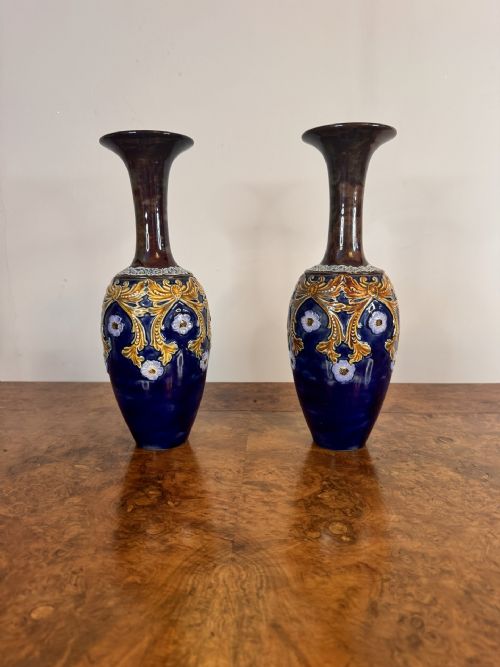
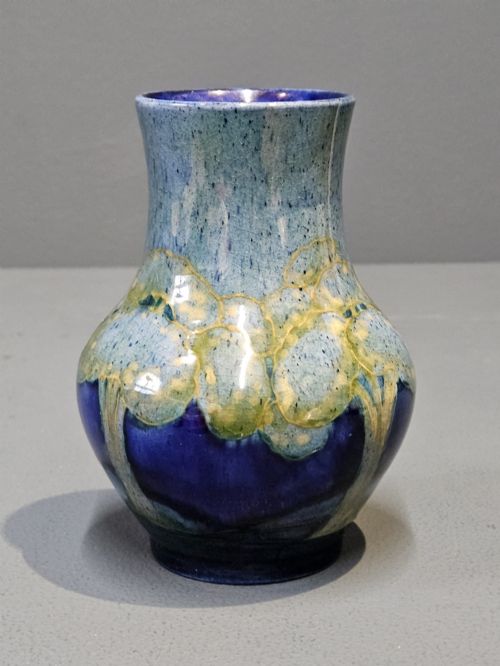





Cobalt Glaze Vase
Cobalt glaze vase examples bring intense mineral blue colour to ceramics across centuries, spanning earthenware, stoneware and porcelain.
Cobalt Glaze Vase
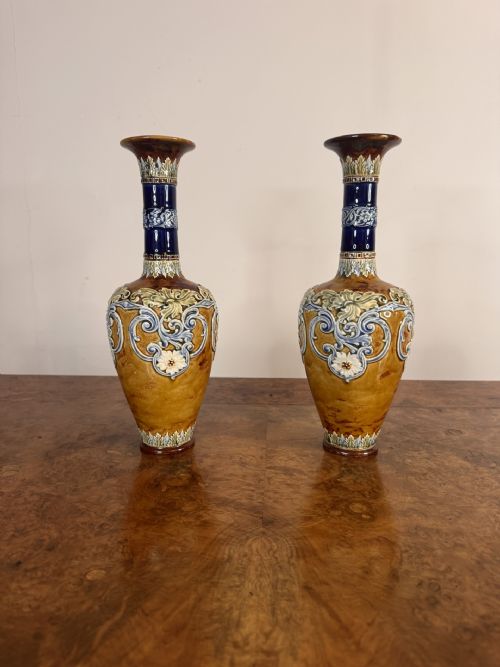
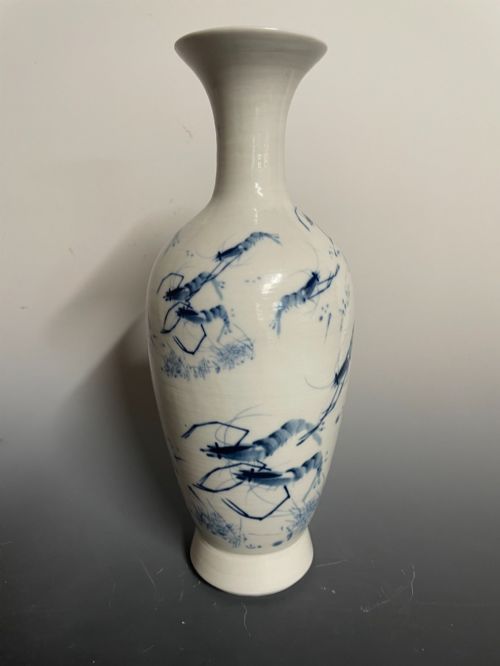
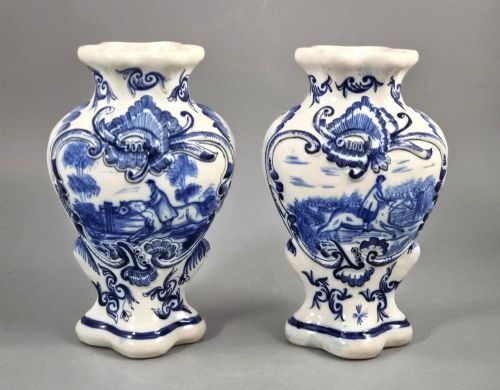
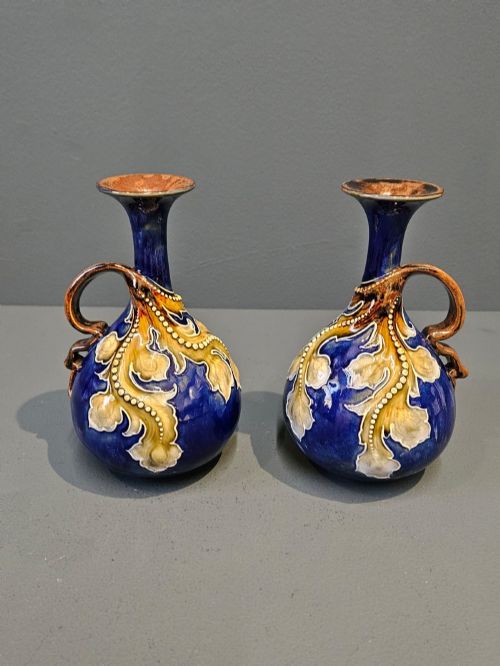
A cobalt glaze vase covers a broad span of centuries and regions, ranging from English Delftware and Victorian Doulton Lambeth salt-glazed stoneware to Qing Dynasty Chinese blue and white porcelain and Japanese Satsuma ware.
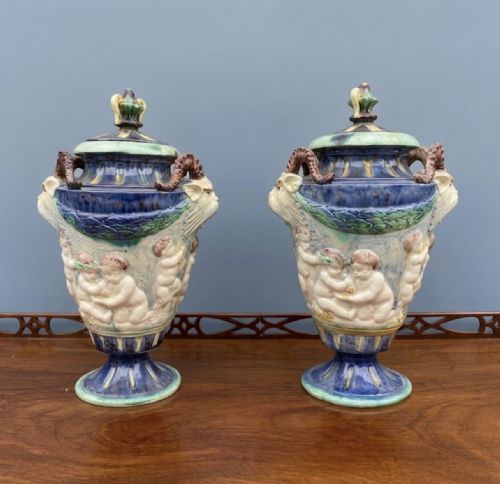
Buyers seeking a cobalt glaze vase encounter various vessel forms, including traditional bottle vases, brush pots, double-gourd shapes, ewers and decorative urns.
The selection extends from European earthenware and faience to Moroccan terracotta and Chinese porcelain, representing periods from the eighteenth century through the art deco era.
How they were made
Potters applied cobalt oxide either directly onto the clay body or over an opaque white tin glaze before firing, producing deep blue pigments that react with kiln temperatures.
Many items combine ceramic, earthenware, porcelain or stoneware bodies with surface treatments such as enamel highlights, gold leaf, or silver mounts.
Cobalt Glaze Vase Retail Price Guide 2026
Typical asking prices for cobalt glaze vase among the pieces listed under this phrase on Sellingantiques today, from the lower quarter to the upper quarter. They describe what is for sale here now, not the wider market.
Some vessels double as writing brush holders, reminding us that eighteenth-century scholars occasionally needed a very blue desk.
What varies in quality
The richness and depth of the cobalt colour determine visual impact, alongside the precision of hand-painted decoration and the stability of the glaze during firing.
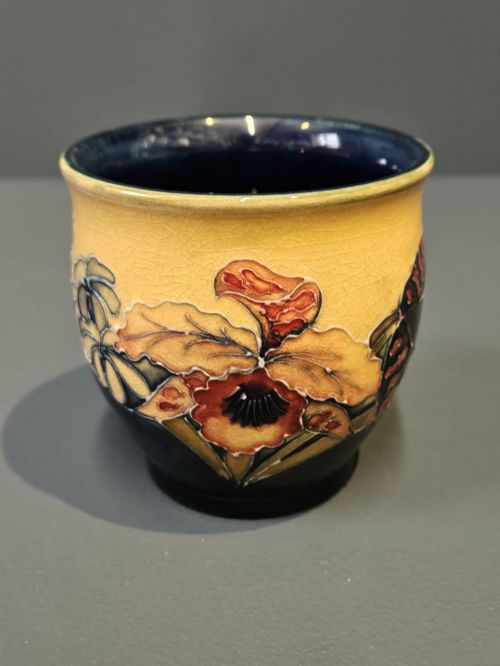
Distinction lies in the crispness of form, whether an intricate Japanese moriage relief or the controlled botanical modelling of Moorcroft and Doulton pieces.
Fourmaintraux Courquin Desvres·Doulton Lambeth Ware·Brannam art pottery·Carlton Ware Cobalt Blue·Pilkingtons Royal Lancastrian·William Moorcroft
The Cobalt Glaze Vase Glossary
- Cobalt glaze
- A metallic oxide pigment applied to ceramics that turns a deep, intense blue under high kiln temperatures. It remains stable at high heats, allowing for fine painted details.
- Stoneware
- A dense, hard pottery fired at high temperatures until vitrified, making it impermeable to liquids without requiring a separate glaze. Victorian makers utilised this body for textured decorative wares.
- Porcelain
- A fine, translucent ceramic made from kaolin and petuntse fired at extremely high temperatures. Chinese and European factories employed it for delicate brush pots and bottle vases.
- Ewer
- A large jug with a wide spout and curved handle, traditionally used for pouring water but frequently made as a purely decorative vessel.
Cobalt Glaze Vase: Frequently Asked Questions
How do I date a cobalt glaze vase?
Dating depends on the ceramic body type, the style of the cobalt decoration, and any base marks or factory signatures. Comparing the potting technique and glaze chemistry helps align the piece with specific manufacturing periods.
Victorian stoneware, eighteenth-century Delftware, and twentieth-century art pottery each exhibit distinct clay preparation and pigment handling methods that clarify their era of origin.
What is the difference between earthenware and porcelain?
Earthenware is a porous, lower-fired ceramic body that requires a glaze to hold liquids and appears more opaque. Porcelain is vitrified, highly dense, and often translucent.
Cobalt pigment behaves differently on each surface, soaking softly into porous tin glazes while resting crisply on high-fired porcelain.
How were these vases used historically?
Many vessel forms served practical functions such as holding water, wine, or writing brushes in scholar's studios. Others were created strictly as garniture sets or decorative mantel displays.
Over time, objects like ewers and jars transitioned from utility to purely ornamental interior display pieces.
How do I clean an antique ceramic vase?
Dust gently with a soft, dry brush to prevent accumulating dirt in recessed surface textures or crazed glaze lines. Avoid soaking antique ceramics, particularly porous earthenware or pieces with added silver mounts and gold leaf.
Harsh cleaning agents can strip delicate overglaze enamels or weaken aged ceramic bodies.