




Decorative Pottery Display Vase
These decorative pottery display vases bring colour and form from the nineteenth and twentieth centuries into a room.
Decorative Pottery Display Vase
A decorative pottery display vase is an ornamental vessel designed for visual impact rather than holding cut flowers, spanning periods from the nineteenth century through the 1940s. Buyers searching for a decorative pottery display vase encounter earthenware, porcelain, and ceramic bodies shaped as vases, decorative jugs, and two-handled vessels.
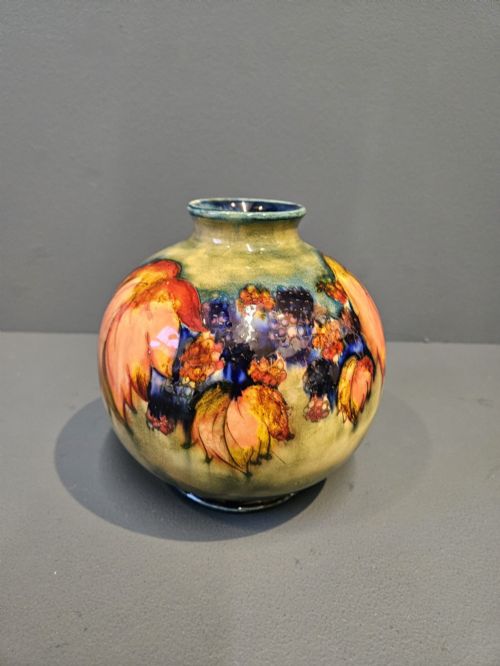
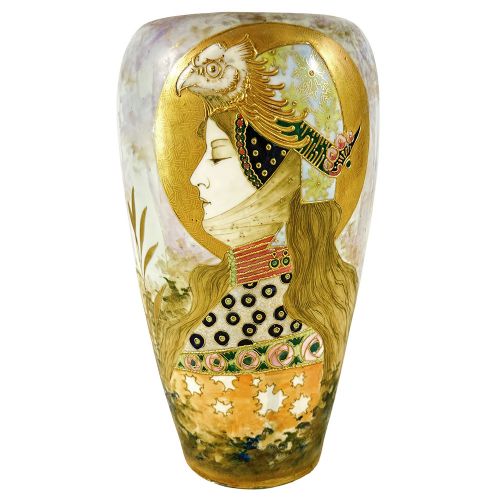
The selections on this page range from English makers such as Moorcroft, Minton, Charlotte Rhead, and Wedgwood to Japanese Satsuma and Imari works, alongside European examples like Iznik-style Belgian pieces and items by Reissner, Stellmacher and Kessel.
Styles represented include Art Deco, Art Nouveau, Arts and Crafts, Meiji Period, and Iznik Revival designs, showcasing hand-painting, gilding, and enamelling.
How they were made
Potters shaped earthenware, ceramic, and porcelain into vessels before applying glazes, enamel, and gold leaf. Many pieces incorporate heavy gilt highlights and intricate surface textures.
Decoration relied on hand-painting techniques, with specific workshops employing Moriage relief work, lustre finishes, and hand-enamelled patterns across Satsuma, Imari, and lustre wares.
Decorative Pottery Display Vase Retail Price Guide 2026
Typical asking prices for decorative pottery display vase among the pieces listed under this phrase on Sellingantiques today, from the lower quarter to the upper quarter. They describe what is for sale here now, not the wider market.
Materials documented across the inventory feature earthenware, porcelain, ceramic, enamel, gold leaf, gilt, and glaze.
What varies in quality
Quality rests in the execution of the hand-painting and the application of gold leaf, enamel, and lustre glazes. Finer examples display precise brushwork and balanced composition across the panels and handles.
The distinction between standard production and exhibition quality lies in the depth of the modelled relief, such as Moriage work, and the crispness of the firing and glazing.
Moorcroft·Nicholas Kannhauser·Reissner Stellmacher and Kessel·Minton·Hododa·Kinkozan·Charlotte Rhead·Wedgwood
The Decorative Pottery Display Vase Glossary
- Moriage
- A type of raised clay decoration used on Japanese ceramics to create textured, three-dimensional surface patterns. This technique appears frequently on Satsuma vases.
- Imari
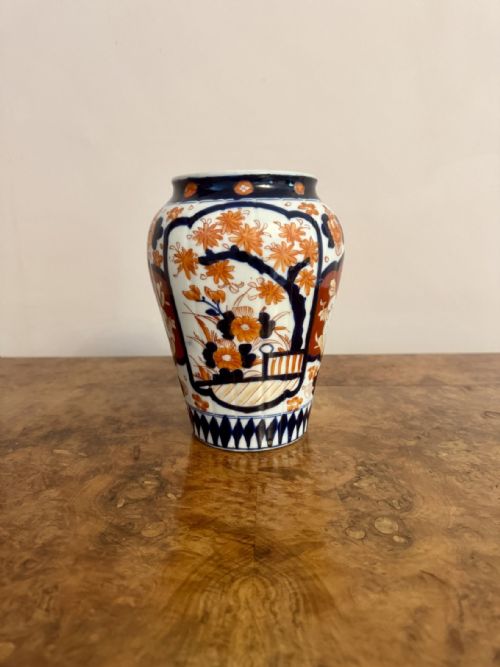
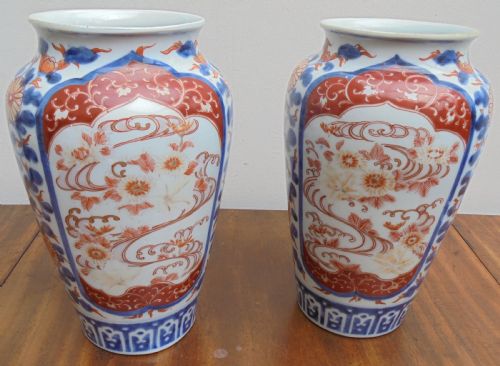
- A style of Japanese export porcelain characterised by a palette of underglaze blue, iron red, and gilt. Pieces often feature dense floral and geometric panels.
- Lustre
- A ceramic glaze containing metallic elements that produce an iridescent, reflective sheen when fired. Wedgwood and Minton utilised this finish on specific decorative vessels.
- Satsuma
- Earthenware pottery originating from Satsuma province in Japan, typically featuring a ivory crackle-glaze and detailed polychrome enamel painting. Many examples include gilt highlights.
- Iznik Revival
- A late nineteenth and twentieth-century European and Middle Eastern style mimicking the bold floral motifs and turquoise and cobalt palettes of historic Turkish ceramics.
Decorative Pottery Display Vase: Frequently Asked Questions
How do I clean a display vase?
Dust gently with a soft dry cloth to protect fragile enamel, gold leaf, and lustre surfaces.
Avoid using water or chemical cleaners, particularly on antique earthenware and overglaze painted decoration.
Can these vases hold water?
Many decorative pottery display vases are intended solely for ornamental display rather than practical use with water.
Earthenware bodies and historic glazes can be porous or sensitive to moisture, so inserting a liner is recommended if holding flowers.
How do I identify Satsuma ware?
Look for a fine ivory-coloured crackle glaze combined with detailed polychrome enamel painting and heavy gilding.
Japanese Satsuma pieces often depict figures, landscapes, and traditional motifs from the Meiji period.
What is Imari pottery?
Imari pottery is characterised by a distinct colour palette consisting of underglaze blue, iron red, and abundant gold leaf.
Designs typically incorporate intricate floral panels and traditional Japanese aesthetic structures.