

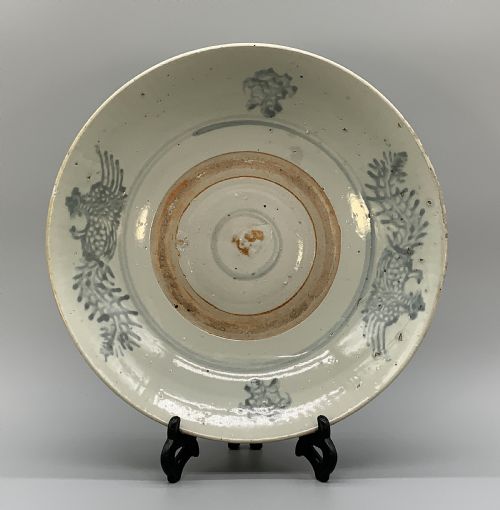


Cobalt Blue Serving Platter
A cobalt blue serving platter brings rich pigment and generous proportions to the table, uniting centuries of ceramic artistry from English earthenware to Chinese export porcelain.
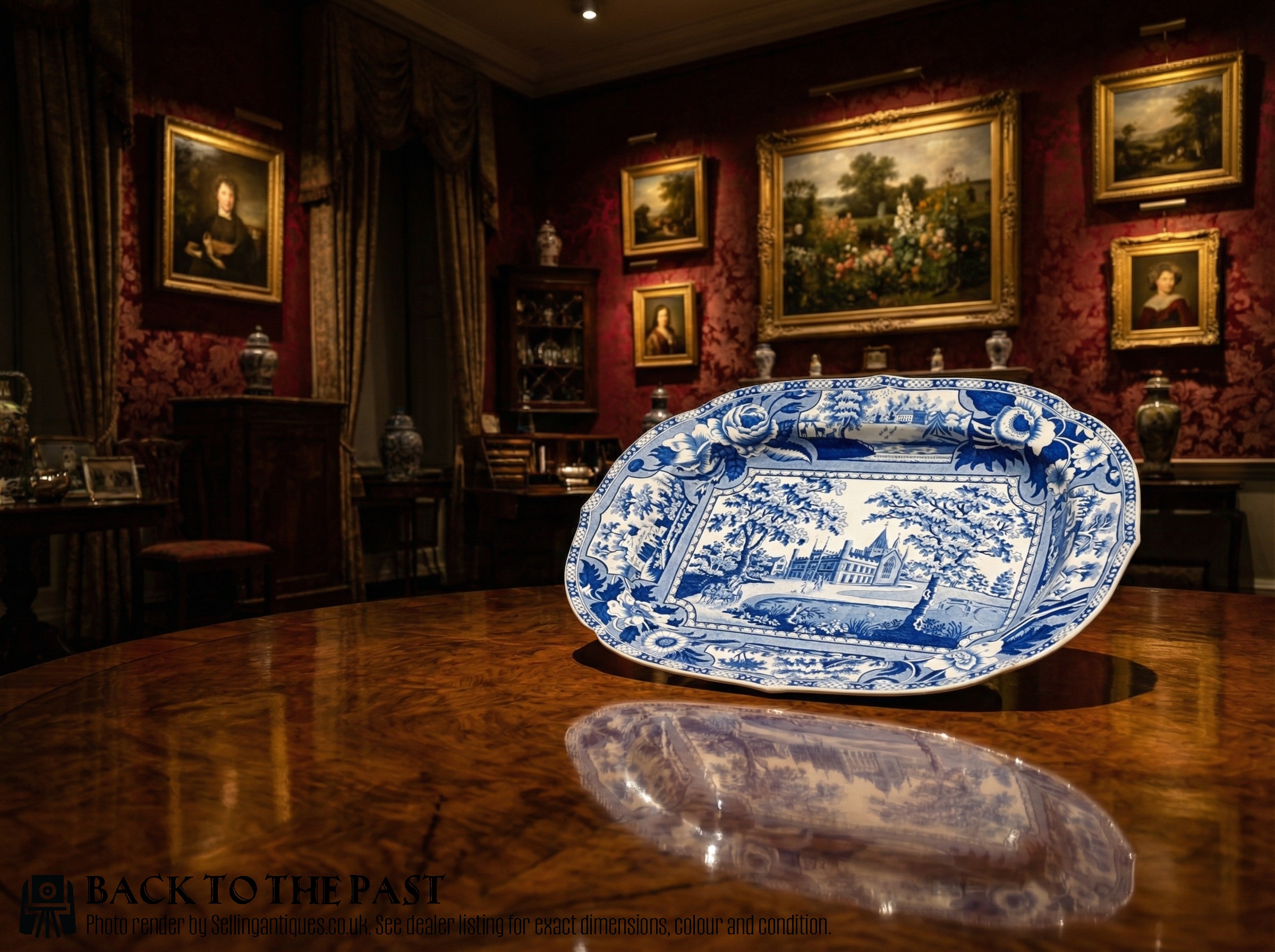
Cobalt Blue Serving Platter
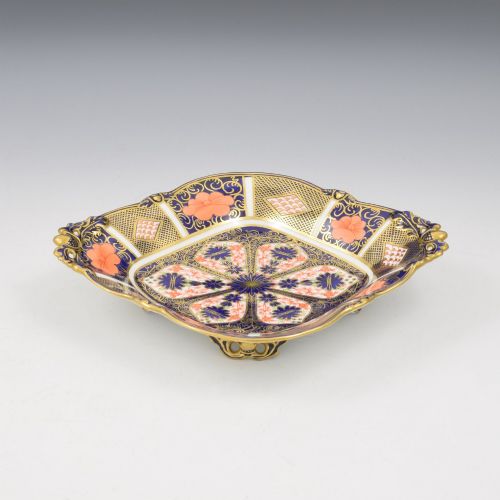
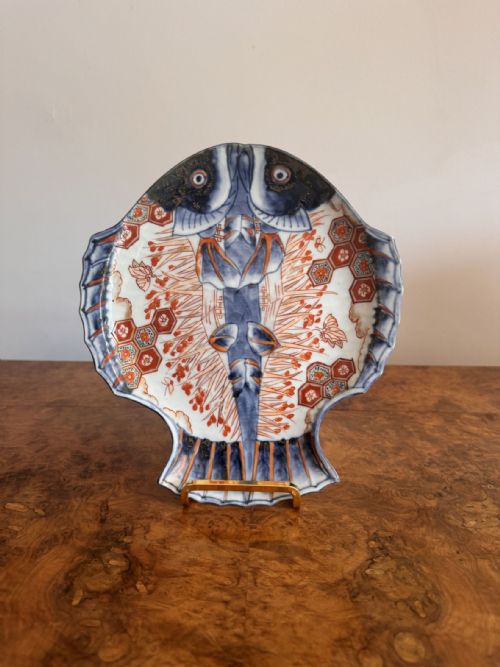
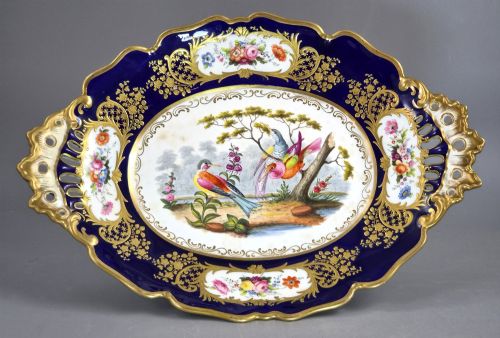
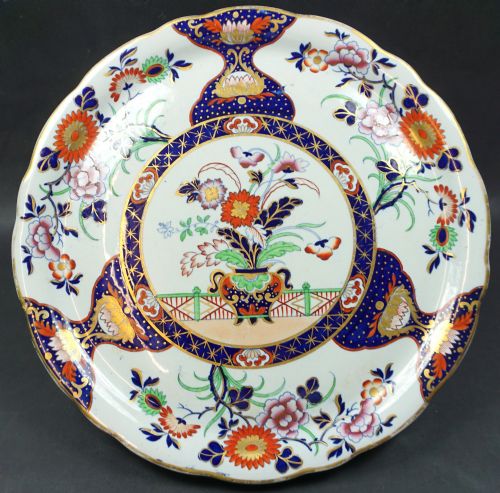
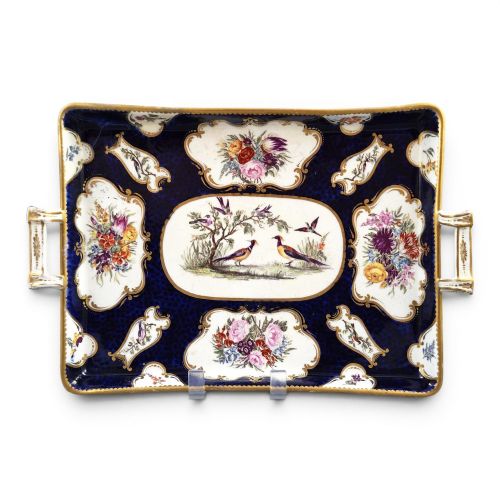
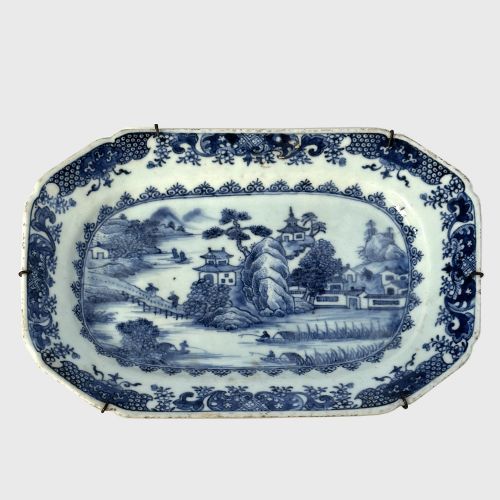
When you search for a cobalt blue serving platter, you encounter large platters, chargers, and serving dishes spanning the eighteenth, nineteenth, and early twentieth centuries. These pieces encompass English transferware, Chinese export porcelain, Dutch Delft, and Japanese Imari wares.
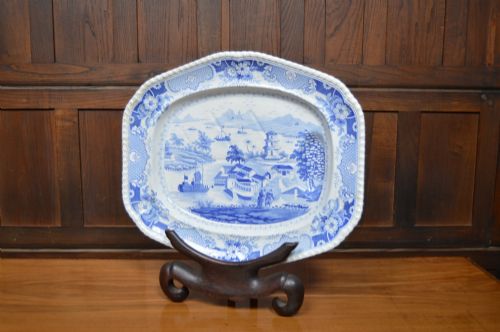
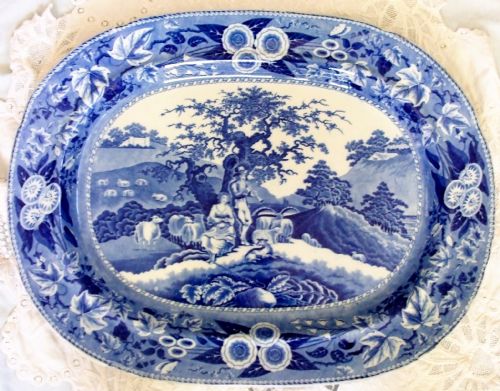
The versions most commonly met on this page are large nineteenth-century earthenware and ironstone meat platters, alongside eighteenth-century chargers and porcelain serving dishes decorated in deep cobalt pigment.
Forms vary from grand octagonal meat dishes and oval platters to large round chargers and square plates, each designed to hold substantial amounts of food or display decorative motifs at table.
Materials and methods
Potters built these pieces from porcelain, earthenware, and ironstone, applying cobalt pigment beneath a clear glaze before firing at high temperatures to achieve deep, permanent blue tones.
Transfer printing allowed makers to apply complex pictorial scenes onto large surfaces efficiently, while hand-painted pieces received detailed brushwork in cobalt alongside enamel colours and gold leaf highlights.
Cobalt Blue Serving Platter Retail Price Guide 2026
Typical asking prices for cobalt blue serving platter among the pieces listed under this phrase on Sellingantiques today, from the lower quarter to the upper quarter. They describe what is for sale here now, not the wider market.
Listings feature eighteenth-century Chinese export porcelain alongside Victorian ironstone meat platters.
Distinctions in quality
Quality rests upon the crispness of the transfer print or the dexterity of the hand-painted brushwork, distinguishing standard utility wares from pieces produced by premier porcelain factories.
The weight, resonance, and finish of the ceramic body, alongside the depth and stability of the cobalt glaze under the heat of the kiln, separate ambitious exhibition pieces from everyday table items.
Royal Crown Derby·Coalport·Hicks And Meigh·Mason·Spode·Ridgway·Mintons·Thomas Lakin·Don Pottery
The Cobalt Blue Serving Platter Glossary
- Transferware
- Earthenware or porcelain decorated by applying a printed paper design from a copper plate onto the ceramic surface before glazing. This technique enabled factories to produce intricate pictorial landscapes and botanical patterns consistently.
- Ironstone
- A dense, durable type of earthenware patented in the nineteenth century to withstand heavy kitchen and dining use. It provided a sturdy alternative to porcelain while accepting blue transfer prints exceptionally well.
- Charger
- A large decorative plate or platter traditionally used for ceremonial display or as a base beneath smaller course dishes. Examples in this category often feature bold cobalt motifs designed to be seen from a distance.
- Imari
- A style of Japanese porcelain featuring underglaze cobalt blue combined with iron red, green enamel, and gilding. English potteries frequently borrowed these rich colour schemes for their own serving dishes.
- Well and tree
- A platter design featuring a grooved channel and a small basin to collect meat juices during carving. This practical innovation appeared on large nineteenth-century meat plates.
Cobalt Blue Serving Platter: Frequently Asked Questions
What were cobalt blue serving platters used for?
These large dishes served roasted meats, fowl, and substantial courses at formal dining tables, presenting food against a decorative backdrop of blue pigment.
Beyond dining use, many larger chargers and platters spent time displayed on sideboards or hung on walls to showcase their pictorial patterns.
How do I distinguish eighteenth-century pieces from Victorian ones?
Eighteenth-century examples often display softer body pastes, tin glazes as seen on Delft, or hand-painted Chinese export designs with subtle irregularities from wood-firing.
Victorian pieces frequently utilise crisp transfer printing on heavier ironstone or refined porcelain, sometimes accompanied by registration marks or factory stamps on the reverse.
Can I still use antique platters for serving food?
Most antique ceramic and ironstone platters remain structurally sound for serving dry foods, bread, or cold dishes at the table.
Hand-washing is essential to protect old glazes, fragile enamel details, and delicate gold leaf from the harsh conditions of modern dishwashers.
Why do some platters have channels or wells?
Meat platters with integrated wells and channels were engineered to drain juices away from roasted joints during carving at the table.
This practical design kept meat resting above its own drippings, making large nineteenth-century examples particularly prized by collectors of dining silver and ceramics.