





Cobalt Blue Satsuma Porcelain
Cobalt blue satsuma porcelain brings rich indigo grounds and intricate hand-painted detail to any room, offering classic Japanese craftsmanship.
Cobalt Blue Satsuma Porcelain
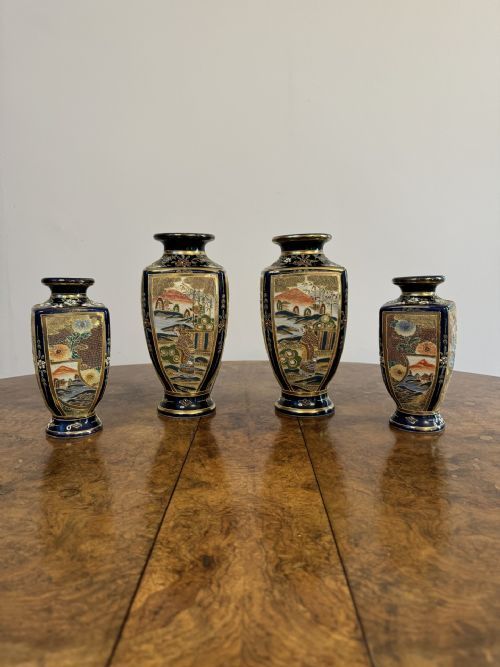
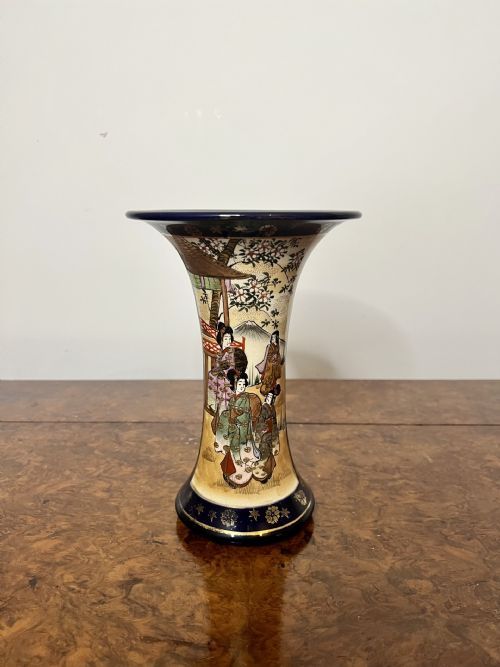
Cobalt blue satsuma porcelain comprises decorative vessels created during the Meiji period and Victorian era, encompassing items such as vases, shaped vases, and decorative bowls. These pieces typically display deep blue backgrounds contrasted with detailed figurative scenes and ornamental motifs.
Buyers encountering this category will most frequently find nineteenth-century and nineteen-hundred examples originating from Japan, often bearing specific artist signatures or workshop marks like Kinkozan and Nanzan. The forms range from small matched pairs to monumental bowls and garniture sets.
How they were made
Artisans built these pieces using earthenware bodies finished with rich glazes and decorated with enamel paint. The deep cobalt blue grounds provide a striking backdrop for subsequent ornamentation.
Makers applied gold leaf and heavy gilt moriage work over the base glazes to build raised, textured patterns. Hand-painted court figures, samurai scenes, and traditional crests were then meticulously added across the surface.
Cobalt Blue Satsuma Porcelain Retail Price Guide 2026
Typical asking prices for cobalt blue satsuma porcelain among the pieces listed under this phrase on Sellingantiques today, from the lower quarter to the upper quarter. They describe what is for sale here now, not the wider market.
Listings feature items from the Meiji period, nineteenth century, and nineteen hundred, utilising earthenware, enamel, gold leaf, glaze, and gilt.
What varies in quality
Quality in these ceramics rests upon the precision of the hand-painted brushwork and the complexity of the figural scenes depicted. Pieces featuring intricate samurai battles or detailed court gatherings demonstrate superior artistic skill compared to simpler designs.
The application of the gilt and moriage work also dictates the tier of a piece, with finely raised, intact detailing marking the upper end of the range. Furthermore, discernible maker marks associated with respected Kyoto circles elevate the standing of an item.
Kinkozan·Nanzan
The Cobalt Blue Satsuma Porcelain Glossary
- Moriage
- A Japanese pottery technique where slip is piped onto the surface to create raised, three-dimensional decorative patterns. This method often frames painted figures and geometric borders.
- Gilt
- A thin layer of gold applied to the surface of the ceramic to accent specific details. It catches the light and highlights the cobalt blue ground.
- Garniture
- A set of matching vases or vessels designed to be displayed together on a mantelpiece or sideboard. These sets share uniform decorative schemes and colour palettes.
- Mon
- A traditional Japanese emblem or badge used to identify families or clans. These crests frequently appear within the painted decoration of Satsuma wares.
- Earthenware
- A porous type of pottery fired at lower temperatures, serving as the traditional substrate for Satsuma ware before glazing and decoration.
Cobalt Blue Satsuma Porcelain: Frequently Asked Questions
What is cobalt blue satsuma porcelain?
These items are Japanese ceramic pieces featuring deep blue glazed grounds decorated with intricate enamel paintings, gold leaf, and raised moriage work. They primarily date from the Meiji period and the nineteenth century.
The category includes functional and decorative vessels such as vases, shaped vases, and large bowls, often depicting traditional court figures, samurai battles, and family crests.
How do I identify a Meiji period piece?
Meiji period items typically display distinct aesthetic characteristics including dense hand-painted polychrome enamel scenes set against rich cobalt blue backgrounds. Artisans frequently incorporated heavy gilding and textured raised work into these compositions.
Many pieces also feature artist signatures, studio marks, or workshop stamps on the base, such as those associated with Kyoto makers like Kinkozan.
Were these items made for export?
A significant portion of Satsuma ware produced during the late nineteenth century was created specifically for international export markets following the opening of Japan. Western buyers showed a strong appetite for highly detailed Japanese decorative arts.
Consequently, many surviving vases and bowls reflect a blend of traditional Japanese motifs and forms tailored to Victorian interior display tastes.
How should I display these bowls and vases?
These vessels require stable placement away from direct sunlight and high-traffic areas to protect their delicate enamel and gilt surfaces from accidental damage. Grouping smaller pairs together or placing a monumental bowl as a central focal point highlights their intricate details.
When positioning garniture sets or individual vases, ensure adequate lighting to properly illuminate the raised moriage textures and deep blue glazes.