



Large Japanese Baluster Vase
A large japanese baluster vase brings monumental presence and intricate narrative to a room, drawing the eye with sweeping curves and layered hand-painted detail.
Large Japanese Baluster Vase
When you search for a large japanese baluster vase, you encounter commanding vessels defined by a wide rounded body that tapers gracefully toward a narrower neck and flared rim. These imposing vessels dominate a space, frequently standing as floor-standing centrepieces or substantial table ornaments rather than subtle mantel accents.
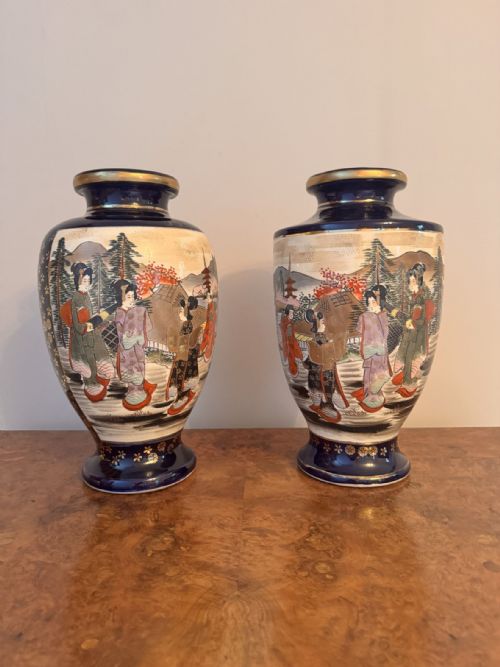
The pieces appearing here span centuries of production, though nineteenth-century works and Meiji period examples dominate the selections. You will frequently find pairs alongside solitary showpieces, offering symmetrical balance or standalone architectural weight.
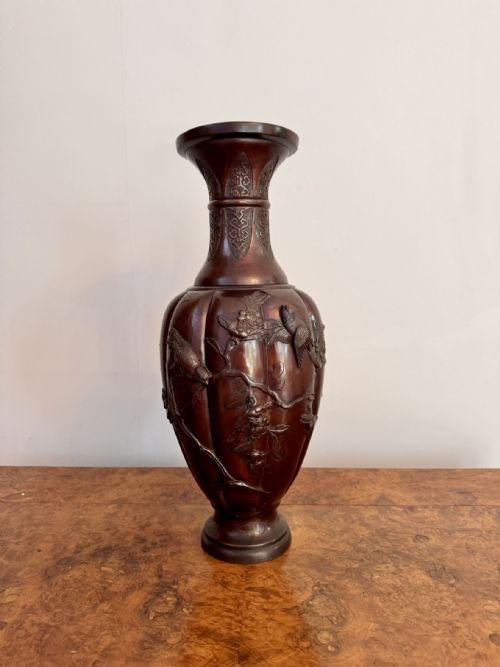
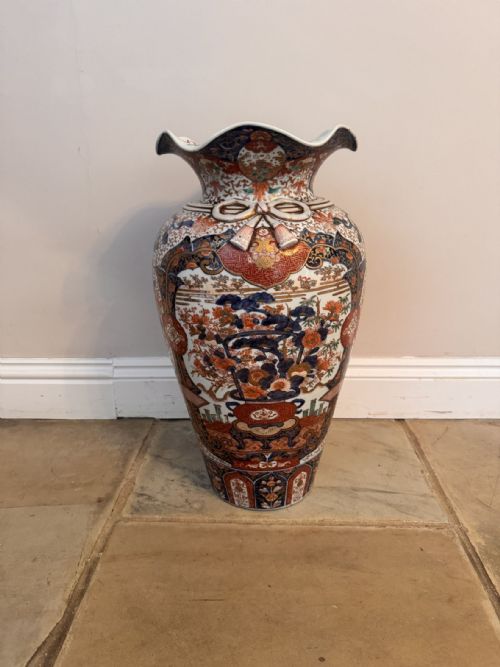
A significant portion of these vessels hail from traditional pottery centres like Arita, manifesting as vivid Imari wares, earthy Satsuma, or detailed Kutani. Alongside porcelain, substantial bronze castings provide a heavier, metallic alternative to the ceramic standard.
How they were made
Potters shaped high-fired porcelain and earthenware on the wheel, constructing the characteristic swelling profile in sections before joining them for large-scale stability. Bronze variants utilised intricate casting methods, achieving thick walls capable of supporting elaborate patination and applied ormolu mounts.
Surface decoration relied on mineral pigments and enamels, often enriched with gold leaf and precise gilding that caught the light across the room. Artisans applied these pigments by hand, executing complex floral, figurative, and geometric motifs with meticulous brushwork.
Large Japanese Baluster Vase Retail Price Guide 2026
Typical asking prices for large japanese baluster vase among the pieces listed under this phrase on Sellingantiques today, from the lower quarter to the upper quarter. They describe what is for sale here now, not the wider market.
Some nineteenth-century giants grew so heavy during production that firing them without a catastrophic collapse was considered a minor miracle by the potter.
What varies in quality
The distinction between ordinary and exceptional works rests in the crispness of the hand-painting and the depth of the palette. Superior examples display dense, uncrowded compositions where every gold stroke and enamel layer contributes to a harmonious whole.
Scale and ambition also dictate standing, with monumental pairs requiring immense technical control during firing to prevent warping in the kiln. Furthermore, signed works by renowned makers command attention through superior potting and refined glaze consistency.
MAKUZU KOZAN·Kinkozan
The Large Japanese Baluster Vase Glossary
- Baluster
- A vase shape characterised by a rounded lower body that tapers toward the neck, resembling an architectural baluster. This form provides a stable base and generous surface area for narrative decoration.
- Imari
- A traditional style of Japanese porcelain featuring a distinct palette of underglaze blue, iron red, and gold. These wares originated in Arita and became immensely popular for export.
- Satsuma
- Earthenware pottery featuring a fine ivory craquelure glaze decorated with polychrome enamels and rich gilding. These pieces often depict elaborate figural scenes from Japanese history and mythology.
- Kutani
- A style of Japanese porcelain known for bold, vibrant colour schemes, particularly greens, blues, yellows, and purples. The decoration frequently incorporates detailed pictorial panels set against dense geometric borders.
- Meiji Period
- The era spanning from eighteen sixty-eight to nineteen twelve, marked by intense artistic production and international export. Works from this time often display extraordinary technical proficiency and ambitious scale.
- Ormolu
- Gilded bronze mounts applied to ceramic vessels to enhance their decorative appeal. This technique bridges Eastern ceramic traditions with Western display tastes.
Large Japanese Baluster Vase: Frequently Asked Questions
How were these large vases used?
These substantial vessels served primarily as grand decorative fixtures in stately rooms, often displayed in pairs flanking a fireplace or positioned on pedestals in grand hallways. Their impressive scale allowed them to function as architectural focal points rather than simple flower holders.
Over time, many of these ceramic and bronze bodies were adapted into table lamps, incorporating electrical fittings while retaining their striking silhouette and hand-painted surface narrative.
How do I care for my vase?
Maintenance requires gentle, regular dusting with a soft, dry cloth to prevent particulate build-up within the intricate crevices of the enamel and gilding. Avoid using chemical cleaners or abrasive cloths, which can damage fragile gold leaf and delicate overglaze pigments.
Position the vessel away from direct sunlight and strong heat sources to protect the pigments and prevent any historic glazes from drying or degrading over extended periods.
How do I distinguish Imari from Kutani?
Imari wares rely on a distinct tripartite palette of cobalt blue underglaze, iron red, and generous gold highlights upon white porcelain. The patterns frequently incorporate floral panels and intricate brocade motifs.
Kutani pieces, conversely, lean into a heavier, more saturated palette dominated by greens, purples, and yellows, often featuring dense pictorial scenes depicting figures or landscapes.
What is Satsuma ware?
Satsuma ware consists of earthenware bodies covered in a characteristic creamy glaze webbed with a fine network of tiny cracks known as craquelure. These pieces are typically painted with detailed polychrome enamels and heavy gold leaf.
Originating from the Satsuma province, these decorative items were created specifically for export during the nineteenth century, showcasing elaborate narrative scenes to international buyers.