
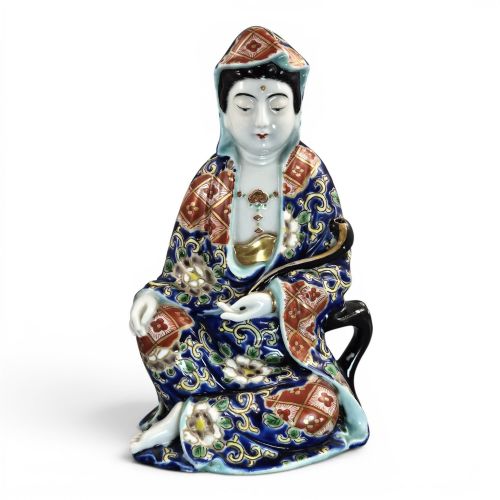
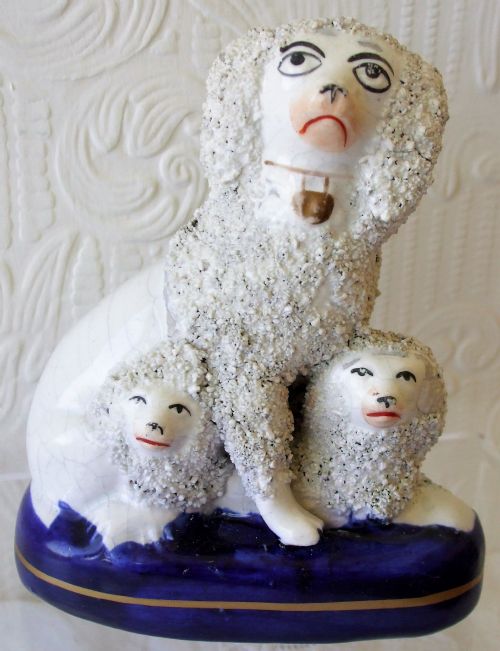


Cobalt Blue Porcelain Ornament
These cobalt blue porcelain ornaments combine delicate glazing with intricate modelling, offering a striking display piece for any mantelpiece or cabinet.
Cobalt Blue Porcelain Ornament
A cobalt blue porcelain ornament covers a diverse group of objects, spanning figures, busts, vases, and candlesticks from various periods. You will encounter English Staffordshire earthenware alongside continental porcelain and Japanese imports.
The Victorian era provides many of the pieces, featuring animal figures like poodles and greyhounds alongside human subjects. Earlier Regency examples include inkstands and cornucopia pieces with distinct neoclassical influences.
Japanese workshops from the Meiji and Taisho periods contribute figural representations such as courtesans and musicians. Continental factories like Sevres and Samson Paris add classical busts and mythological figures to the selection.
Materials and methods
Makers shaped porcelain and earthenware bodies before applying cobalt blue glazes and hand-painted enamel details. Gold leaf, gilt, and brass mounts frequently accent the fired ceramic surfaces.
Moulding and slip-casting created the underlying figures, while skilled hands added fine surface decoration, encrustations, and gold leaf highlights prior to final firing.
The listings feature pieces spanning the 19th century, Victorian, Edwardian, and Regency periods, utilising materials such as porcelain, earthenware, enamel, and gold leaf.
Assessing quality and execution
The crispness of the modelling and the precision of the hand-painted enamel work distinguish finer examples from standard production pieces. Superior items display careful attention to facial expressions and delicate surface details.
The richness of the gilding and the depth of the cobalt blue glaze indicate the workshop standards. Well-preserved pieces retain their original lustre without excessive wear to the gold leaf and enamel.
The Cobalt Blue Porcelain Ornament Glossary
- Biscuit porcelain
- Unglazed ceramic ware fired once to a porous state, often used for busts and classical figures. It provides a matte, marble-like finish.
- Enamel
- Opaque glass fused to the ceramic surface through firing to produce vibrant decorative colours. It stands up well to cleaning when applied correctly.
- Gilt
- A thin layer of gold applied to the porcelain surface or brass mounts for enrichment. It catches the light and frames the cobalt blue elements.
- Staffordshire pottery
- Earthenware produced in the English Midlands spanning multiple centuries. It includes popular figures of animals and royalty.
Cobalt Blue Porcelain Ornament: Frequently Asked Questions
How do I clean my ornament?
Dust gently with a soft, dry brush to prevent the accumulation of dirt in recessed areas. Avoid harsh chemical cleaners that can damage fragile enamel and gilt highlights.
Keep pieces away from direct sunlight to preserve the vibrancy of the cobalt blue glaze and hand-painted colours over time.
Are these pieces functional or decorative?
Most items serve primarily as decorative ornaments, though some types like candlesticks and inkstands had practical uses. Figures and busts were designed purely for display on mantelpieces and tables.
Even functional items functioned largely as status symbols and interior decoration in period homes.
How do I identify the period?
Examine the style of the modelling, base marks, and manufacturing techniques to determine the likely era of production. Victorian pieces often display robust earthenware bodies, while continental works lean towards neoclassical refinement.
Comparing known factory styles helps narrow down the origin and decade of manufacture.
Where were these pieces made?
Origin locations range across English potteries, French porcelain manufactories, and Japanese kilns. Each region employed distinct clay bodies and glazing traditions.
Regional characteristics help attribute unmarked items to specific countries and stylistic traditions.