
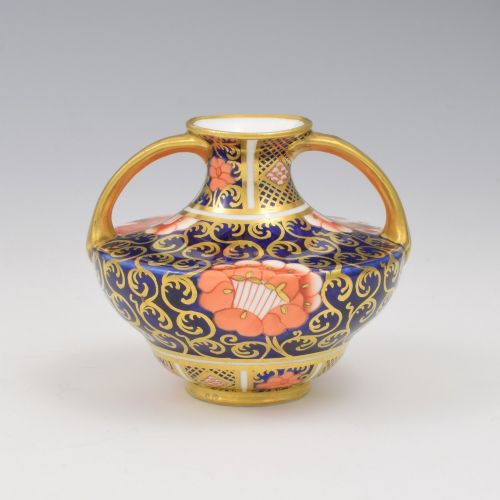


Gilded Bone China Miniature
These gilded bone china miniature pieces bring cabinet-scale craftsmanship into domestic spaces.
Gilded Bone China Miniature
A gilded bone china miniature search covers small-scale ceramic works created across several distinct periods. These diminutive objects range from tiny vases and teapots to delicate bowls and flat irons.
The pieces on this page span from Regency items and Victorian creations through to Edwardian pieces and works from the nineteen-tens, nineteen-twenties, and nineteen-forties. Traditional British porcelain traditions heavily influence the forms found in this selection.
Buyers frequently encounter specialist designs such as Imari patterns alongside Edwardian Imari and Victorian Imari variations. Cabinet collectors often seek these smaller vessels for their dense detailing and portable scale.
Materials and methods of production
Potters shaped these miniature forms using porcelain and bone china bodies, applying detailed paint and enamel work by hand. Skilled artists often added gold leaf and gilt highlights to accentuate the delicate rims and handles.
Renowned painters decorated individual surfaces with botanical motifs, fruit studies, and intricate patterns before final kiln firings set the glaze and metallic lustre.
A miniature flat iron complete with its own stand demonstrates the Victorian taste for replicating full-sized domestic laundry equipment in miniature.
Evaluating craftsmanship and execution
Quality rests upon the precision of the hand-painted decoration and the crispness of the gilt application. Fine examples exhibit steady brushwork on fruit or Imari motifs without blurring along the edges.
The refinement of the ceramic body itself distinguishes superior items, showing thin, even walls and delicate handles that remain intact despite their miniature scale.
Royal Crown Derby·Stevenson and Hancock·Wedgwood·Royal Worcester·Spode
The Gilded Bone China Miniature Glossary
- Bone China
- A type of porcelain containing calcined bone ash, producing a strong, milky white body suitable for intricate small-scale items.
- Imari
- A decorative style characterised by underglaze blue, iron red, and gilt ornamentation, originating in Japan and adapted by British factories.
- Gilt
- A thin layer of gold applied to the ceramic surface to highlight handles, rims, and painted panels.
- Miniature Ceramics
- Small decorative vessels and household objects produced at a fraction of standard scale for cabinet display.
Gilded Bone China Miniature: Frequently Asked Questions
What are gilded bone china miniature pieces?
These items are small-scale ceramic vessels, including vases, teapots, and dishes, produced in fine china and porcelain. They were designed for display in cabinets rather than for heavy household service.
Craftsmen decorated them with hand-painted scenes and gilt embellishments to replicate full-sized tableware in miniature.
How do I date these miniature ceramics?
Dating relies on factory marks, painter signatures, and stylistic traits associated with periods from the Regency era through to the mid-twentieth century. Factory backstamps often evolved over time, providing clues to the decade of manufacture.
Examining the palette and gilding style also helps place an item within Victorian, Edwardian, or later twentieth-century production windows.
Where were these miniature items displayed?
Owners typically kept these small vessels inside glazed display cabinets, vitrines, and tabletop display cases. Their diminutive size allowed collectors to assemble varied groupings within limited domestic spaces.
Such placement protected fragile gilt details and fine enamel work from everyday handling and dust.
Are these miniatures painted by hand?
Many examples feature meticulous hand-painted decoration executed by named artists working for major British potteries. Artisans applied fine brushwork to depict fruit studies, floral arrangements, and complex patterns.
The presence of hand-applied gold leaf further elevates the individual character of each cabinet piece.