





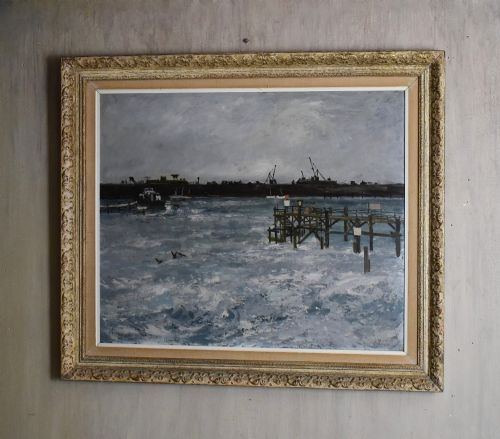


Coastal Landscape Canvas Art
Coastal landscape canvas art brings the maritime horizon and open shore into an interior through layered oil paint.
Coastal Landscape Canvas Art
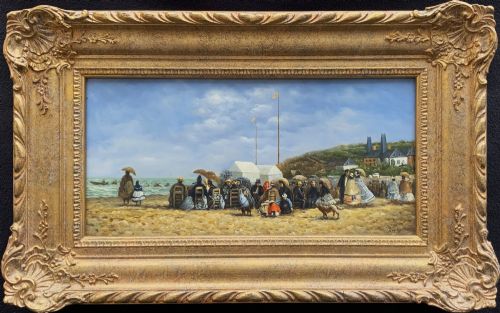
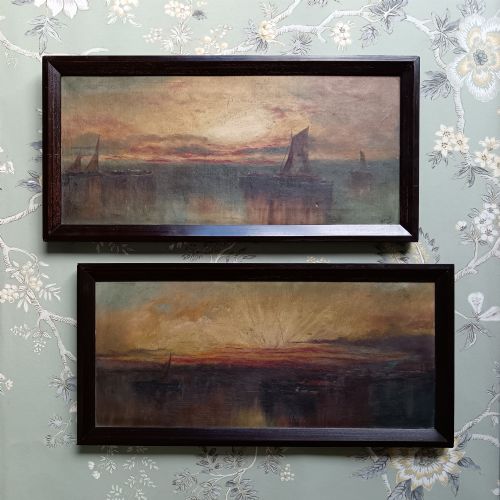
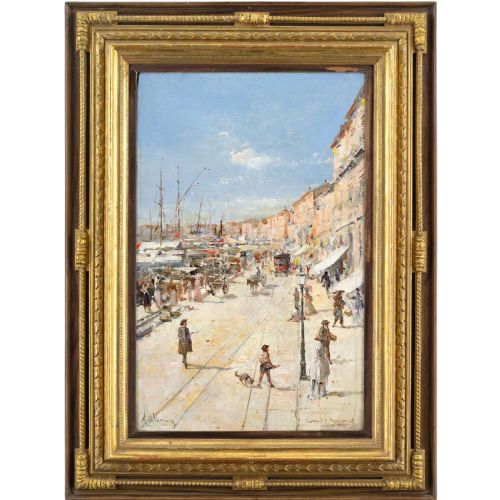
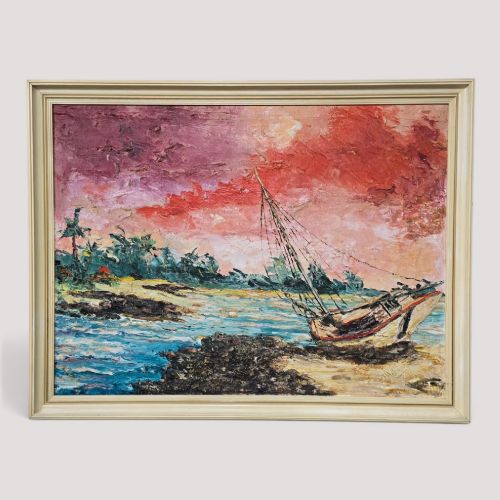
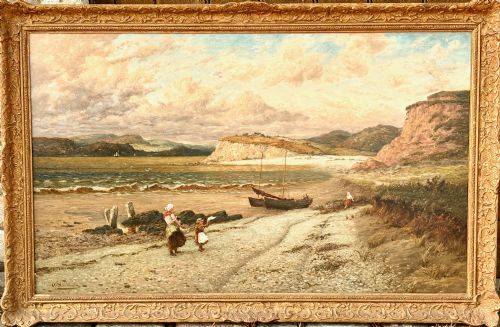
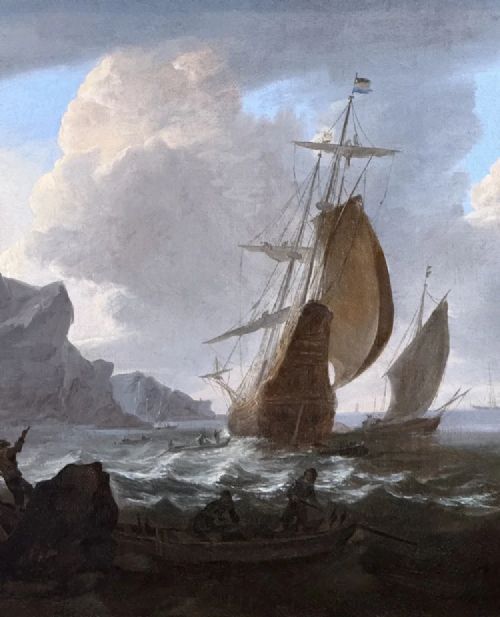
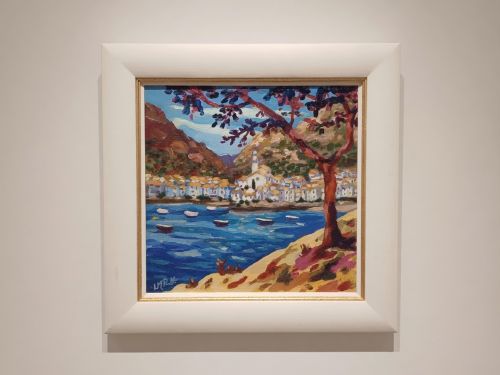
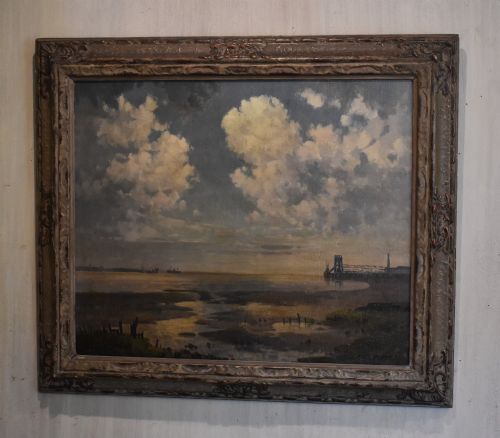
When searching for coastal landscape canvas art, a buyer encounters painted depictions of shores, harbours, and maritime activity spanning from the nineteenth century into the mid-twentieth century. These works capture seascapes, fishing vessels, and coastal cliffs through various historical lenses including Victorian, Edwardian, and Post-Impressionist movements. The selection relies heavily on oil paintings executed on canvas or board, framed in wood or gilt surrounds.
The pieces on this page range from detailed nineteenth-century harbour views to expressive mid-century impressions of the coast. Subjects frequently include local fishing fleets, stormy seas, and quiet beaches rendered by named artists and regional schools. Such artworks function as historical windows into maritime life and coastal topography from past eras.
Materials and technique
The primary material foundation of these works is oil paint applied to woven canvas stretched over wooden frames, or occasionally mounted to board. Artists utilised oil medium for its rich pigment depth and slow drying time, allowing for both smooth blending in calmer waters and thick, textured impasto applications for crashing waves. Gilt wood and carved timber frames complete the construction, often original to the period of the painting.
Techniques varied from the precise academic realism of the nineteenth century to the looser brushwork of British and French impressionism. Painters built up scenes using layered pigments to capture changing light conditions over the sea, incorporating palette knife work or visible brushstrokes to denote movement in water and sky.
Smugglers with horses and nude sunbathers occasionally share the coastline with working fishing fleets and grand nineteenth-century sailing ships.
Judging quality in maritime painting
The distinction between standard works and exceptional examples rests upon the artist's command of light, atmosphere, and spatial depth within the maritime setting. Superior pieces demonstrate confident brushwork that successfully conveys the weight of water, the transparency of air, and accurate perspective in shipping vessels or architectural elements. Compositional balance and the preservation of the original paint surface and framing further separate the finest works from ordinary decorative canvases.
Handwritten signatures, period provenance, and documented attribution to established painters elevate specific canvases above anonymous school pieces. The tactile quality of the impasto and the harmony of the tonal palette reveal the technical skill applied during the creation of the coastal scene.
Kenneth Cozens·Clifford Hanney·Augusto Alberici·Bonaventura Peeters·Clive Browne·Peter Brannan·Paul Bret·Bernard Benedict Hemy·Thomas Creswick·Donald McIntyre·Cecil Allan Mould·Charles Euphraisie Kuasseg·John Wilson Carmichael·Abraham Cooper·Joseph Farquharson·William Henry Williamson·John Holland·Walter Goodin·Raymond Moritz·Joseph Edward Hennah·William Edward Webb·Edward Matthew Elliott
The Coastal Landscape Canvas Art Glossary
- Impasto
- Paint applied thickly to a canvas, standing out in relief from the surface so that the marks of the brush or palette knife remain visible. This technique adds physical texture and dimension to crashing waves or rugged cliffs.
- Provenance
- The chronological history of the ownership of a work of art, establishing its authenticity and origin. A clear record enhances the historical value of a maritime painting.
- Post-Impressionism
- An art movement developing roughly from the last decades of the nineteenth century that extended impressionism while rejecting its limitations. Painters focused on symbolic content and heavier weight in forms.
- Gilt wood
- Timber framing coated with a thin layer of gold leaf or gold paint. These decorative surrounds often date to the same period as the canvas they enclose.
Coastal Landscape Canvas Art: Frequently Asked Questions
How do I date a coastal oil painting?
Dating relies on stylistic clues within the painting, such as the rigging of depicted vessels, the clothing of figures on the shore, and the overall artistic movement like Victorian realism or mid-century modernism. Signatures, exhibition labels, and the construction methods of the canvas stretcher and wooden frame provide additional chronological markers.
Examination of the reverse of the canvas or board often reveals old gallery stamps, inscriptions, or maker marks that narrow down the exact decade of creation.
What subjects are most common in marine art?
Common subjects include bustling harbour scenes, fishing boats navigating coastal waters, dramatic cliff views, and quiet sandy beaches. Artists frequently documented specific regional ports, coastal paths, and maritime weather events such as gales or calm sunrises.
These motifs reflect the nineteenth and twentieth-century fascination with maritime trade, coastal living, and the changing moods of the sea.
How should I hang and light an oil painting?
Oil paintings on canvas require placement away from direct sunlight and high humidity to protect the paint layer and wooden stretcher. Stable interior wall conditions prevent the canvas from sagging and reduce thermal stress on the wood.
Lighting is best achieved using dedicated picture lights with low heat emission, positioned to illuminate the canvas evenly without causing glare on the varnished surface.
What is the difference between an oil on canvas and an oil on board?
Oil on canvas involves stretched woven fabric, usually linen or cotton, primed to receive oil paint, offering a slight give when touched. Oil on board uses a rigid wooden or composite panel as the painting support, providing a completely stable and immovable surface.
Both techniques were widely used across different periods, with boards often favouring smaller plein air studies and outdoor landscape sketches.