
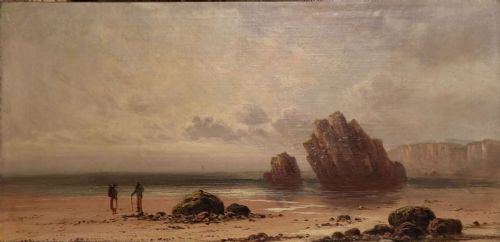

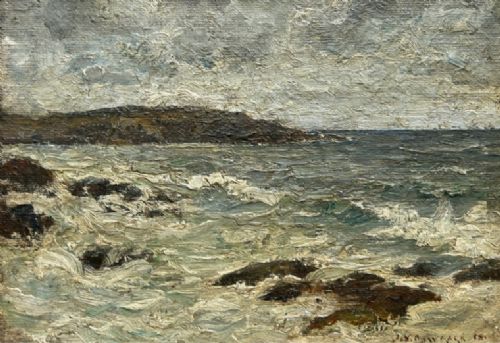
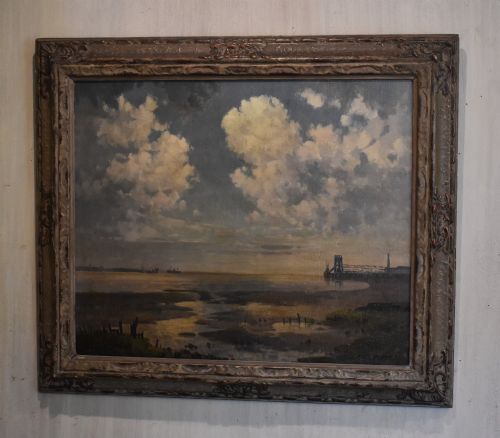
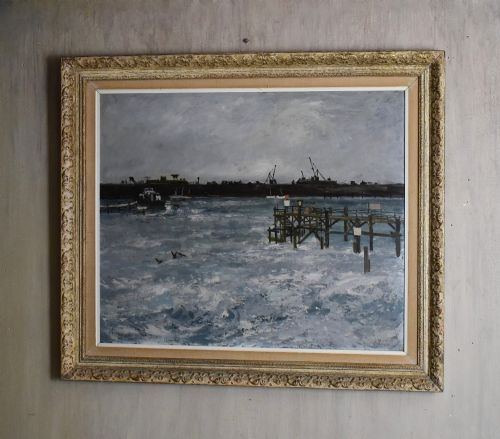
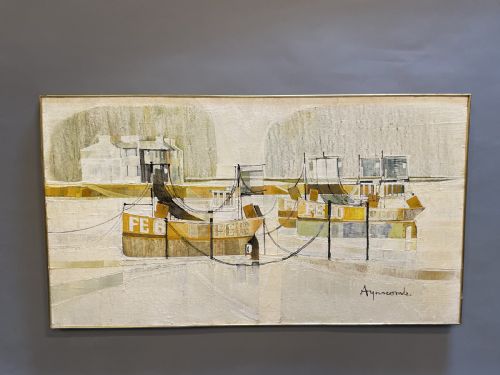


Grey Coastal Oil Painting
A grey coastal oil painting captures the sombre light and salt spray of the shoreline through layered pigment.
Grey Coastal Oil Painting
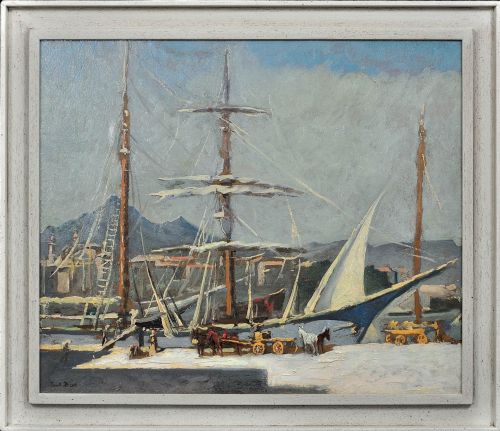
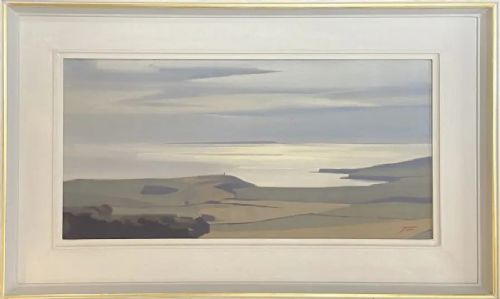
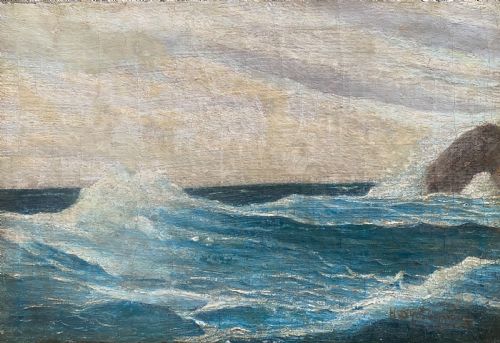
A grey coastal oil painting brings together marine views, harbour scenes and turbulent seas rendered in muted tones. The pieces on this page span the Victorian era through the mid-twentieth century, capturing shorelines from British ports to French fishing harbours.
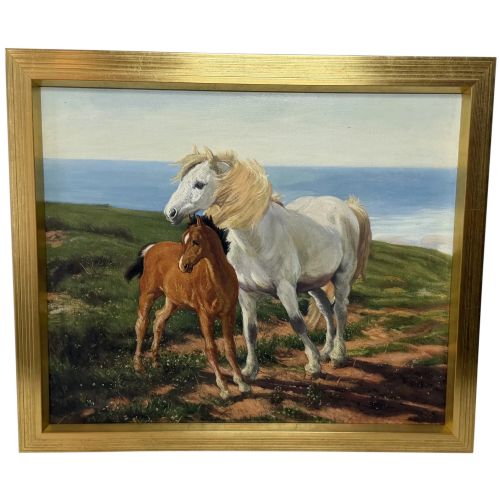
Buyers encounter works executed on canvas, wood and board, reflecting styles from nineteenth-century marine art to British impressionism and twentieth-century realism. Many depict specific locations such as Whitby, Filey Brigg and various river estuaries.
The dominant palette relies on slate greys, leaden blues and overcast whites to record maritime weather, shipping activity and rocky beaches.
Materials and Technique
Artists built these compositions using oil paint applied to canvas, wooden panels or thick boards, often sealing the work within gilt frames. The medium allowed for both smooth atmospheric blending and heavy impasto technique to render the texture of crashing waves and rocky cliffs.
Brushwork varies from tight academic precision in Victorian marine art to looser, expressive marks characteristic of impressionist and modernist schools.
Grey Coastal Oil Painting Retail Price Guide 2026
Typical asking prices for grey coastal oil painting among the pieces listed under this phrase on Sellingantiques today, from the lower quarter to the upper quarter. They describe what is for sale here now, not the wider market.
Several artists braved relentless North Sea gales to paint shipwrecks and pilot boats directly from windswept Yorkshire cliffs.
Distinctions in Quality
Quality rests upon the artist's handling of light and atmosphere, where the most accomplished works convey the palpable dampness and movement of the sea through confident brushwork rather than mere documentation. Superior paintings demonstrate a sure command of tone, making overcast skies and grey waters pulse with atmospheric depth.
The integration of the support also dictates merit, with well-preserved canvases and stable wooden boards maintaining the structural integrity of the pigment over decades.
Kenneth Cozens·Clive Browne·Peter Brannan·Paul Bret·James Fry·Raymond Picque·Herbert Royle·William Greaves·Charles Sim Mottram·Owen Bowen·John Davison Liddell·John Sanderson Wells·Edward T Jones·Frank Myers Boggs·Bertram Priestman·John W Gilroy
The Grey Coastal Oil Painting Glossary
- Impasto
- Paint applied thickly to a surface, standing out in relief from the plane and capturing physical texture. This technique often denotes sea spray or rocky strata in maritime scenes.
- Canvas
- A closely woven fabric stretched across a wooden frame to serve as a sturdy support for oil paint. It provides a slightly flexible surface that absorbs the initial layers of pigment.
- Gilt
- A thin layer of gold leaf or gold-coloured pigment applied to wooden picture frames. It was widely used in Victorian and early twentieth-century framing to complement marine works.
- Board
- A rigid wooden or composite sheet used as an alternative to canvas for painting. It offers a completely firm foundation for artists working outdoors.
- Impressionism
- A style of painting that focuses on the visual impression of a moment, especially regarding the shifting effect of light and colour. This approach appears frequently in twentieth-century coastal works.
Grey Coastal Oil Painting: Frequently Asked Questions
How do I date a grey coastal oil painting?
Dating relies heavily on the stretcher construction, canvas type and framing style, alongside any signature or biographical dates of the artist. Victorian pieces typically feature heavier ornamentation and traditional academic brushwork, while twentieth-century examples embrace looser modernist interpretations.
Examining the reverse of the board or canvas often reveals gallery labels, titles or exhibition stamps that narrow down the exact decade of creation.
Where were most of these coastal scenes painted?
The geographical focus centres primarily on British ports, Yorkshire fishing towns, Scottish borders and various European harbours. Locations such as Whitby, Filey Brigg and the North East coast appear frequently in the record.
Artists also travelled to French coastal communities like Concarneau and the French Riviera to capture local maritime activity.
What is the difference between canvas and board supports?
Canvas provides a woven textile base that yields slightly under the brush, allowing for subtle tension and texture over time. Board offers a completely rigid surface made of wood or compressed material, which was particularly favoured for portable plein air work.
Both materials require stable environmental conditions to prevent warping or paint cracking.
How should I care for an antique oil painting?
Keep the artwork away from direct sunlight, extreme temperature fluctuations and high humidity to protect both the wooden support and the oil pigment. Avoid using water or liquid cleaners on the painted surface, relying instead on professional restoration for any dust or grime accumulation.
Ensuring the back of the frame is adequately sealed prevents dust from settling on the reverse of the canvas or board.