
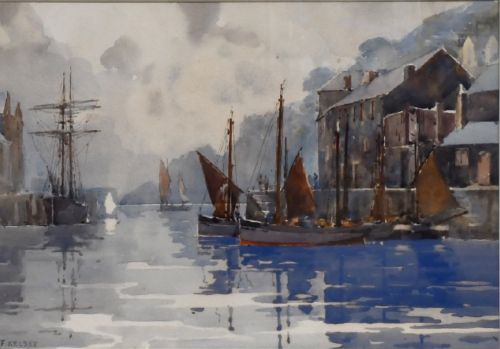


Edwardian Seascape Artwork
Edwardian seascape artwork captures coastal vessels and maritime scenes through the distinct lens of early twentieth-century painters.
Edwardian Seascape Artwork
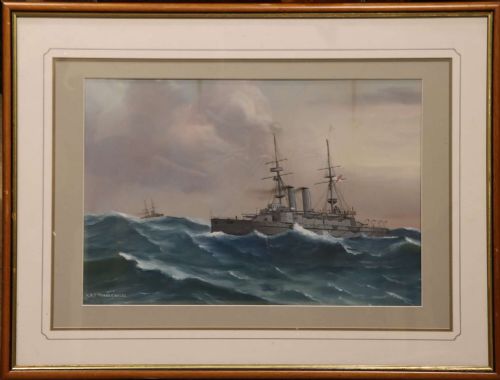
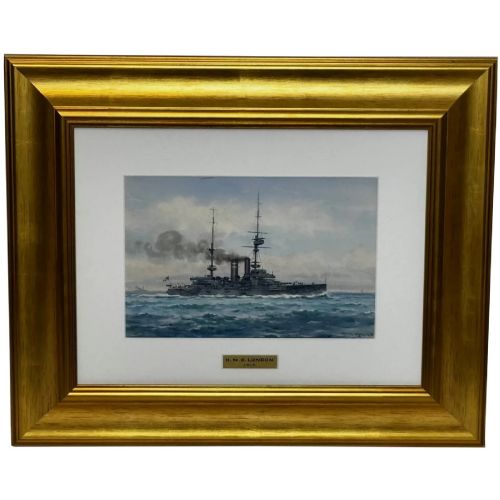
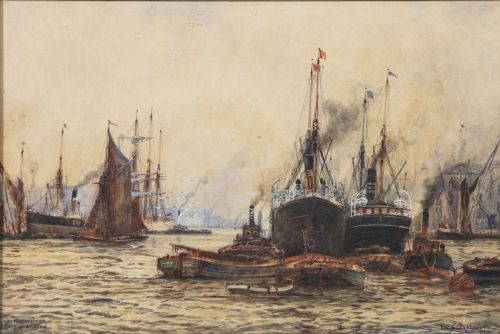
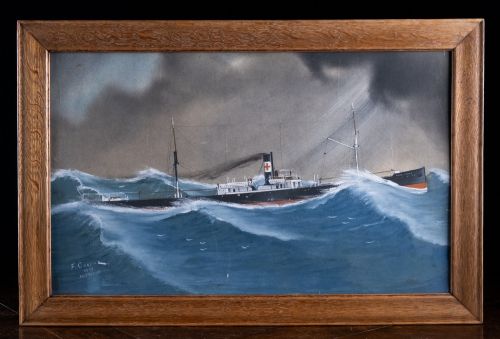
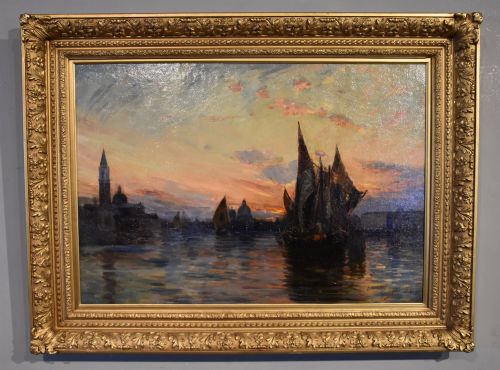
Edwardian seascape artwork encompasses paintings and watercolours depicting coastal views, harbour scenes, and open sea vessels produced around the early twentieth century. These works frequently document specific naval ships, fishing luggers, and bustling ports from Cornwall to Venice.
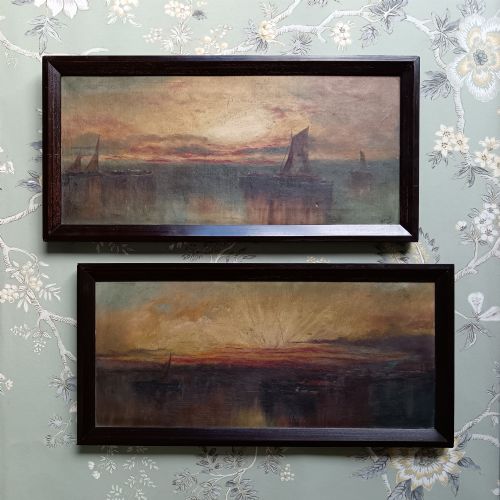
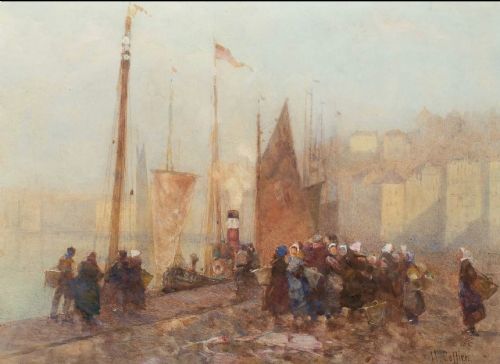
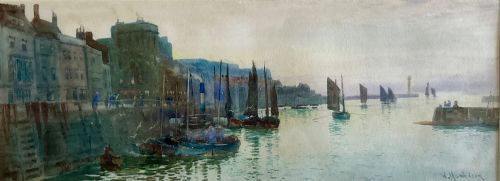
Buyers on this page most commonly encounter framed watercolours and oil paintings on canvas or board originating from the Edwardian period, alongside related Victorian and 1930s maritime pieces. The subjects range from calm evening departures at Whitby to dramatic storms involving steamships and tall-masted vessels.
The assortment records local British coastal life as well as international waters, including China Trade paintings of junks on the Pearl River. Each piece reflects contemporary interest in maritime commerce, naval power, and picturesque coastal topography.
Materials and Technique
Artists of these maritime scenes relied primarily on oil paint applied to canvas or wood board, alongside watercolour pigment worked onto paper. Gouache appears frequently for added opacity and sharp detail in ship rigging and breaking waves.
The physical support typically consists of stretched canvas in timber frames or heavy watercolour paper protected by glass. Brushwork shifts from tight topographical recording of naval architecture to looser Impressionist application of light on water.
Several canvases capture Whitby harbour exactly as seaweed gatherers and steam vessels left it a century ago.
Variations in Quality
Quality in these coastal paintings rests upon the artist's command of atmospheric light, water movement, and accurate vessel proportions. Superior works capture the weight of choppy seas and the specific rigging of named ships with confident brushwork rather than stiff technical illustration.
The handling of the medium distinguishes standard decorative watercolours from accomplished fine art paintings. Strong composition and tonal depth separate works by established marine specialists from anonymous or follower pieces.
Frank Watson Wood·Charles Napier Hemy·Richard Harry Carter·Pieter Cornelis Dommersen·Daniel Sherrin·Edward Henry Eugene Fletcher·James Webb·William Kay Blacklock
The Edwardian Seascape Artwork Glossary
- Gouache
- An opaque watercolour paint consisting of pigment mixed with a water-bound gum and a white inert material. It allows artists to build bright highlights on cresting waves and ship sails.
- Lugger
- A small two- or three-masted fishing vessel rigged with standing lugsails. These craft frequently populate the foreground of West Country and Yorkshire harbour scenes.
- Impressionism
- An art style characterised by relatively small, thin, yet visible brush strokes and an emphasis on accurate depiction of light. In marine works, this approach renders shimmering reflections across coastal waters.
- Maritime
- Relating to the sea, shipping, and navigation. This category unites military dreadnoughts, working fishing fleets, and foreign trading junks under one artistic umbrella.
Edwardian Seascape Artwork: Frequently Asked Questions
What subjects appear in these seascapes?
The artworks depict named naval vessels, working fishing boats, bustling harbours, and serene coastal views. Scenes range from British ports in Cornwall and Whitby to international waters off Venice and Hong Kong.
Artists focused heavily on contemporary maritime life, recording steamships, tall-masted sailing ships, and local craft navigating coastal waters.
How do watercolours differ from oil paintings here?
Watercolour works utilise pigment on paper, often protected under glass, offering a transparent and luminous quality well suited to bright coastal light. Oil paintings employ heavy pigment on canvas or wood board, providing deeper texture and richer tonal layering.
Both mediums capture the movement of sea and sky, though oils frequently achieve greater surface relief in depicting turbulent waves.
How should I display these artworks?
These framed paintings and watercolours suit traditional wall display in living spaces, studies, or hallways. Works on paper under glass require placement away from direct sunlight to prevent pigment fading over time.
Matching the period frame to the interior setting enhances the visual impact of the coastal subject matter.
How do I identify the date of a piece?
Dates often appear alongside artist signatures directly on the painted surface or on the reverse of the canvas or paper. Stylistic elements, such as the presence of specific Edwardian naval ships or early twentieth-century clothing on figures, also aid dating.
Period framing materials and labels attached to the wood backing provide further chronological clues.