


Coastal Cliff Oil Painting
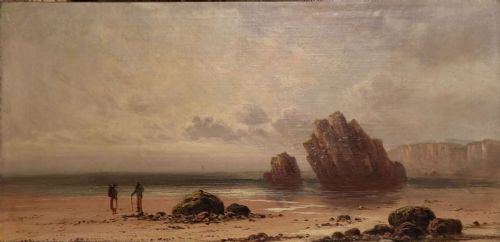
A coastal cliff oil painting captures the rugged grandeur of the shore, drawing collectors with its dramatic brushwork and atmospheric light.
Coastal Cliff Oil Painting
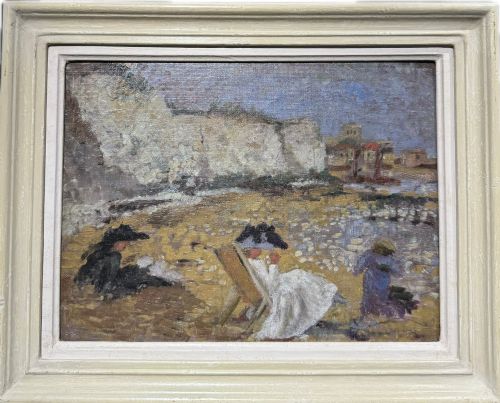
A coastal cliff oil painting presents shorelines, headlands, and beaches across various periods from the Victorian era through the mid-twentieth century. These works range from sweeping nineteenth-century topographical views of British landscapes to impressionist French scenes rendered on canvas or board.
Buyers meet works spanning styles like Post-Impressionism, British Impressionism, and Victorian Realism. Subjects vary from figures on rocky beaches and sunbathing nudes on cliffs to lighthouses and pastoral scenes with sheep grazing near drops.
Originating largely from British and French contexts, these paintings reflect changing artistic interpretations of the coast. The selection includes works produced across several decades, showing both intimate board studies and exhibition-sized canvases.
What varies in quality
Quality rests in the handling of light, atmosphere, and spatial depth rather than mere condition. Superior examples demonstrate confident brushwork that defines the texture of cliffs and the movement of the sea with economy and precision.
The strength of the composition dictates the visual impact of the piece. Stronger works balance the mass of coastal rock formations against expansive skies and water, while lesser examples rely on formulaic arrangements.
The listings show works executed on both canvas and board across various decades from the nineteenth century to the mid-twentieth century.
Raymond Moritz·Norman Lloyd·Thomas Rose Miles·Herbert James·William Savage Cooper·James Watson·William Edward Webb·Edward T Jones·Charles Jones·Alfred Egerton Cooper·Lester Sutcliffe
The Coastal Cliff Oil Painting Glossary
- Canvas
- A heavy woven fabric stretched across a wooden frame to serve as a support for oil paint. It provides a flexible yet durable surface favoured by artists for centuries.
- Board
- A rigid wooden panel used as a support for painting, often seen in smaller or plein air works. It offers a firm surface that requires minimal preparation.
- Gesso
- A primer mixture consisting of a binder mixed with chalk, gypsum, or pigment. Applied to canvas or board to prepare the surface for oil paint.
- Post-Impressionism
- An art movement following Impressionism that extended its rejection of traditional academic standards while retaining the use of vivid colours and distinct brushstrokes. Artists focused on symbolic content and formal structure.
- Impasto
- Paint applied thickly to a canvas or board, standing out from the surface to create visible texture. This technique gives weight and relief to elements like frothing water or rocky strata.
Coastal Cliff Oil Painting: Frequently Asked Questions
What periods do these paintings date from?
The works span from the nineteenth century through the early decades of the twentieth century. Examples include Victorian pieces alongside later Edwardian and interwar paintings.
Stylistic shifts across these decades move from detailed realism towards impressionistic interpretations of coastal light and atmosphere.
Are these paintings executed on canvas or board?
Both supports appear frequently across the selection. Traditional stretched canvas is common in larger works, while wooden board often appears in smaller studies.
Each support method influences the texture and preservation of the oil paint layer over time.
Where were these coastal scenes painted?
Locations range widely across British and French coastlines. Specific sites include Cornish headlands, the Isle of Man, the Alabaster Coast, and the French Riviera.
Topographical accuracy varies from exact depictions of named bays and piers to generalised impressions of seaside landscapes.
How do I display an oil painting safely?
Keep paintings away from direct sunlight and fluctuating humidity levels to protect the oil medium and wooden supports. Proper framing helps shield the canvas or board from environmental wear.
Ensure wall fixings are secure, particularly for larger exhibition-sized canvases housed in heavy wooden frames.