


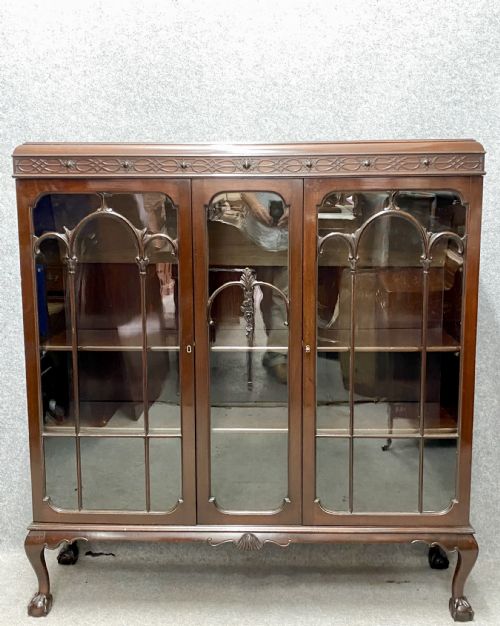

Claw and Ball Foot Cabinet
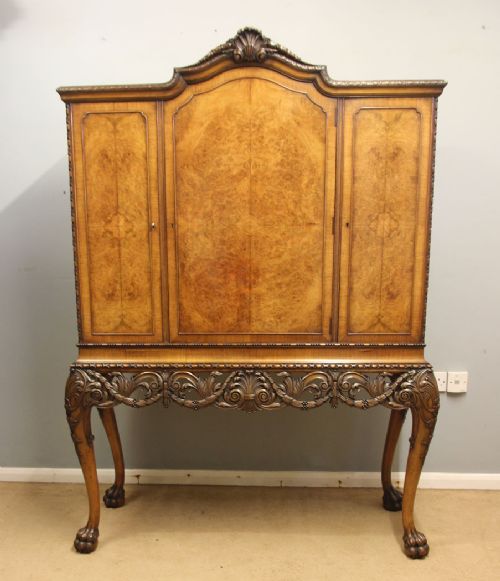
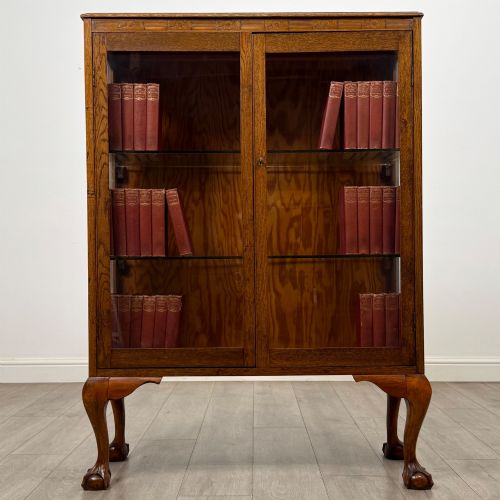
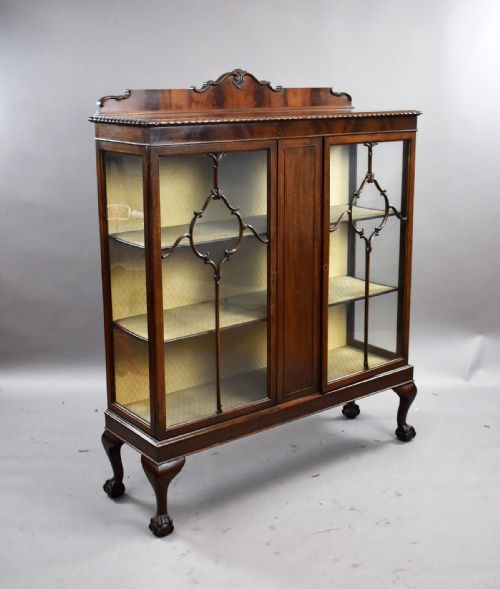
These claw and ball foot cabinet pieces combine timber and carved detail, offering storage and display for the home.
Claw and Ball Foot Cabinet
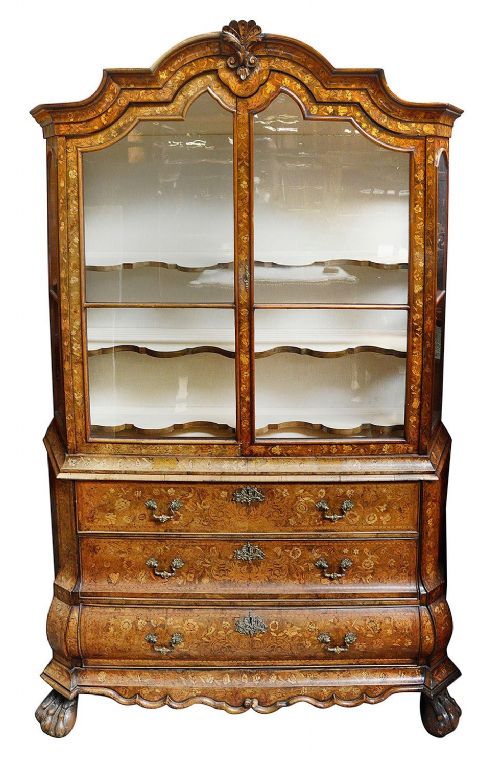
A claw and ball foot cabinet brings together functional storage and period revival design, appearing across forms such as display cabinets, side cabinets, and bureau bookcases. These items range from Edwardian and 1920s examples to 18th-century Dutch marquetry pieces.
The most common versions met on this page belong to the Edwardian period and the 1920s, heavily influenced by Chippendale and Queen Anne revival styles. Cabinet makers utilised mahogany, walnut, and oak to construct these versatile household items.
Buyers encounter everything from tall bookcases and music cabinets to sideboards and cutlery chests. Each piece relies on the characteristic carved claw and ball foot to ground its proportions.
How they were made
Makers constructed these cabinets using solid hardwoods like mahogany and oak, frequently applying flame mahogany veneer or burr walnut veneer to visible surfaces. These timbers provided both structural stability and rich decorative grain patterns.
Workshops incorporated fine details such as brass hardware, glass panels for display doors, and intricate marquetry inlay. The defining claw and ball feet required skilled hand carving to shape the talons grasping the spherical support.
Even the cutlery needs a grand home when nestled inside a dedicated chest complete with claw and ball feet.
What varies in quality
Quality rests heavily on the execution of the timber work and the depth of the carving on the feet. Finer examples display crisp detail in the talons and superior matching of veneer grains across the cabinet facade.
The choice of primary timber and secondary wood lining dictates the longevity and substance of the piece. Superior construction shows in the tight fitting of doors, drawers, and internal shelving.
Walker & Hall, Sheffield
The Claw and Ball Foot Cabinet Glossary
- Claw and ball foot
- A furniture foot design representing a bird's talon grasping a ball, popular in 18th-century and revival furniture. This motif originates from Chinese art before arriving in European design via Dutch trade.
- Burr walnut veneer
- A thin slice of wood taken from the burl growth of a walnut tree, revealing swirling patterns. Cabinet makers applied this to front panels for decorative impact.
- Marquetry
- The art of applying pieces of veneer to a structure to form decorative patterns or pictures. Craftsmen used various tinted woods to create complex floral or geometric scenes.
- Bureau bookcase
- A dual-purpose item featuring a sloping writing flap above and shelving enclosed by doors above that. It serves as both a desk and a display unit for books.
- Breakfront
- A piece of furniture where the central section projects forward from the flanking sides. This architectural feature creates visual depth and breaks up long flat surfaces.
Claw and Ball Foot Cabinet: Frequently Asked Questions
What periods do these cabinets date from?
The selection spans from the 18th century up through Edwardian production and into the 1920s. Revival styles dominate the later 19th and early 20th centuries.
Buyers will find that 18th-century examples often feature Dutch marquetry, whilst later pieces lean heavily into Chippendale and Queen Anne revivals.
What woods were used in construction?
Mahogany, oak, and walnut form the primary structural timbers across these listings. Makers also applied decorative veneers to enhance the appearance.
Flame mahogany and burr walnut veneers provide distinct grain patterns on door fronts and drawer panels, supported by solid oak or mahogany frames.
How do I identify a revival style?
Revival pieces borrow design vocabulary from earlier centuries, such as 18th-century Chippendale or Queen Anne forms. Makers in the Edwardian era and the 1920s reproduced these classic proportions.
Examining the construction methods, interior linings, and secondary timbers helps differentiate an original 18th-century piece from a later revival version.
Where were these cabinets placed in a home?
These items served various practical functions in dining rooms, libraries, and parlours. Display cabinets and vitrines showcased porcelain or glassware.
Side cabinets, sideboards, and bureau bookcases provided enclosed storage for silver, documents, and books while adding formal presence to a room.