
Antique Display Side Cabinet
When you search for an antique display side cabinet, you are looking at timber furniture built to exhibit and store precious objects in domestic rooms.
Antique Display Side Cabinet
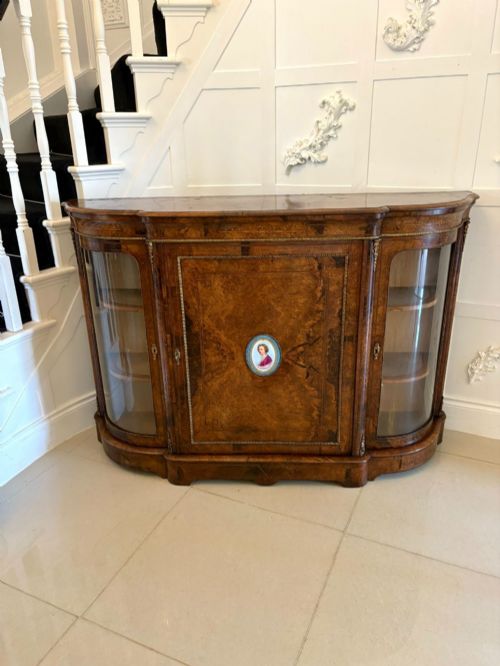
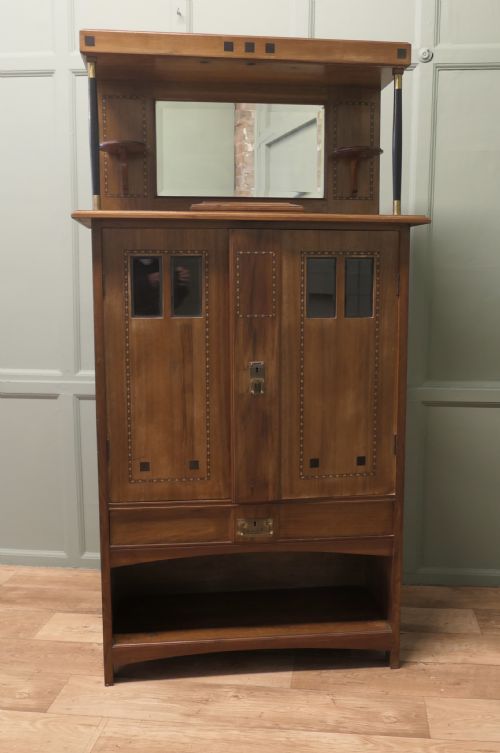
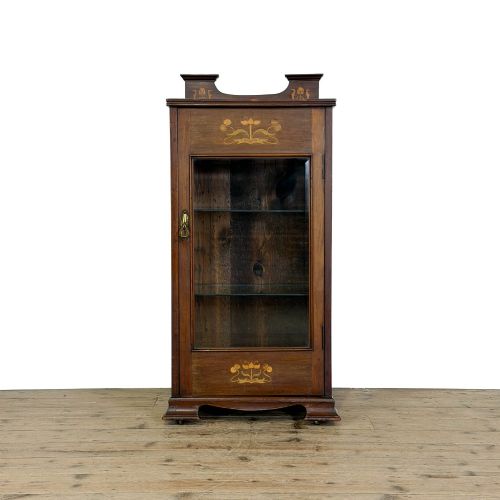
An antique display side cabinet combines glazed or open shelving for showing ceramics and glass with enclosed lower cupboards for storage. These pieces bridge the gap between freestanding display cases and traditional sideboards.
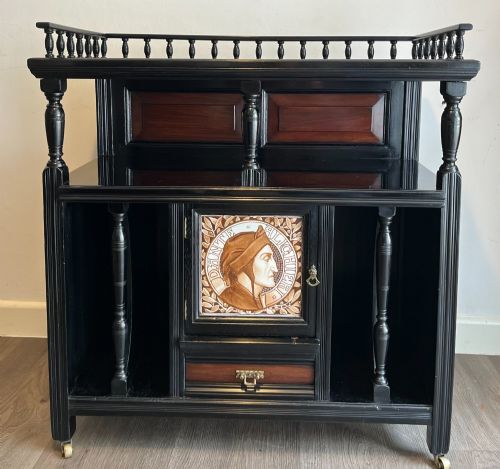
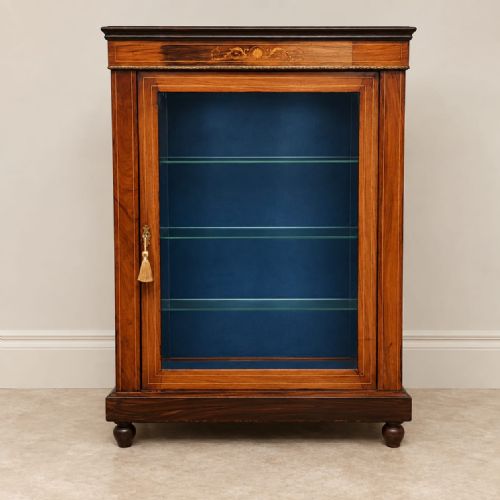
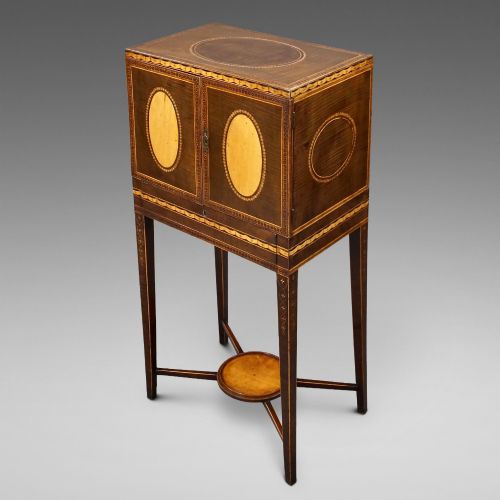
The pieces appearing on this page span the Victorian and Edwardian eras, alongside earlier Georgian and Regency pieces, with nineteenth-century walnut and mahogany examples forming the core of the selection.
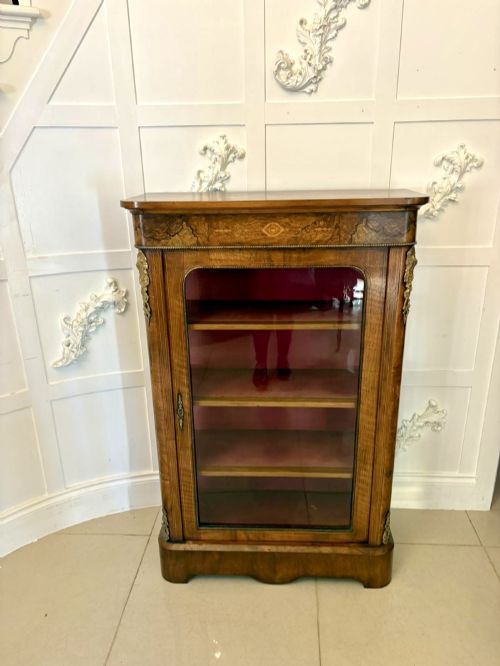
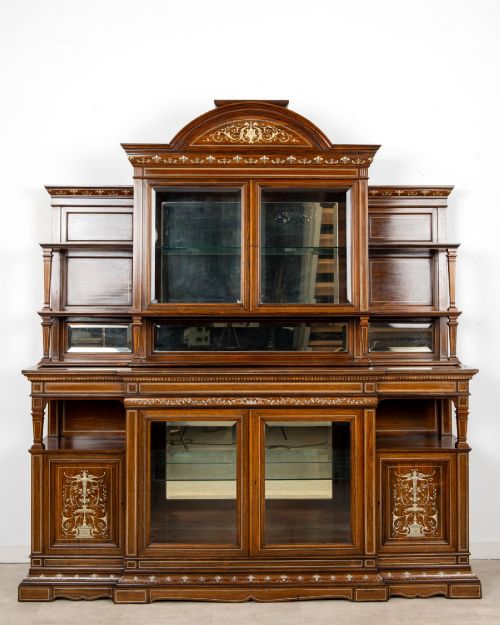
Forms range from compact pier cabinets designed for narrow wall spaces to grand credenzas and breakfront bookcases that anchor a principal room.
How they were made
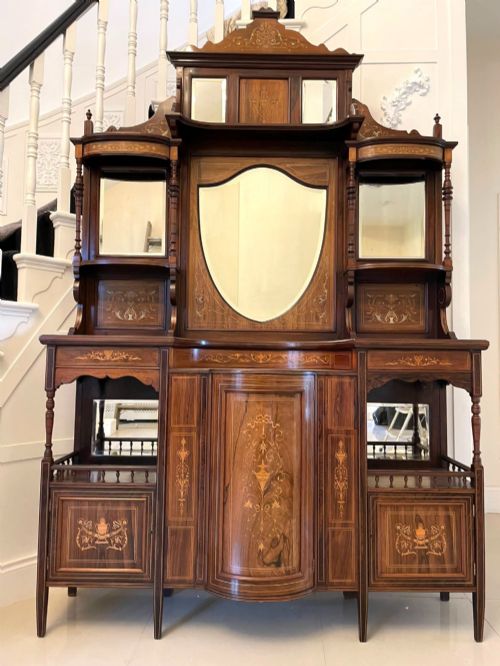
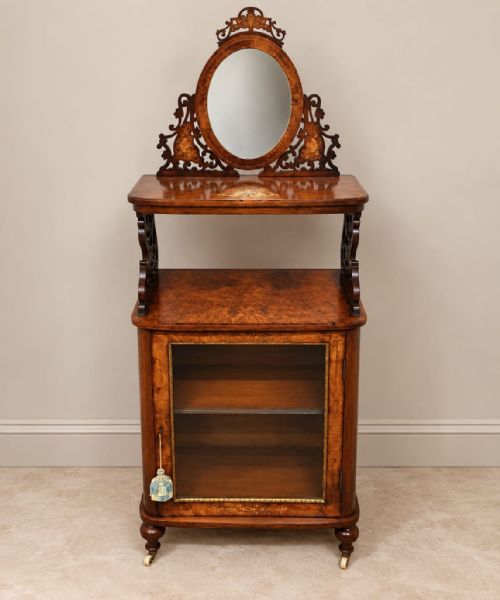
Cabinetmakers constructed carcasses from dense hardwoods such as mahogany, rosewood, and walnut, often applying finely figured veneers of burr walnut or satinwood across primary surfaces.
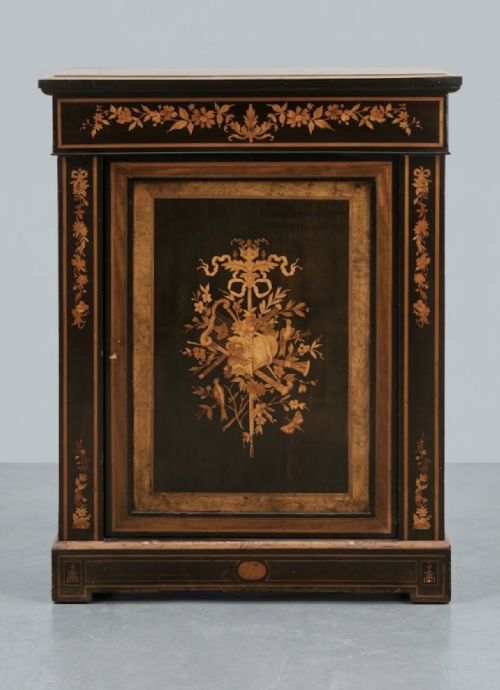
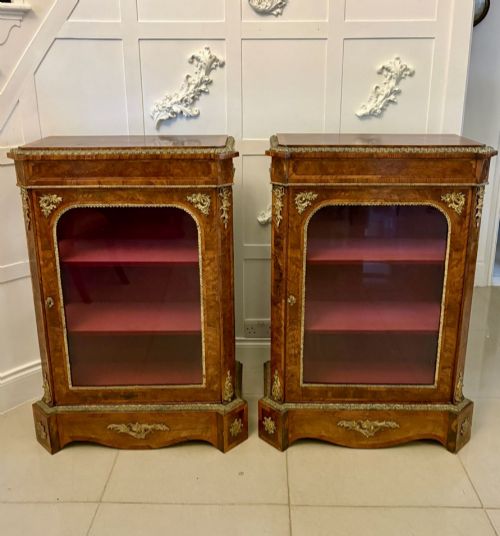
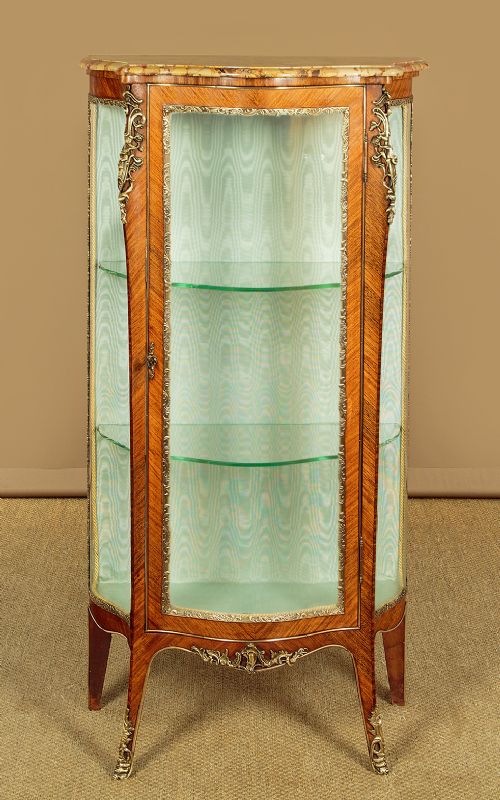
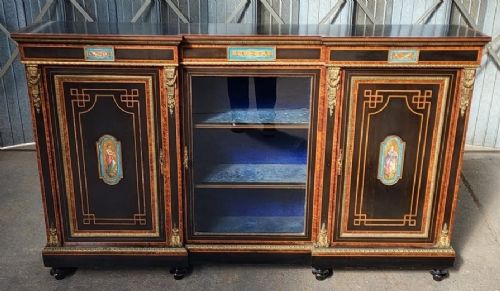
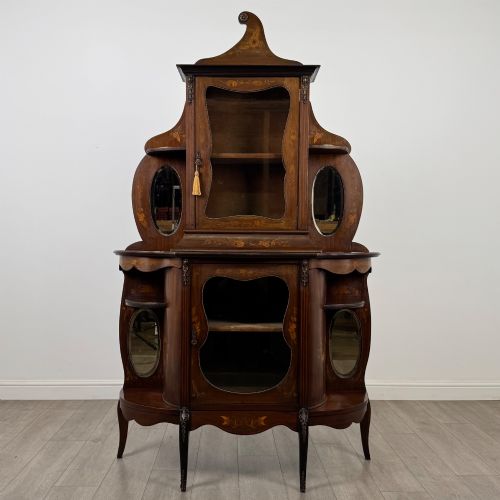
Structural enrichment relied on cast or chased ormolu, gilt bronze, and brass mounts, alongside delicate marquetry and mother-of-pearl inlay embedded into the wood.
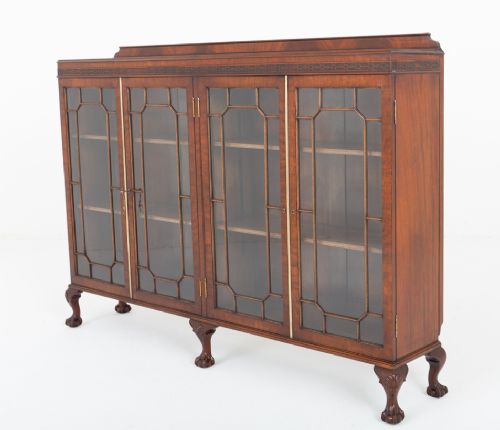
Glazing utilised flat or curved glass panes held within slender timber glazing bars, designed to maximise light penetration to the interior shelves.
Some Victorian musical cabinets double as storage for sheet music, proving that nineteenth-century drawing rooms took their home entertainment quite seriously.
What varies in quality
The distinction between standard commercial production and high workshop output lies in the selection of timbers and the precision of the marquetry. Superior examples employ deeply figured veneers and continuous grain patterns across multiple doors and panels.
Hardware and mounts indicate grade; cast ormolu and detailed gilt bronze demonstrate a higher level of expenditure than stamped brass or plain plated alternatives.
Internal construction, including secondary timbers used for drawer linings and the weight of the glass, marks the difference between utilitarian items and pieces made by established cabinetmakers.
Collinson and Lock·Gillows·Lamb of Manchester·Edwards and Roberts·Liberty and Co
The Antique Display Side Cabinet Glossary
- Credenza
- A low cabinet or sideboard, frequently fitted with glass-fronted side doors and central cupboards, popular in Victorian drawing rooms. It stands low to the floor and often incorporates ormolu mounts.
- Pier Cabinet
- A narrow cabinet built specifically to occupy the wall space between windows. These are typically shallow in depth and glazed on the front.
- Marquetry
- Decorative patterns formed by fitting together thin veneers of different woods, metals, or shells. It requires high precision to create intricate floral or geometric designs.
- Ormolu
- Gilded bronze used for decorative mounts and feet on furniture. The technique involves applying finely ground gold-mercury amalgam to bronze.
Antique Display Side Cabinet: Frequently Asked Questions
How were display side cabinets used historically?
These cabinets served primarily in drawing rooms and reception spaces to house and exhibit collections of porcelain, glassware, and decorative objects. The upper glazed sections protected delicate items from dust while keeping them visible to visitors.
The lower cupboards provided discreet storage for table linens, writing materials, or supplementary dining ware, keeping the main living areas tidy.
Where should I place a side cabinet at home?
Narrow pier cabinets suit hallways or alcoves where floor space is restricted, whereas larger credenzas require a prominent wall in a dining room or drawing room. Positioning them away from direct sunlight protects vulnerable rosewood and mahogany veneers from fading.
Ensure the room has stable humidity levels to prevent the timbers and historic glues from drying out over time.
How do I distinguish Victorian from Edwardian pieces?
Victorian cabinets generally feature heavier proportions, darker woods like rosewood and burr walnut, and rich ormolu mounts. The decorative scheme often leans towards ornate marquetry and formal symmetry.
Edwardian pieces tend to show lighter satinwood or painted finishes, reflecting a shift towards airier, Neo-Georgian or Sheraton revival aesthetics.