


Carved Walnut Highboy
These carved walnut highboy pieces are tall storage furniture built from rich timbers, offering historic character and deep drawers for any traditional interior.
Carved Walnut Highboy
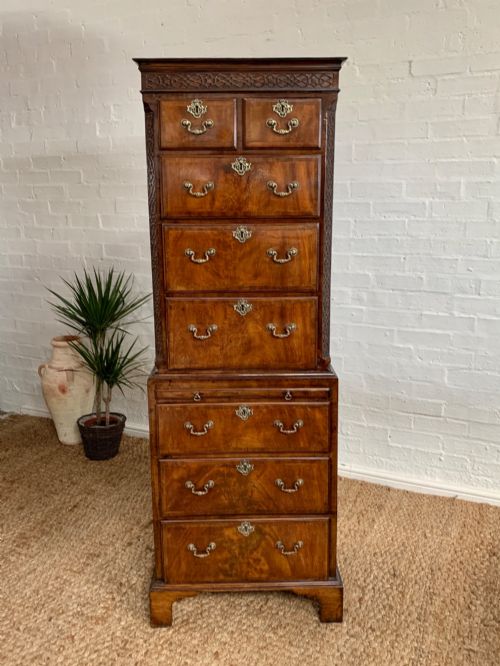
When you search for a carved walnut highboy, you are looking at tall case furniture designed to maximise vertical storage. These pieces combine upper and lower sections, often taking the form of a chest on stand or a tallboy.
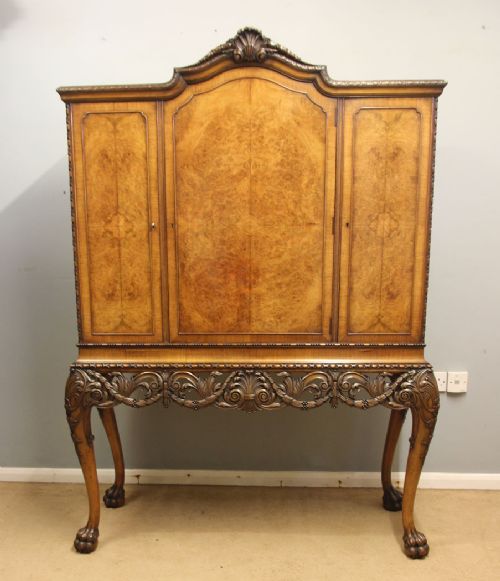
The examples gathered here span several centuries, reaching from the seventeenth century through to revivals in the early twentieth century. Walnut and burr walnut dominate the selection, accompanied by occasional oak and amboyna veneers.
You are most likely to meet Queen Anne and George III styles on this page, alongside earlier William and Mary forms. These variations reflect shifting tastes in English cabinet making over hundreds of years.
How they were made
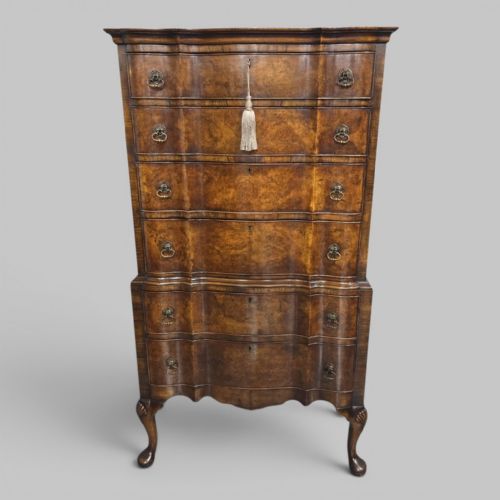
Cabinet makers utilised solid walnut and decorative burr walnut veneers over secondary timbers like oak to construct these tall chests. The application of veneer required great skill to align grain patterns symmetrically across multiple drawers.
Brass hardware such as drop handles and escutcheons punctuate the dark timber surfaces, secured with traditional fixings. Carved details emerge directly from the solid wood on stands and cornices, defining the distinct style of each period.
Listings span the 17th century through the 1930s, featuring walnut, burr walnut veneer, oak, and brass.
What varies in quality
The sophistication of the timber grain separates standard examples from exceptional ones, particularly in the use of highly figured burr walnut veneer. Rich figuring and careful matching across drawer fronts demand superior craftsmanship.
Proportion and the integrity of the original stand or base dictate the overall architectural success of the piece. Subtle carving on legs and cornices further distinguishes the work of skilled period joiners.
The Carved Walnut Highboy Glossary
- Highboy
- A tall chest of drawers mounted on a low stand or legs. This American term often describes pieces similar to English chests on stands or tallboys.
- Tallboy
- A tall chest of drawers made in two sections, usually a smaller chest stacked upon a larger base. They emerged in the late seventeenth century for efficient vertical storage.
- Veneer
- A thin slice of decorative wood applied to a firmer underlying timber. Burr walnut veneer provides the swirling patterns seen on many surfaces here.
- Escutcheon
- A protective plate surrounding a keyhole. Brass examples on these pieces often reflect the period of manufacture.
Carved Walnut Highboy: Frequently Asked Questions
What is a highboy?
A highboy is a tall chest of drawers divided into two sections or raised on a distinct stand. It provides substantial storage while occupying a compact floor footprint.
These pieces combine functional drawer space with decorative cabinet work, making them striking focal points in traditional rooms.
How do I date a walnut highboy?
Dating relies on observing structural characteristics, hardware styles, and timber types across the piece. Seventeenth-century examples show different leg forms and construction methods compared to eighteenth-century or twentieth-century revival pieces.
Matching the listed period styles, such as Queen Anne or George III, helps place the furniture in its historical context.
Where should I place a tall chest?
Tall chests require stable wall placement and adequate vertical clearance to accommodate their imposing height. Bedrooms and large hallways suit their grand scale best.
Ensure the room humidity remains stable to protect the historic timber and delicate veneers from drying out.
What is burr walnut?
Burr walnut is a specialised timber derived from tree growths that produce intricate, swirling grain patterns. Cabinet makers prized this wood for creating decorative drawer fronts.
Using burr veneer allowed workshops to display dramatic natural patterns across flat surfaces without warping solid wood.