


Three Door Walnut Cabinet
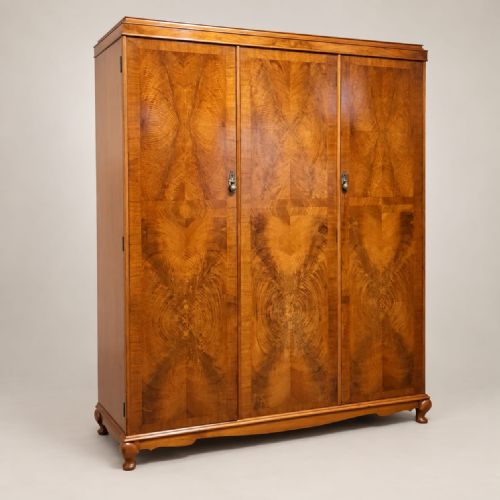
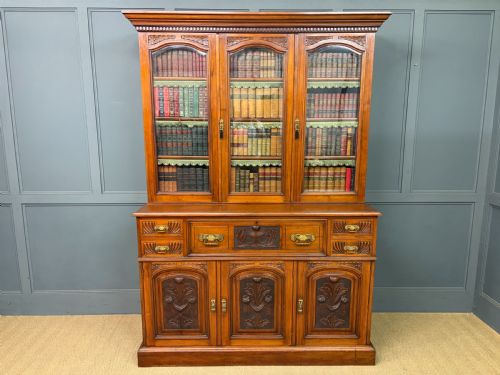
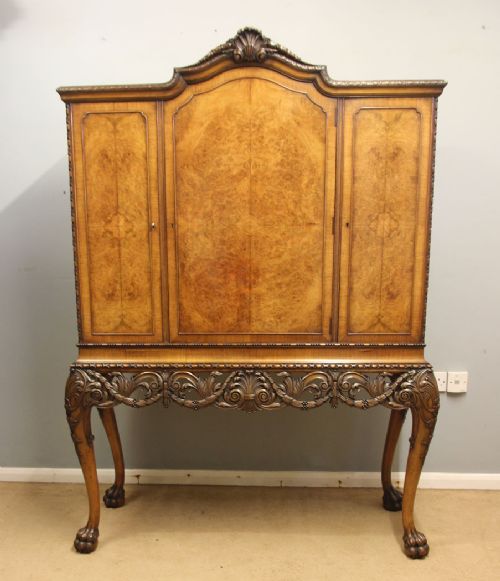
A three door walnut cabinet brings rich timber figure and generous storage to a room, ranging from Victorian breakfront bookcases to Edwardian display pieces.
Three Door Walnut Cabinet
When searching for a three door walnut cabinet, buyers encounter a diverse selection of large storage and display furniture spanning the Victorian, Edwardian, and Art Deco periods. These forms include breakfront bookcases, side cabinets, display cabinets, and sideboards executed in rich walnut timbers.
The pieces appearing most frequently range from nineteenth-century Victorian breakfront bookcases to early twentieth-century burr walnut side cabinets and wardrobes. Originating from English and continental workshops, they serve both practical storage and grand decorative functions in traditional and period interiors.
Makers and designers from various eras utilised the expansive surface area of a three door walnut cabinet to showcase intricate grain patterns, marquetry inlay, and glazed apertures. Whether configured as a bookcase with glass doors or a solid timber sideboard, the three-door format provides substantial capacity.
How they were made
Craftsmen built these cabinets using solid walnut and applied burr walnut veneers to achieve striking figured surfaces across the wide three-door format. Secondary timbers provided sturdy internal framework, whilst skilled cabinetmakers laid decorative veneers with precise grain matching.
Details such as brass mounts, ormolu accents, and carved ornamentation frequently complement the walnut exterior. Glass panes feature in bookcase and display variations, while selected pieces incorporate marble tops or marquetry work to elevate the visual finish.
The listings show three door walnut cabinets spanning the Victorian, Edwardian, and Art Deco eras, constructed primarily from walnut, burr walnut, and kingwood.
What varies in quality
The choice of timber grain separates standard production from exceptional examples, with master craftsmen selecting highly figured burr walnut veneers for the most prominent facades. Finer execution is evident in balanced marquetry, crisp carved details, and well-proportioned breakfront styling.
Construction standards differ between mass-produced factory items and exhibition-grade pieces from renowned firms. Superior quality reveals itself in the seamless integration of doors, high-grade brass hardware, and the enduring stability of the walnut carcase over time.
Waring & Gillow
The Three Door Walnut Cabinet Glossary
- Burr Walnut
- A specialised wood veneer taken from the growth growths or burls of walnut trees. It yields a swirling, highly decorative pattern prized by cabinetmakers.
- Breakfront
- A cabinet design where the central section projects forward from the flanking sections. This architectural arrangement creates depth and visual rhythm across the facade.
- Ormolu
- Gilt bronze mounts applied to furniture for decorative effect. It adds metallic contrast to the dark walnut timber.
- Marquetry
- The art of applying pieces of veneer to a structure to form decorative patterns and pictures. Craftsmen use various woods to achieve tonal shading.
- Secrétaire
- A desk form incorporating a drop-front writing surface concealed within the cabinetry. It combines workspace functionality with large-scale storage.
Three Door Walnut Cabinet: Frequently Asked Questions
How do I date a walnut cabinet?
Dating relies on stylistic clues, construction methods, and period characteristics visible in the hardware and timber preparation. Victorian and Edwardian examples often display distinct revival motifs or simpler structural lines.
Examining the interior timbers and backboards helps confirm the manufacturing era. Comparing the piece against known cabinetmaking styles from the nineteenth and early twentieth centuries narrows the timeframe further.
Are these cabinets difficult to position?
Because three door walnut cabinets are substantial pieces of furniture, measuring available wall space and clearance is essential before placement. Breakfront and wardrobe forms require adequate depth in the room.
Consider the lighting in the space, as walnut grain and glass doors interact strongly with natural and artificial light. Placing them away from direct heat sources protects the timber and veneer.
What is the difference between a bookcase and a side cabinet?
Bookcases typically feature glazed upper doors designed for displaying volumes, whereas side cabinets focus on closed storage or display surfaces at a lower height. Both utilise the three-door layout for balanced proportions.
Selection depends entirely on whether the primary requirement is book storage or general display. Sideboards and credenzas offer similar mass with different internal configurations.
How should I clean walnut furniture?
Maintenance requires gentle dusting with a soft, dry cloth to prevent surface scratching. Avoid silicone-based polishes that can build up and attract dust over time.
Applying traditional beeswax occasionally nourishes the walnut timber and preserves the sheen of the veneer. Keeping the piece away from extreme humidity fluctuations prevents wood movement.