
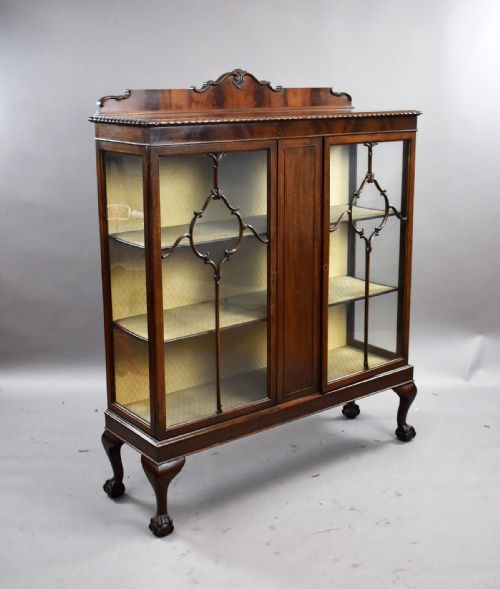


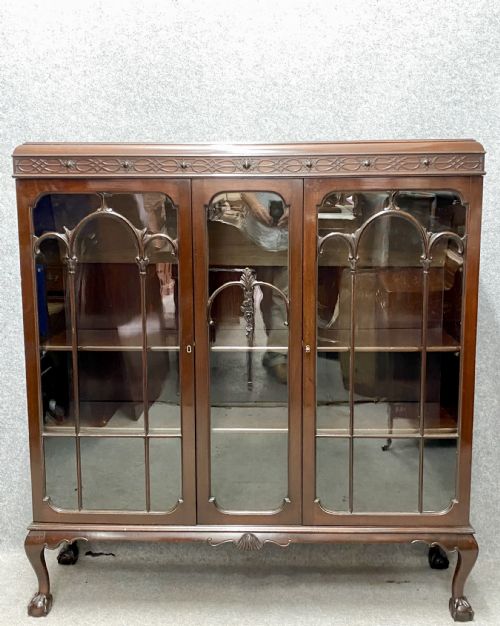

Claw and Ball Feet Cabinet
These claw and ball feet cabinet pieces offer refined storage, uniting traditional carving with versatile timber forms.
Claw and Ball Feet Cabinet
A claw and ball feet cabinet combines functional storage with a distinctive carved terminal detail that grounds the furniture visually. These pieces span formal display furniture to practical side storage and drawer chests, reflecting diverse revival aesthetics.
The Edwardian era and the 1920s generate most of the surviving examples found here, alongside occasional 18th Century and 1900s pieces. Common forms range from display cabinets and sideboards to music cabinets and bureau bookcases.
Revival styles dominate the selection, heavily drawing upon Chippendale and Queen Anne inspirations. Buyers frequently encounter mahogany and oak constructions configured for glass-fronted display or enclosed shelving.
How they were made
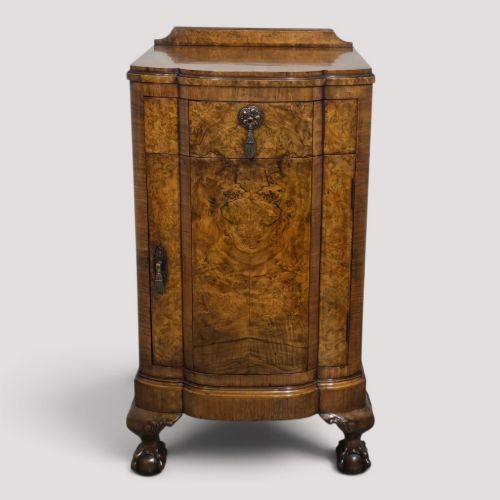
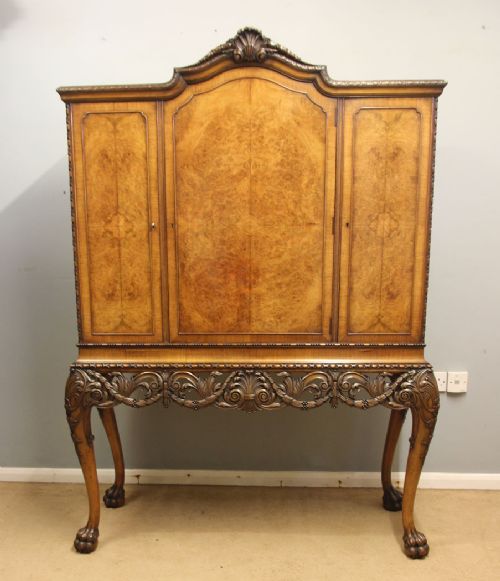
Cabinetmakers utilised solid timbers alongside specialised veneers, applying flame mahogany veneer and burr walnut veneer to enhance visual grain patterns. Structural carcases rely heavily on sturdy mahogany and oak, ensuring long-term stability for heavy shelving and drawer units.
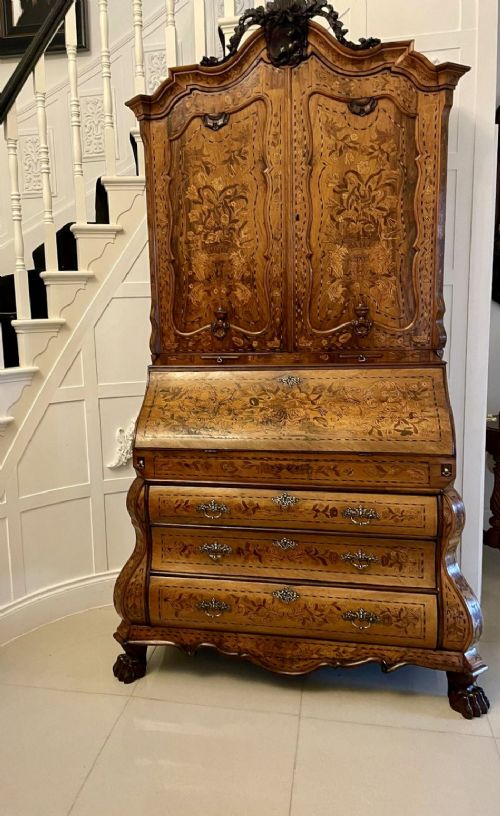
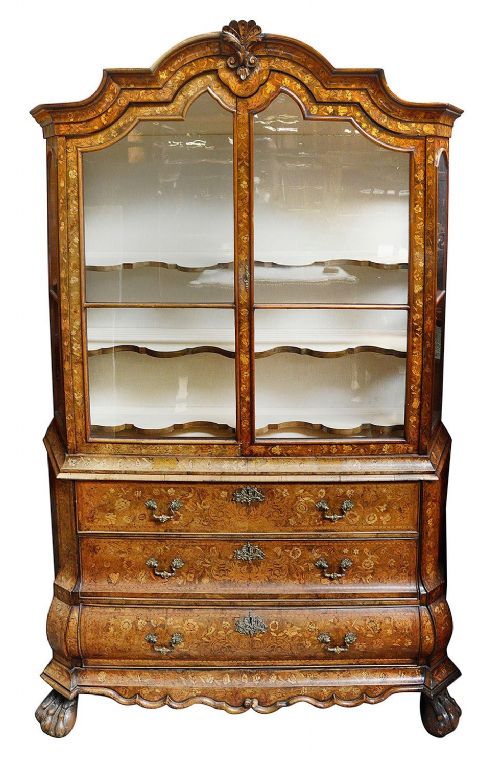
Decorative surfaces integrate glass panels, brass hardware, and intricate Dutch marquetry inlay work. The characteristic feet are carved directly from the timber supports, often emerging from cabriole legs to grasp a stylized sphere.
Wooden talons grip their wooden spheres with surprising determination.
What varies in quality
Quality reveals itself in the precision of the timber selection and the depth of the carved elements. Finer pieces demonstrate careful grain matching across veneered surfaces and crisply defined claw and ball terminals rather than soft, mass-produced moulding.
The integrity of internal fittings, such as bevelled glass panes, velvet-lined display interiors, and robust brass fittings, separates standard utility items from superior cabinetwork. Construction joinery must support heavy loads, particularly in large bureau bookcases and display cases.
Walker and Hall
The Claw and Ball Feet Cabinet Glossary
- Chippendale Style
- Furniture following the 18th-century design vocabulary popularised by Thomas Chippendale. These items frequently feature elaborate carved mahogany details and cabriole legs.
- Vitrine
- A glass-fronted cabinet designed for displaying porcelain, curiosities, or books. They often incorporate glazed side panels to maximise light entry.
- Bureau Bookcase
- A dual-purpose piece featuring a sloping writing flap above drawer storage, surmounted by a shelved bookcase section. They are commonly executed in mahogany.
- Marquetry
- The art of applying thin slices of wood veneers to form decorative pictorial patterns. Dutch examples frequently employ floral motifs.
- Cabriole Leg
- A furniture leg that curves outward and then tapers inward, finishing in a decorative foot such as a claw and ball.
Claw and Ball Feet Cabinet: Frequently Asked Questions
What periods do these cabinets come from?
The available selection primarily spans the Edwardian era, the 1900s, and the 1920s, with occasional earlier 18th Century examples represented in the records.
Revival movements heavily influence the dates, with cabinetmakers drawing inspiration from classical Georgian and Baroque design traditions.
What timber types were used?
Mahogany and oak serve as the principal structural timbers for these cabinets, providing both durability and a suitable base for carving. Walnut also appears frequently in the selection.
Craftsmen often enhanced these surfaces through the application of burr walnut veneer and flame mahogany veneer to create striking decorative grain patterns.
How do I identify a revival style?
Revival pieces emulate historical design periods such as the Queen Anne or Chippendale eras, adapting older aesthetic forms to early 20th-century domestic needs. They combine traditional motifs with contemporary manufacturing methods of the time.
Look for specific stylistic markers like cabriole legs and carved terminals alongside period-appropriate hardware and construction techniques.
How were these cabinets used?
Owners utilised these pieces for multiple domestic functions, ranging from book storage and stationery organisation to the display of fine porcelain and curiosities. Different internal configurations accommodated cutlery, sheet music, or general household linens.
Display cabinets and vitrines placed decorative objects on open shelves behind glass, while sideboards and chests provided concealed storage.