
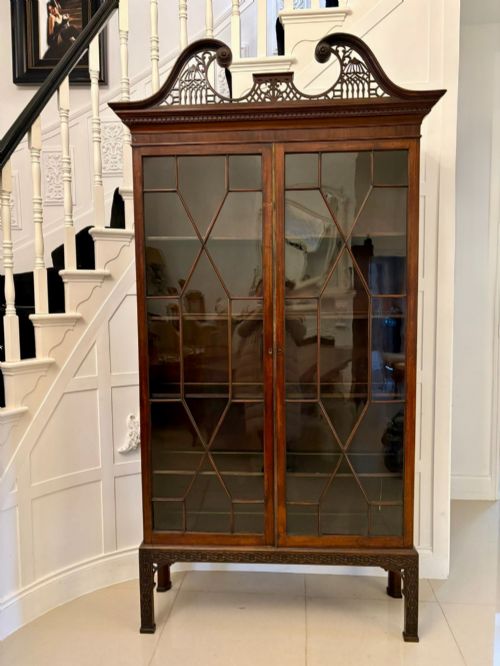
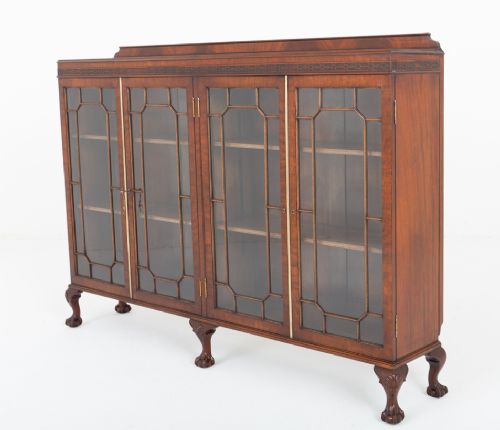
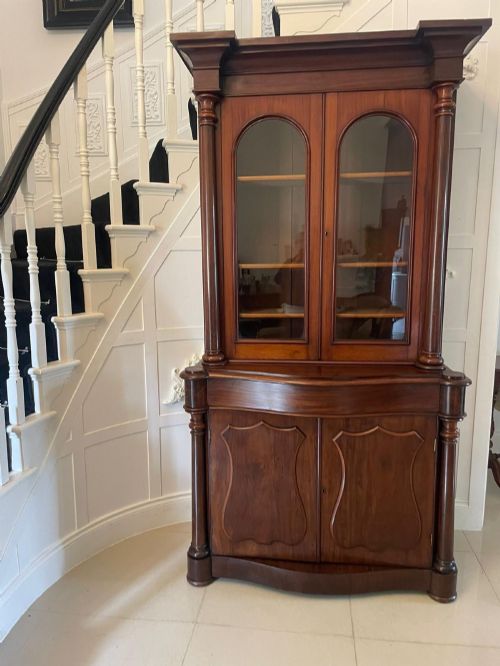
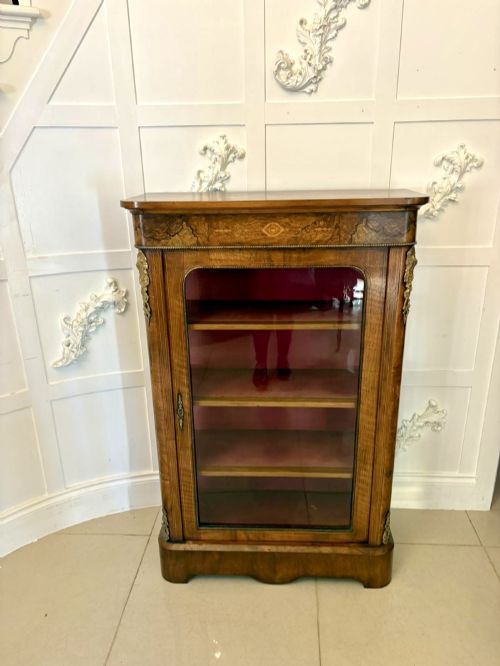
Antique Bookcase with Glass Doors
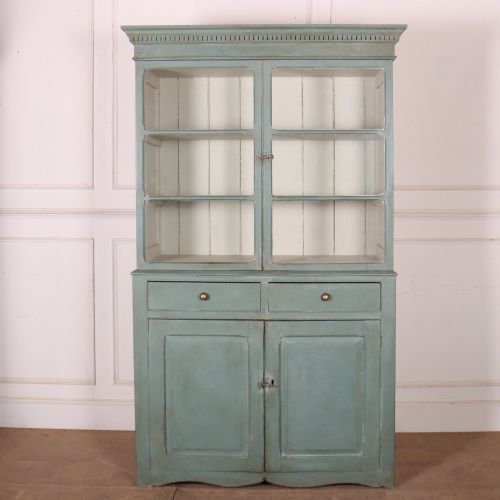
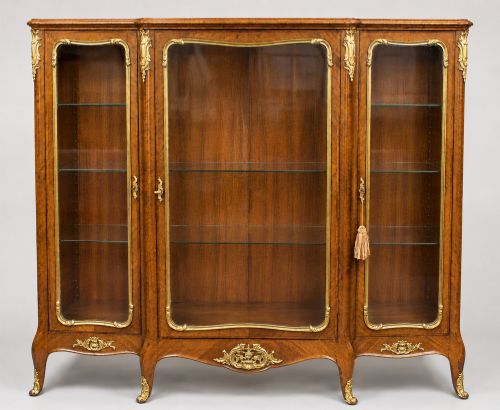
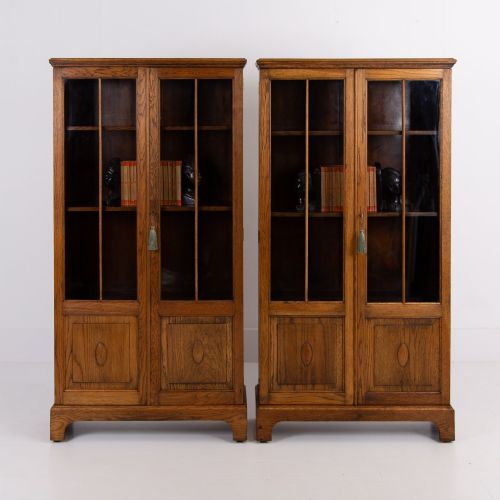
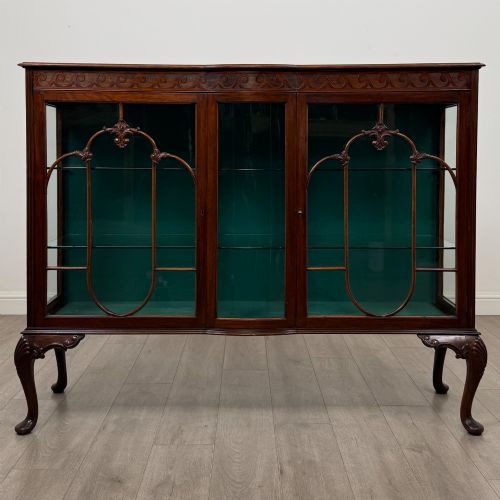
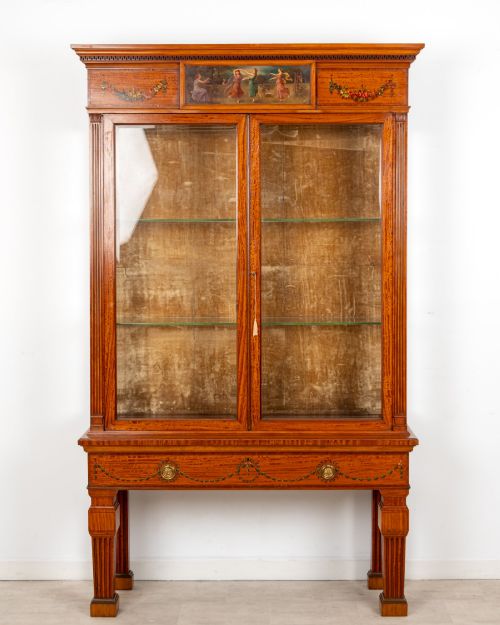
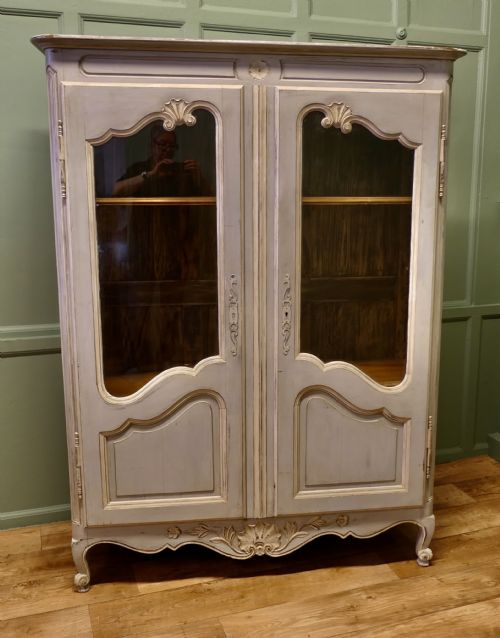
An antique bookcase with glass doors protects a library while showing bindings through leaded, astragal, or flat panes.
Antique Bookcase with Glass Doors
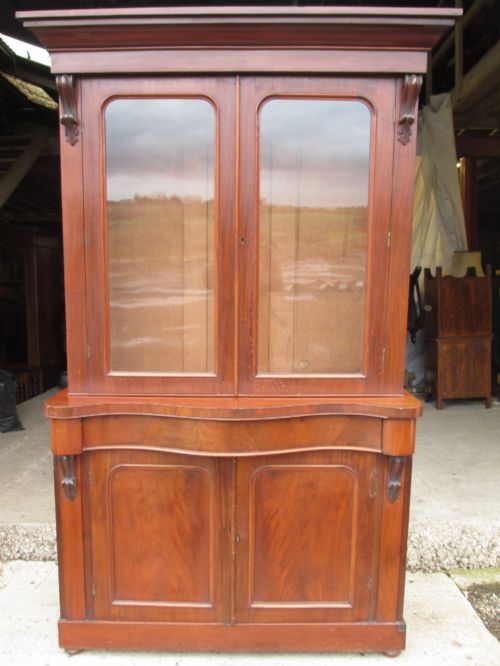
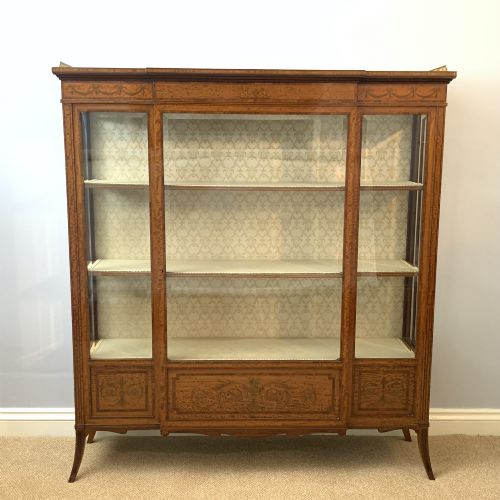
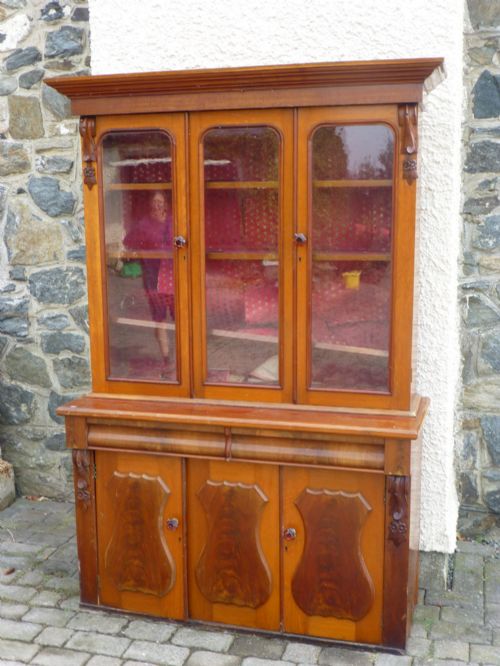
An antique bookcase with glass doors brings together centuries of storage for bound volumes, spanning Victorian, Edwardian, and 1920s periods. These pieces range from substantial mahogany library furniture to compact oak display cabinets and sectional barrister designs.
The version most commonly met on this page is the Edwardian or Victorian upright cabinet, often constructed in mahogany, walnut, or oak, featuring glazed doors that protect the shelves within.
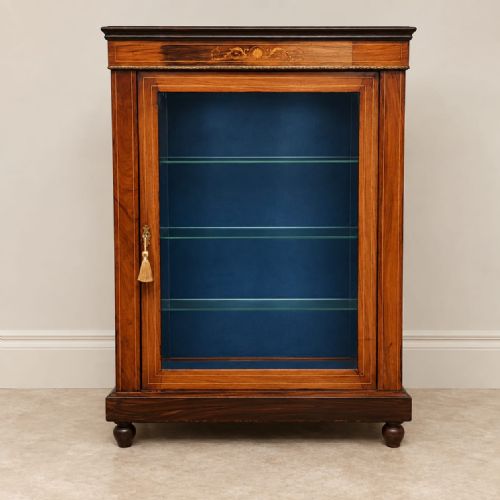
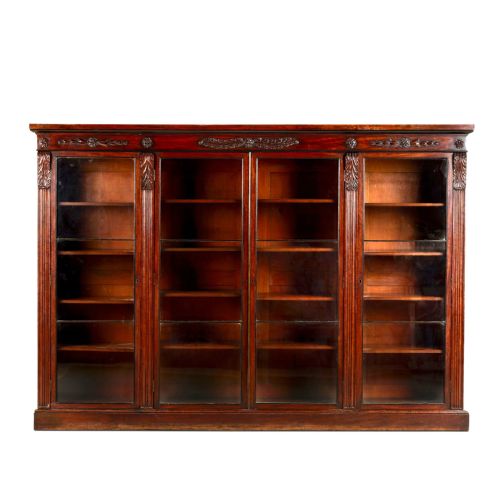
Makers and cabinetmakers produced these in various formats, including tall breakfront bookcases, narrow pier cabinets, and stacking units designed for domestic studies and larger libraries.
Materials and Construction
Cabinetmakers built these pieces using solid timbers and veneers such as mahogany, oak, walnut, and satinwood, frequently enriched with brass hardware and ormolu mounts. Inlays of ebony, boxwood, amboyna, and rosewood added decorative contrast to panelled doors and friezes.
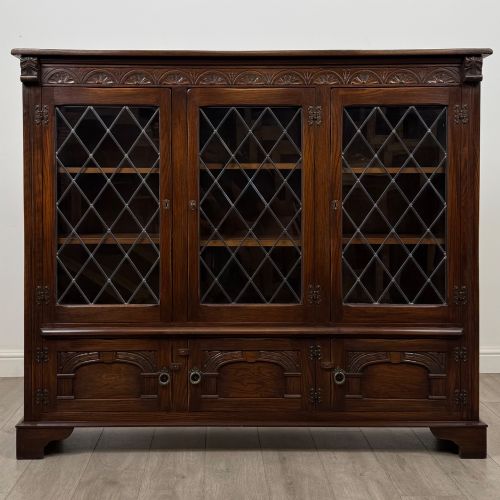
Glass panes were held in place by wooden glazing bars, lead cames, or astragals, creating multi-pane fronts that permitted visibility while keeping dust from the volumes. Pine and secondary softwoods served for internal shelving and carcases.
Listings feature pieces from the Victorian and Edwardian periods alongside 1920s stacking designs, constructed in mahogany, oak, walnut, and pine.
Judging the Standard
Quality rests in the selection of figured timber veneers, the precision of the marquetry or inlay, and the crispness of any carved mouldings. Pieces featuring original glass, matching brass fittings, and well-fitted adjustable internal shelving stand higher in standard.
Construction details such as dovetailed drawer boxes, solid backboards, and substantial timber thickness distinguish finer workshop productions from simpler utility furniture.
Globe Wernicke·Minty
The Antique Bookcase with Glass Doors Glossary
- Astragal glazed
- A door fitted with slender wooden mouldings that divide the glass pane into smaller geometric lights. These bars support the glass while creating a traditional grid pattern.
- Breakfront
- A piece of furniture whose central section projects forward from the flanking wings. This configuration breaks up a long flat facade.
- Pier cabinet
- A low freestanding display cabinet designed to fit against the wall space between windows. They frequently feature glass doors and inlaid veneers.
- Marquetry
- Decorative patterns formed by fitting together thin veneers of various coloured woods and other materials. This technique decorates the friezes and doors of finer cabinets.
- Barrister bookcase
- A sectional bookcase with upward-lifting glazed doors on each tier. These units can be stacked vertically to form a tall shelving unit.
Antique Bookcase with Glass Doors: Frequently Asked Questions
How do I clean the glass?
Use a soft cloth and a mild glass cleaner applied to the cloth rather than directly onto the wood. This prevents moisture from damaging antique polishes and timber frames.
Take care around leaded cames or delicate astragal bars so that the glazing remains secure within the door frame.
Are the shelves adjustable?
Many examples include adjustable wooden shelves supported by traditional wooden racks or metal pins. This allows the interior height to be altered for different book sizes.
Some earlier or simpler pieces have fixed shelves integrated into the carcase construction during manufacture.
Can these hold heavy books?
Most solid mahogany or oak library bookcases easily support standard volumes on their wooden shelves. Sectional barrister designs also distribute weight evenly across their tiered sections.
Check the thickness of the individual shelves and their supports before loading very heavy folios or reference sets.
How do I date an Edwardian piece?
Edwardian cabinets typically date from 1901 to 1910, often displaying satinwood inlay, lighter mahogany tones, or glazed doors with simple geometric glazing bars. Construction methods remain tidy and machine-assisted timber preparation becomes more common.
Compare the timber grain, handle styles, and interior linings with dated examples from the same era to confirm the period.