
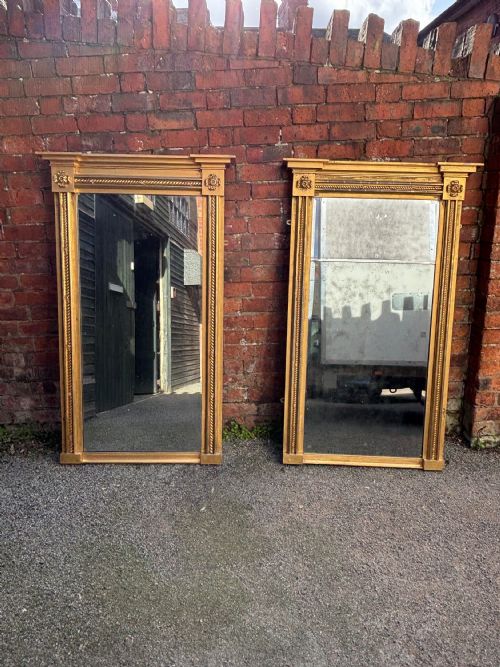


Classical Pilaster Mirror
These classical pilaster mirror examples bring architectural presence into a room through flanking column supports and neoclassical detailing.
Classical Pilaster Mirror
A classical pilaster mirror uses architectural columns or flat pilasters to frame the glass, drawing directly upon neoclassical design principles. These pieces serve primarily as wall mirrors or larger overmantel mirrors designed to sit above a fireplace.
The versions most commonly met on this page date from the nineteenth century, encompassing the Regency, George IV, and Victorian periods. Makers during these eras favoured formats like pier mirrors designed to hang between windows and grander overmantels.
Makers drew on styles such as Regency, Neoclassical, Victorian, George IV, and Grand Regency. These stylistic choices reflect a consistent return to classical antiquity throughout the nineteenth century.
How they were made
Carved giltwood and composition mouldings provide the characteristic metallic sheen on these frames, often built over a softwood or mahogany base. Craftsmen applied gesso to prepare surfaces for gilding or painting, sometimes incorporating faux marble paint.
Specialised decorative techniques appear throughout the selection, including eglomise decoration on glass panels and silver leaf application. These methods required skilled hands to achieve the polished neoclassical finishes expected in formal interiors.
Listings feature eighteenth and nineteenth-century styles including Regency, Neoclassical, and Victorian, constructed from giltwood, mahogany, and softwood.
What varies in quality
The crispness of the carved details on the pilasters and capitals separates standard frames from finer works. Sharp relief work indicates a high standard of craftsmanship in the wood or composition.
The treatment of the glass plate and secondary decoration, such as eglomise panels, influences the overall character. Original gilding and well-preserved painted or silvered surfaces retain the intended visual impact better than heavily restored alternatives.
The Classical Pilaster Mirror Glossary
- Pilaster
- A rectangular column that projects only slightly from the wall, used to frame the mirror glass. It mimics a classical support structure.
- Giltwood
- Timber that has been coated with gold leaf or a gold-coloured metallic finish. This material dominates nineteenth-century neoclassical mirror production.
- Pier glass
- A tall mirror designed specifically to hang on the narrow section of wall between two windows. It often sits above a pier table.
- Eglomise
- A technique involving cold painting and gilding on the rear face of glass. It creates a reflective, decorative panel often placed above the main mirror plate.
- Gesso
- A plaster-like mixture applied to wood frames to create a smooth surface for gilding. It allows for intricate moulded ornamentation.
Classical Pilaster Mirror: Frequently Asked Questions
Where should I hang a classical pilaster mirror?
These mirrors suit principal reception rooms, hallways, or above a fireplace mantelpiece where their architectural proportions can command the space. Placing them opposite a window helps amplify natural light within the room.
Ensure the wall construction can support the weight of larger giltwood and mahogany frames. Wall mirrors and overmantel mirrors require secure fixings tailored to their substantial build.
How do I identify a Regency period mirror?
Regency pieces often incorporate bold classical motifs, such as reeded pilasters, ball accents on the frame, and eglomise glass panels. The influence of neoclassical design remains strong in these nineteenth-century items.
Examine the construction methods and materials behind the frame, such as softwood carcasses prepared with gesso. These details help distinguish early nineteenth-century examples from later Victorian revivals.
How do I clean a giltwood mirror frame?
Dust the giltwood surface gently with a soft, dry brush or feather duster to remove loose particles without disturbing the finish. Avoid using water, liquid cleaners, or abrasive cloths on the delicate gilt surface.
Professional conservation is advisable for fragile gesso and gold leaf. Regular, careful dusting prevents grime build-up while preserving the historical finish.