
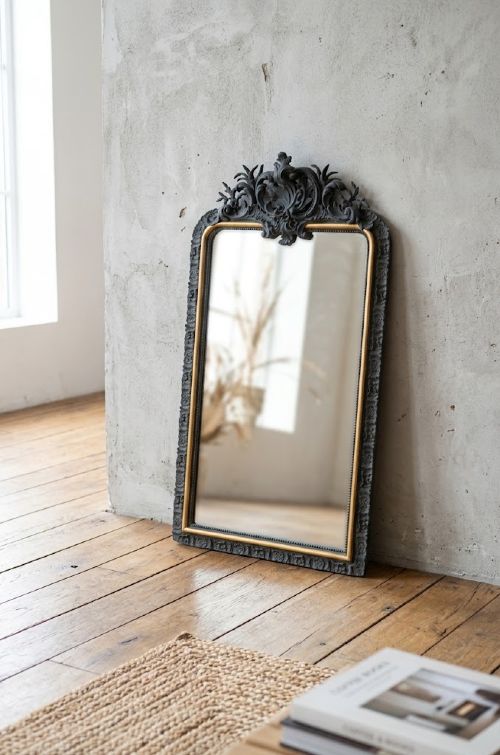
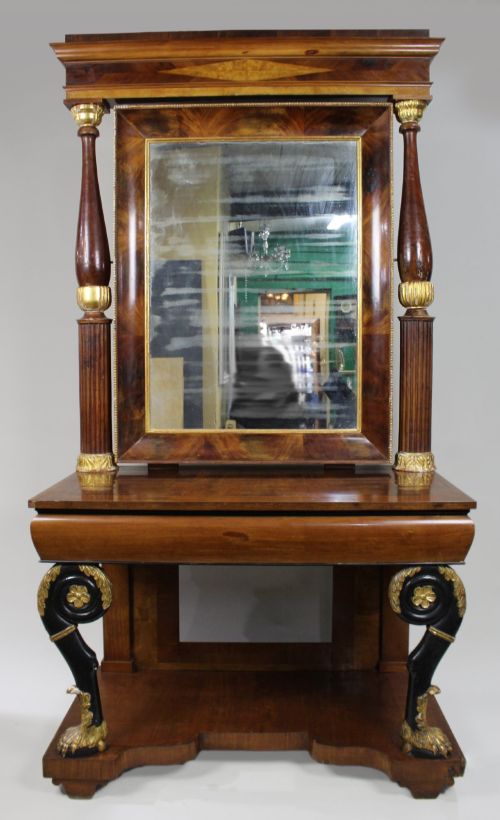
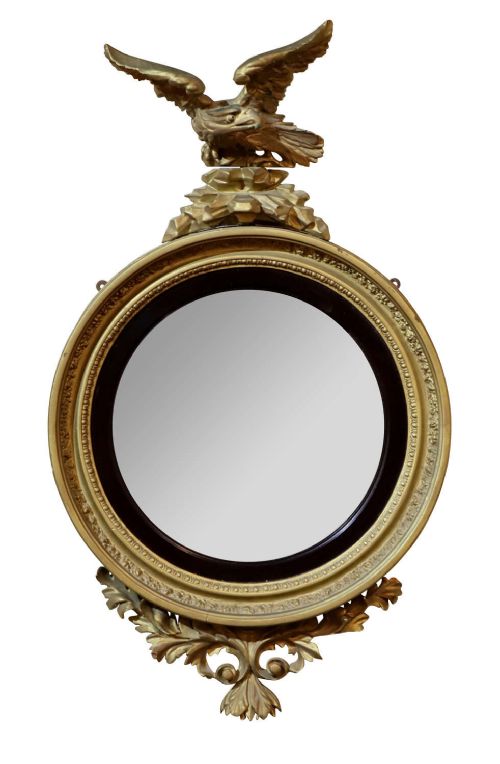
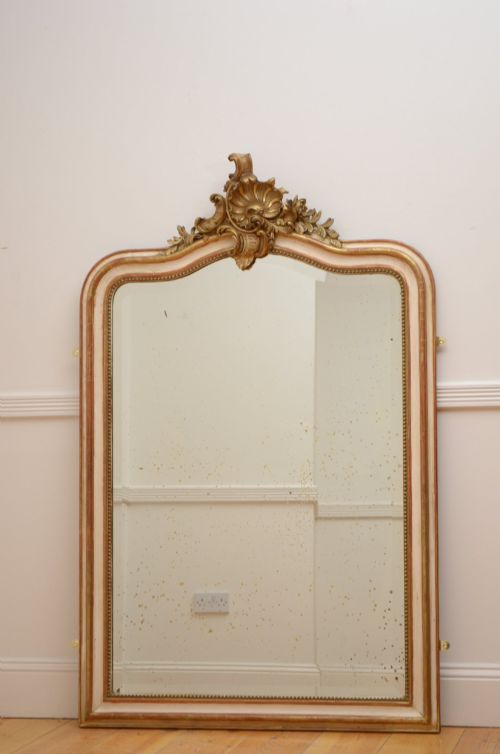



Empire Wall Mirror
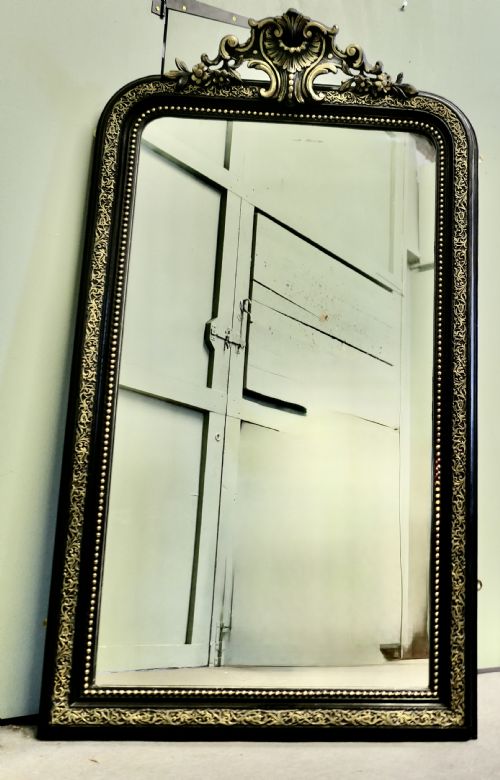
An empire wall mirror brings neoclassical gravitas to a room through monumental proportions, classical columns, and burnished gilding.
Empire Wall Mirror
An empire wall mirror is a commanding decorative object designed to reflect light and anchor a grand interior. These pieces frequently appear as tall pier mirrors, wide overmantels, or circular convex frames from nineteenth-century continental and British workshops.
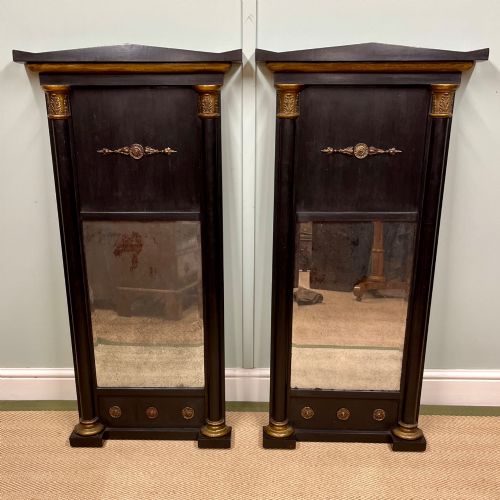
Buyers encounter French Empire, Regency, and Napoleon III interpretations alongside later revival pieces. Many incorporate architectural elements like Egyptian revival columns, painted panels, or ebonised details flanking the central glass.
Formats range from intimate dressing mirrors to towering eight-foot architectural installations. Pier mirrors and overmantels dominate the selection, often pairing rich mahogany or burr walnut with giltwood ornamentation.
Materials and construction
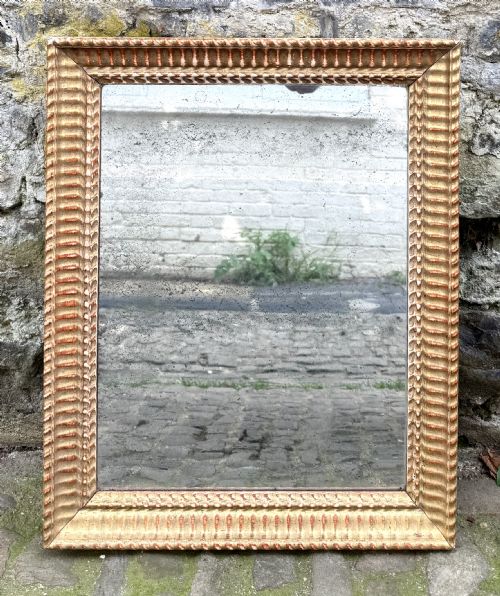
Frames rely on substantial timber carcases of mahogany, walnut, or birch, upon which intricate gesso ornament is applied and gilded with gold leaf. Cabinetmakers utilised parcel gilding and black lacquer to create the sharp colour contrasts typical of the neoclassical taste.
Gilt bronze, brass mounts, and ormolu provide metallic highlights around the sight edges and crestings. Glass plates are occasionally split or convex, mounted securely within deep wooden rebates behind classical architectural surrounds.
Evaluating craftsmanship
The distinction between standard production and exceptional quality lies in the crispness of the carved gesso relief and the depth of the gilding. Superior examples exhibit finely rendered figures, robust structural timber framing, and well-preserved original mirror plates with authentic foxing.
Proportion and architectural balance dictate the visual success of the piece. Stronger examples integrate decorative relief panels, eagle surmounts, or brass detailing with harmonious scale rather than cluttered ornamentation.
The Empire Wall Mirror Glossary
- Pier mirror
- A tall mirror specifically designed to hang on the wall space between two windows. These vertical glasses frequently sit above matching console tables.
- Overmantel mirror
- A wide horizontal mirror created to hang above a fireplace mantelpiece. They often feature decorative relief panels or multiple glass plates.
- Giltwood
- Timber carved and coated with a thin layer of gold leaf over a prepared gesso ground. This technique creates a luminous, warm metallic finish.
- Gesso
- A plaster mixture applied to wood frames and smoothed before gilding. Carved details take shape directly in this heavy ground layer.
- Convex mirror
- A round glass plate curved outward to provide a wide, distorted panoramic reflection of the interior. These pieces often feature candle arms or eagle crests.
Empire Wall Mirror: Frequently Asked Questions
Where should I hang an empire wall mirror?
These mirrors demand a prominent wall where their architectural presence can anchor the room. Positioning them above a fireplace mantel or between tall windows maximises both light reflection and historical context.
Ensure the wall construction supports the considerable weight of timber and glass. Heavy brass fixings attached directly to wall studs provide the necessary security for large pier glasses.
How do I identify a nineteenth-century piece?
Examine the construction methods and materials visible at the back of the timber frame. Hand-cut screws, old pine secondary woods, and traditional gilt layers over gesso point towards authentic period manufacture.
Original mirror plates frequently display subtle imperfections, minor darkening, and uneven silvering characteristic of older manufacturing techniques rather than modern float glass.
What is the difference between Empire and Regency styles?
Empire style originates from the Napoleonic period in France, favouring heavy classical motifs, military trophies, and rich mahogany with gilt bronze mounts. Regency represents the British contemporary equivalent with strong classical and Egyptian revival influences.
Both aesthetics share a common neoclassical foundation rooted in ancient Roman and Greek design principles. British Regency pieces often incorporate ebonised wood and distinctively carved convex frames.