




Late Regency Mirror
A late regency mirror brings architectural weight and bright reflection to a room, captured in gilt wood and convex glass.
Late Regency Mirror
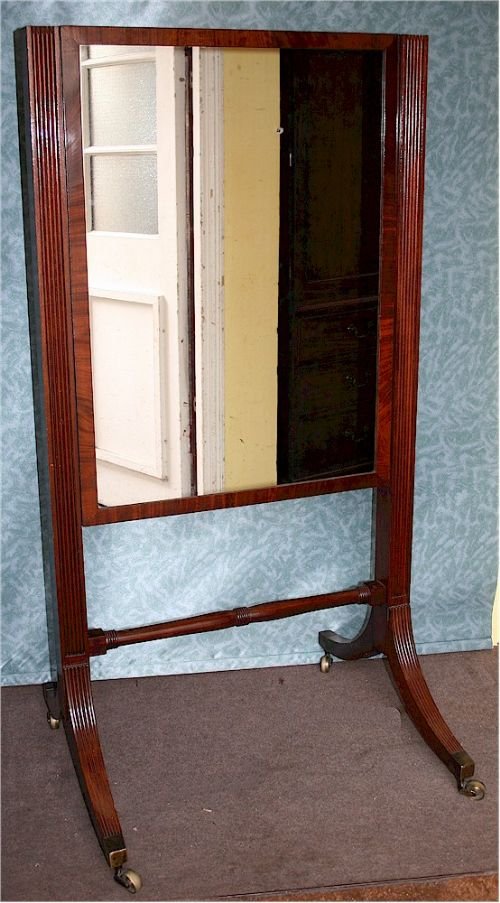
A late regency mirror sits firmly in the nineteenth century, taking the form of wall mirrors, overmantel mirrors, and cheval mirrors. These pieces originate from the Regency period and its later revivals, offering substantial presence in domestic spaces.
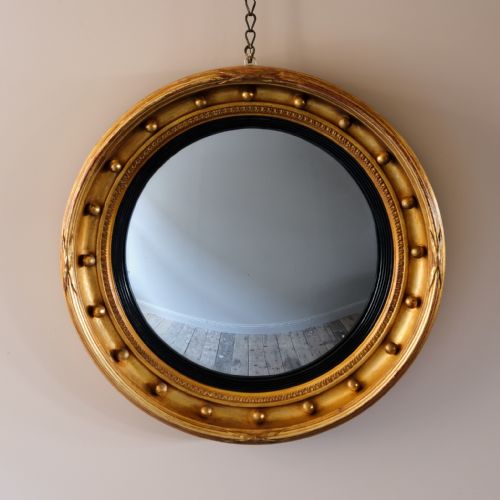
The evidence shows two distinct visual camps on this page: the circular convex glass set within a gilt frame, and the expansive horizontal triple plate overmantel mirror. Both types anchor a room, whether hung above a fireplace or mounted on a principal wall.
How they were made
Makers built these frames using pine, mahogany, and wood as a base, applying gesso to model crisp classical details and mouldings before gilding the surface. Ebonised wood and brass elements also appear, providing contrast within the frame construction.
The glass plates themselves range from single convex discs that distort light spherically to wide triple plates designed to bounce illumination across a grand interior, occasionally accompanied by eglomise glass decoration.
Convex mirrors were once known as banker's mirrors, historically prized because they allowed shopkeepers to keep an eye on all their customers at once.
What varies in quality
The depth and crispness of the carved or moulded gesso relief dictate the visual authority of the frame. Sharp detailing along the acanthus leaves and classical motifs separates a piece of high ambition from a softer, more routine execution.
The survival of the original mirror plate commands attention. Plates showing natural foxing or clear, undistorted silvering carry more integrity than modern replacements.
The Late Regency Mirror Glossary
- Convex mirror
- A round mirror with a curved outward glass plate that captures a wide-angle reflection of the entire room. These circular frames often feature giltwood balls around the inner rim.
- Overmantel mirror
- A wide horizontal mirror designed specifically to hang on the wall directly above a fireplace mantelpiece. They frequently utilise triple plates to fill the expansive space.
- Eglomise
- A technique of applying cold painting and gilding to the rear face of glass to create a decorative panel. This method appears on pier glass mirrors from the period.
- Gesso
- A plaster-like mixture applied to wood frames and carved into intricate decorative motifs before gilding. It provides the smooth white base required for a brilliant gold leaf finish.
- Cheval mirror
- A freestanding full-length mirror hung in a frame with adjustable pivots. This allows the glass to tilt to various angles.
Late Regency Mirror: Frequently Asked Questions
Where should I hang an overmantel mirror?
An overmantel mirror belongs above a fireplace mantelpiece where its horizontal proportions balance the hearth below. It anchors the vertical space of the chimney breast and reflects light across the room.
Ensure the wall fixings can support the substantial weight of the wood and gesso frame. Positioning it at the correct height ensures it mirrors human scale and surrounding furniture.
How do I care for antique giltwood?
Giltwood requires gentle dusting with a dry, soft brush to protect the delicate gold leaf and gesso surface. Moisture and chemical cleaners damage the historic finish instantly.
Keep these mirrors away from direct sunlight and damp walls to prevent the wood frame from warping and the gesso from cracking.
What is a convex mirror used for?
Convex mirrors were historically placed in drawing rooms and dining rooms to monitor guests and servants across the space. The curved glass gathers a panoramic view of the interior into a single circular frame.
Their unique optical property makes them decorative focal points rather than functional looking glasses for checking attire.
How do I spot a later copy?
Examine the construction materials at the back of the frame, looking for aged pine, hand-cut fixings, and the natural oxidation of old mirror glass. Later nineteenth-century revivals and subsequent copies often employ different assembly methods and uniform modern glass.
Natural wear to the gilding and subtle irregularities in the gesso indicate genuine period manufacture rather than modern production.