



Classical Bronze Candelabrum
These pieces bring the heavy presence of a classical bronze candelabrum into a room, offering sculptural weight and nineteenth-century lighting.
Classical Bronze Candelabrum
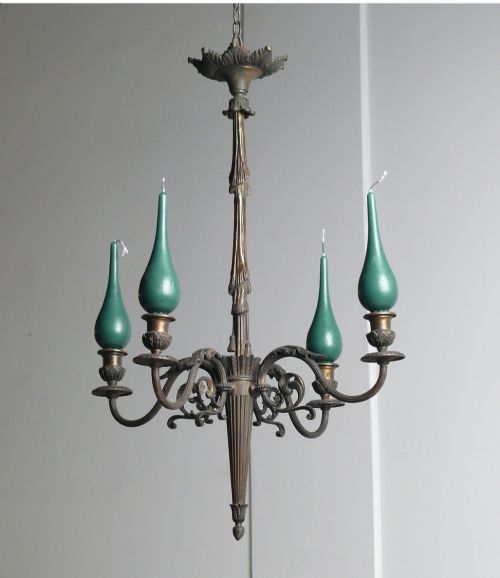
A classical bronze candelabrum combines sculptural metalwork with functional candle branches, drawing heavily on French Empire, Regency, and Louis XVI styles. Buyers seek these objects for their architectural presence and rich surface patination, which anchor a mantelpiece or side table with period character.
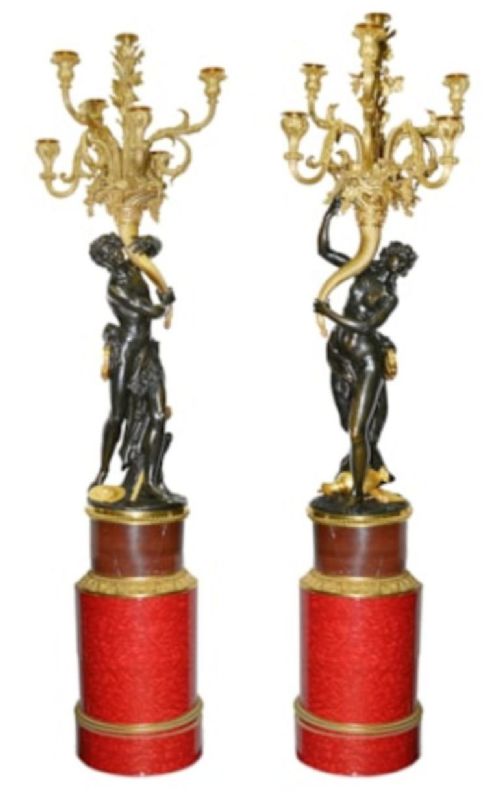
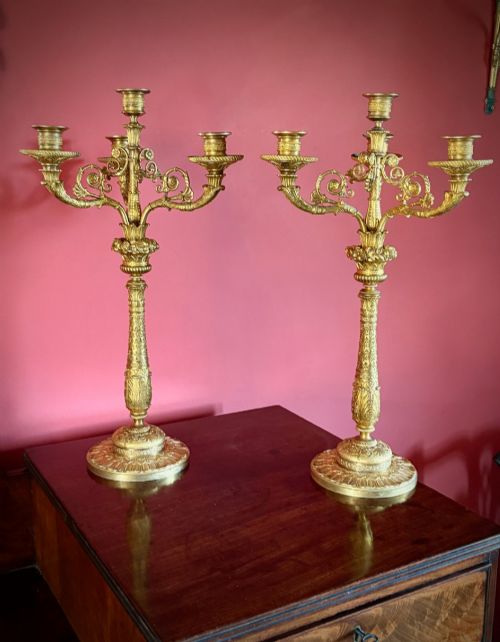
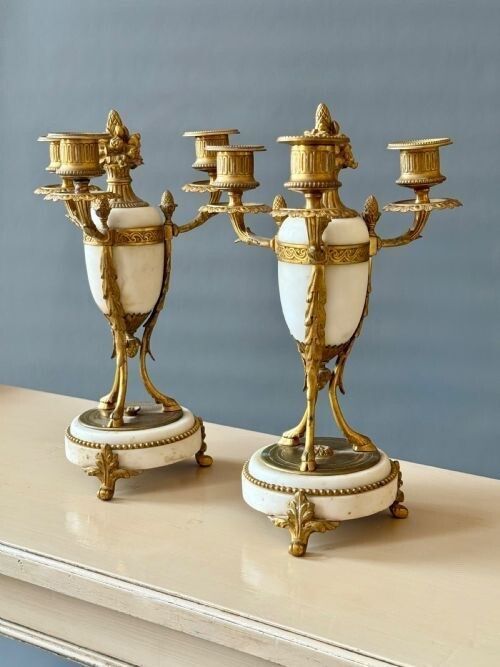
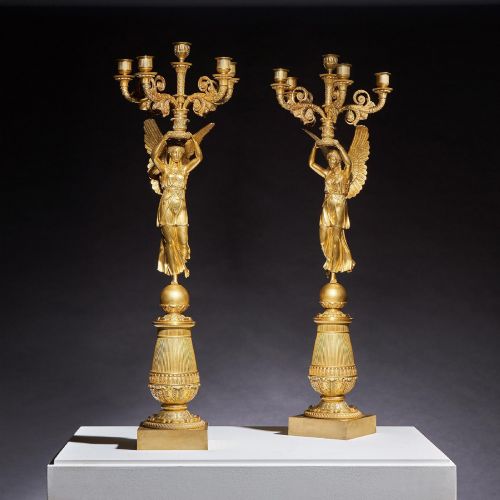
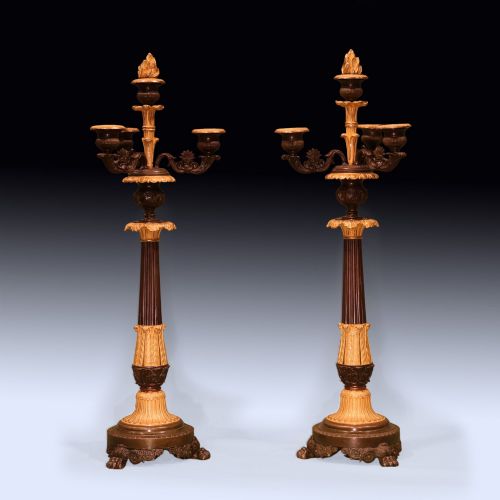
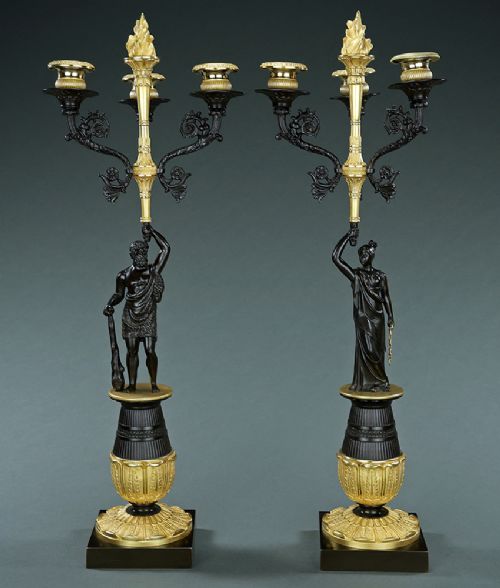
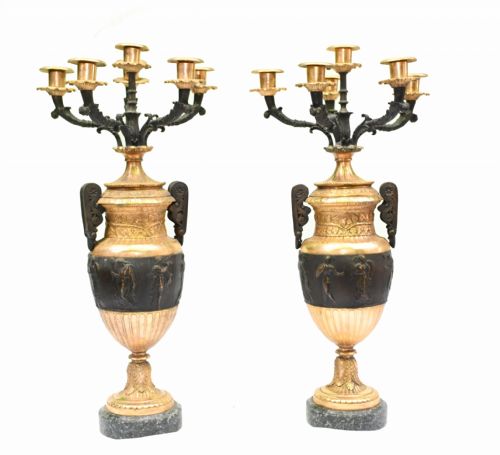
The most common examples on this page are matched pairs dating from the nineteenth century, often pairing patinated or gilt bronze with contrasting white or coloured marble bases. Forms range from simple two-arm wall sconces and table candleholders to large multi-branch candelabra and figural garniture sets.
Materials and Construction
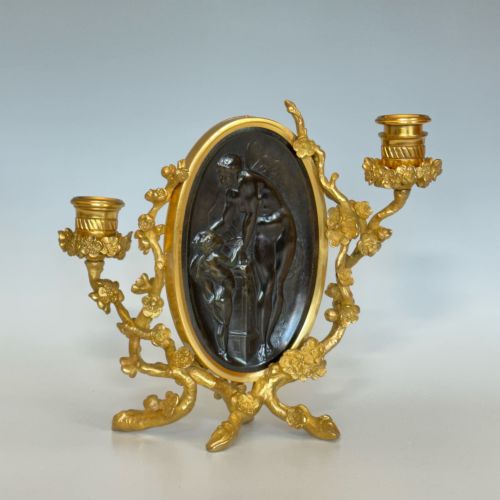
Makers utilised cast bronze, patinated dark bronze, and fire-gilded ormolu, frequently mounting the metal components onto white marble, onyx, or slate plinths. The contrast between deep dark bronze and bright gilt ormolu defines the visual rhythm of these pieces.
Foundry work involved lost-wax or sand casting, followed by meticulous chasing of the metal surfaces to sharpen botanical details, drapery, and figural elements. Individual cast components were then joined with threaded rods and screws, allowing for disassembly during cleaning or repair.
Listings feature eighteenth- and nineteenth-century revival styles including Louis XVI, French Empire, and Regency.
Distinctions in Quality
The crispness of the metal chasing separates standard production from exceptional work, as finer castings retain sharp leaf veins and facial expressions without blurring. Better pieces display a deeper, more even application of mercury gilding or ormolu, whereas lesser examples rely on duller modern lacquers or uneven plating.
Architectural proportion and the integration of secondary materials like marble or porcelain dictate the overall success of a piece. Heavier, denser stone bases and securely seated figural bronzes indicate superior workshop standards from periods like the French Empire or Regency.
Pierre Philippe Thomire·Thiebaut Freres·Thomas Hope·Humphrey Hopper·H Luppens Paris·Rabiat
The Classical Bronze Candelabrum Glossary
- Ormolu
- Gilded bronze produced through a mercury amalgamation process, yielding a durable and warm metallic lustre. It provides the bright decorative highlights seen across French Empire and Regency designs.
- Patinated bronze
- Dark chemical or natural oxidation applied to the surface of cast bronze to create deep brown or black tones. This treatment contrasts sharply with bright ormolu mountings.
- Garniture
- A matched set of ornamental objects, typically comprising a central mantel clock flanked by a pair of candelabra or vases. They were designed to sit harmoniously on a fireplace mantel.
- Torchère
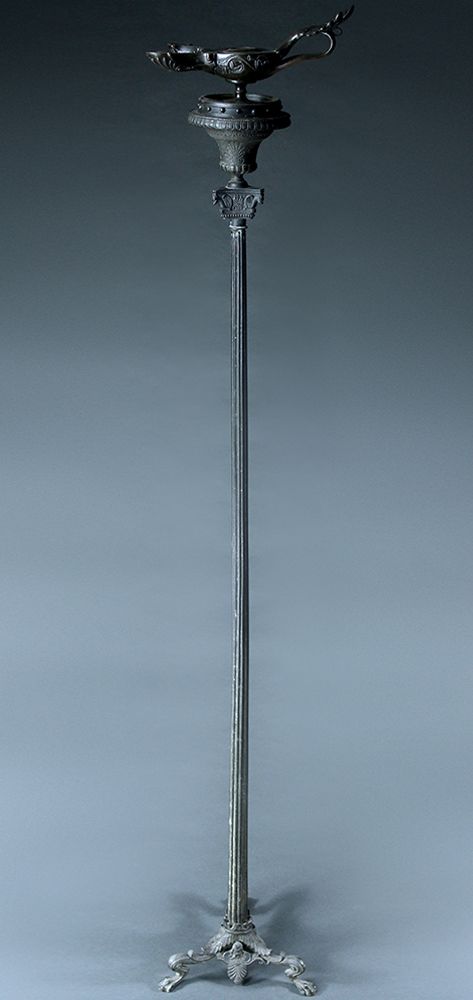
- A tall stand or candlestick designed to hold a light source aloft, often taking the form of a classical column or a figural standard bearing a torch.
- Chasing
- The manual finishing of a metal casting using small chisels and punches to refine details and texture. Superior chasing distinguishes master foundry work from ordinary production.
Classical Bronze Candelabrum: Frequently Asked Questions
Are these candelabra wired for electricity?
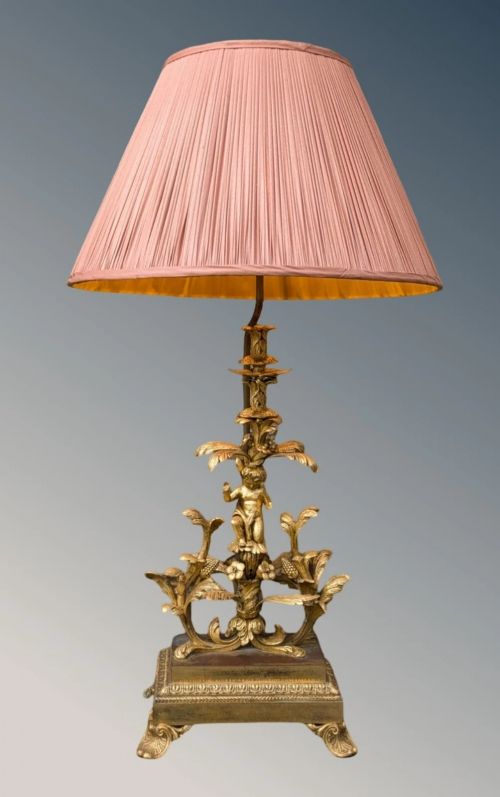
Most period examples retain their original configuration for wax candles, preserving the integrity of the bobbèche and drip pans. Some pieces have been adapted into table lamps or standard lamps over time.
Check individual descriptions to see whether the wiring is modern or if the piece remains purely for candle use. Conversions can often be reversed if you prefer traditional candlelight.
How do I date a nineteenth-century candelabrum?
Examine the casting quality, assembly methods, and stylistic cues such as Neoclassical motifs or French Empire drapery. Heavier bronze components and mercury gilding typically point to earlier nineteenth-century production.
Signatures or foundry marks stamped into the bronze provide definitive clues. Comparing the decorative vocabulary to known Regency or Louis XVI revival patterns helps narrow down the decade.
Where should I display a garniture set?
These sets find their traditional home on a mantelpiece, where the central clock and matching side candelabra create a balanced focal point. They also work well on deep sideboards, console tables, or bookcases.
Ensure the placement protects the piece from accidental knocks, particularly given the weight of marble bases and multi-branch metal arms.