


Antique Tall Bronze Lamp
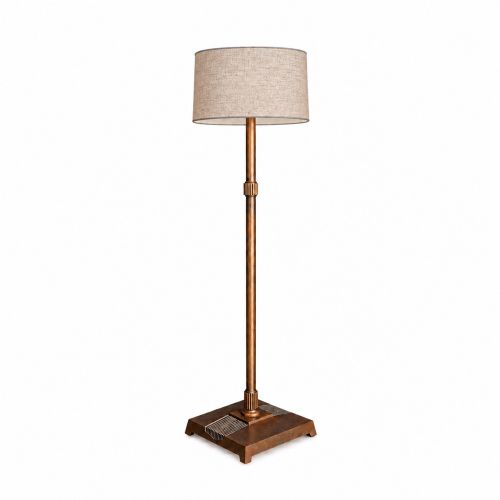
These antique tall bronze lamp pieces stand as commanding columns of metal, offering height and steady light for a period interior.
Antique Tall Bronze Lamp
An antique tall bronze lamp brings vertical presence to a room, rising from floor standing models to substantial table heights. When searching for this type, you encounter standard lamps, floor lamps, and tall columns dating from the nineteenth century into the early twentieth century.
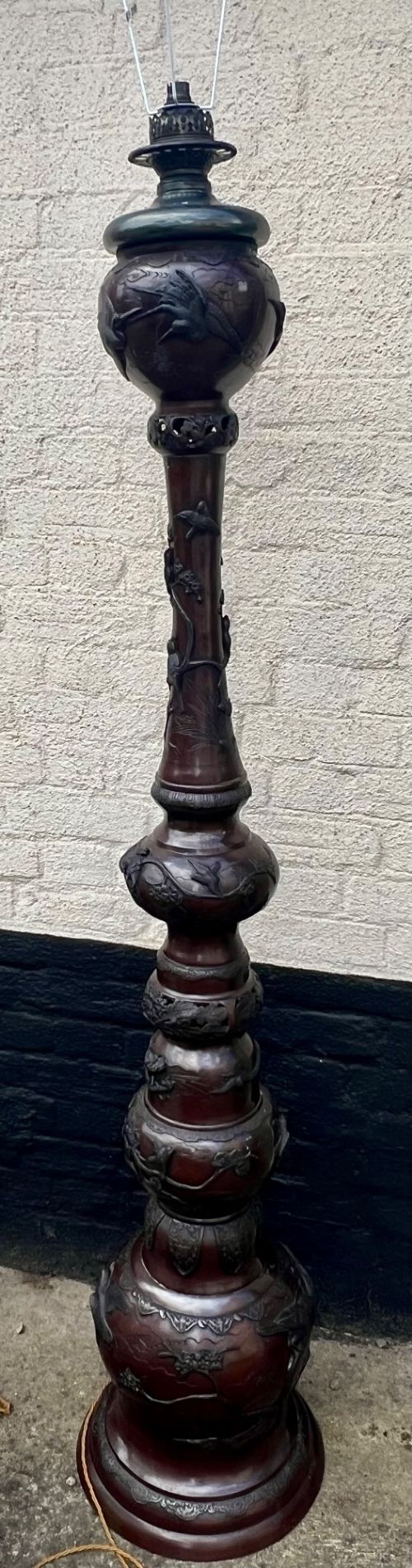
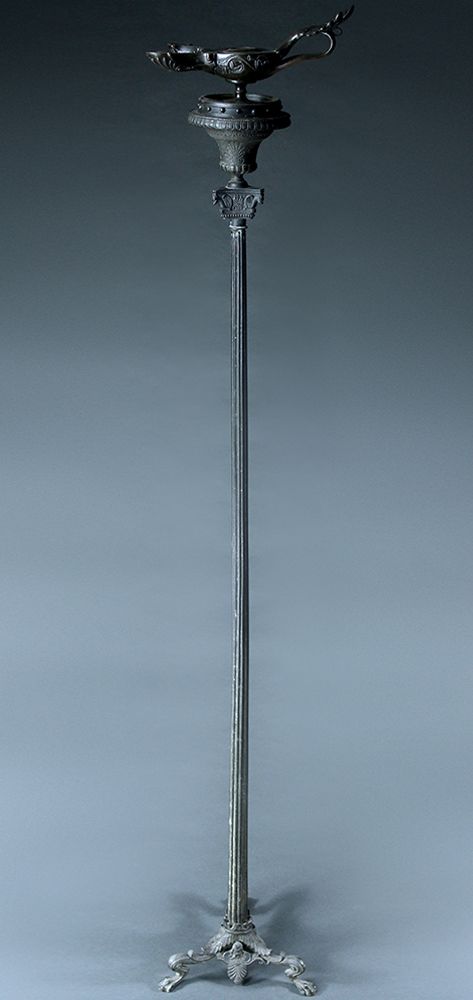
The selections span distinct stylistic revivals, including Neo-Classical designs, Victorian interpretations, Japanese Meiji pieces, and Art Deco torcheres. Many examples take the form of floor standing pillars or torchere stands intended to cast light upward.
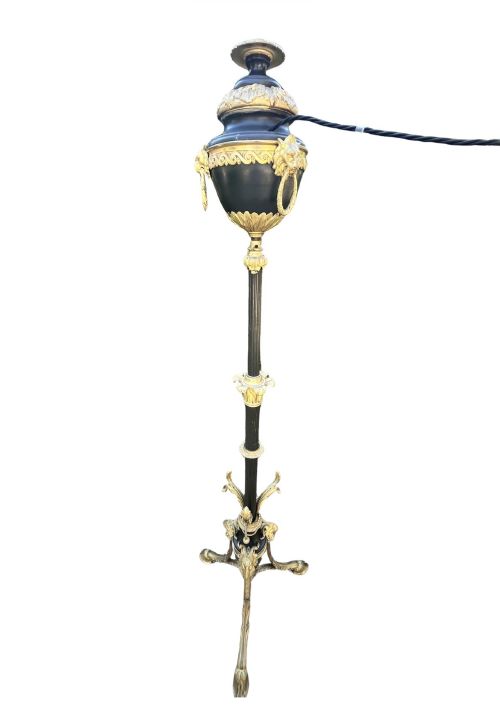
Makers and creators utilised patinated bronze, gilt bronze, ormolu, and brass, occasionally pairing the metalwork with mahogany or crystal elements. These upright fixtures serve primarily as floor lamps and standard lamps, designed to anchor a corner or illuminate a seating area.
Materials and construction methods
Foundry work relied on casting bronze and brass into substantial columns, pillars, and figures, often finished with a dark patination or bright gilding. Ormolu mounts and gilt bronze details were applied to enrich the surface texture of the metal.
Makers combined bronze with contrasting materials like crystal columns, mahogany timber bases, and wrought iron supports. Fabric shades completed the construction, sitting atop standard lamp fittings adapted for electric light.
Neo-Classical and Art Deco styles dominate the design vocabulary of these tall metal floor and standard lamps.
Judging the standard of manufacture
Quality rests in the crispness of the bronze casting and the depth of the chased detailing across the column. Superior examples display refined proportions and hand-finished surface patination rather than flat, uniform machine casting.
The integrity of the construction determines durability, particularly in tall floor models where a heavy bronze shaft requires a stable, well-balanced base. Ormolu elements and gilt highlights show greater artistry when they retain their original fire-gilded lustre.
The Antique Tall Bronze Lamp Glossary
- Ormolu
- Gilded bronze, where a gold amalgam is applied to a bronze base through heat and mercury. This technique creates a rich, lasting metallic sheen found on finer nineteenth-century light fittings.
- Torchere
- A tall stand or lamp originally designed to hold a torch or candle, later adapted for electricity. These pieces provide elevated upward illumination.
- Patinated bronze
- Metal treated with chemicals or heat to produce a controlled surface colour, typically dark brown or green. It protects the bronze while giving an aged appearance.
- Standard lamp
- A British term for a tall floor-standing lamp designed to sit beside furniture. They feature an upright column resting on a weighted base.
- Neoclassical
- A style drawing inspiration from classical antiquity, featuring motifs such as fluted columns and classical urns. It appears frequently across nineteenth-century metalwork.
Antique Tall Bronze Lamp: Frequently Asked Questions
Where should I place a tall bronze floor lamp?
These tall floor models suit corners of reception rooms or beside heavy seating where their height balances surrounding furniture. They provide ambient upward illumination rather than direct task lighting.
Ensure the heavy bronze base rests on a stable floor surface so the vertical column remains secure.
How do I distinguish Victorian bronze from later periods?
Victorian examples often display heavier cast columns with ornate detailing influenced by revival styles, while later Edwardian and Art Deco pieces lean toward leaner profiles or geometric lines.
Examining the casting seams and the depth of the patination helps reveal the period of manufacture.
Are these lamps wired for modern electricity?
Many surviving examples have undergone restoration to update their internal wiring for contemporary safety standards while retaining their original exterior metalwork.
It is advisable to check the specific listing details regarding whether a standard lamp has been restored for modern use.
What is the difference between bronze and spelter?
Bronze is a durable alloy of copper and tin that takes fine detail and heavy casting, whereas spelter is a softer, zinc-based metal used as a more economical alternative for decorative figures.
Weight and surface resilience typically separate genuine bronze columns from lighter spelter substitutes.