



Classical Brass Candlesticks
Classical brass candlesticks bring formal proportion and bright metal warmth to a room, spanning the Georgian, Regency and Victorian eras.
Classical Brass Candlesticks
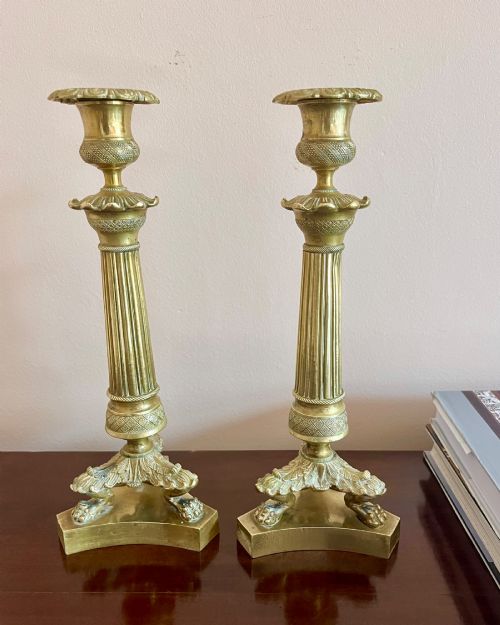
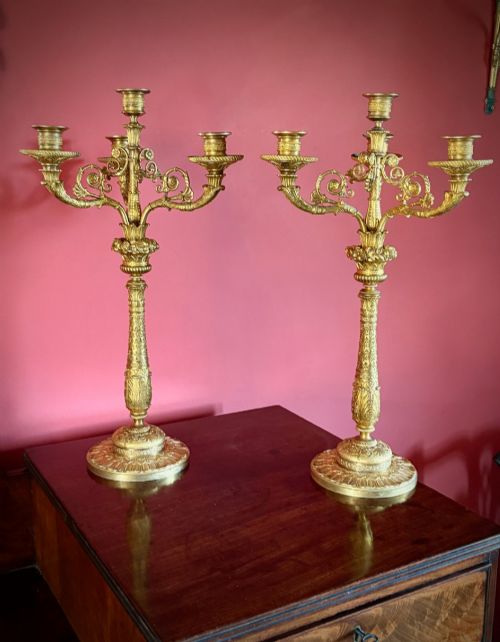
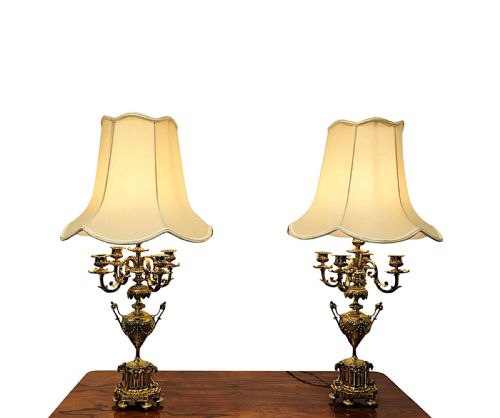
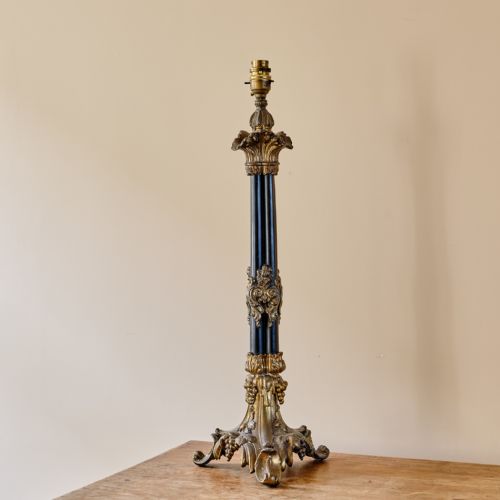
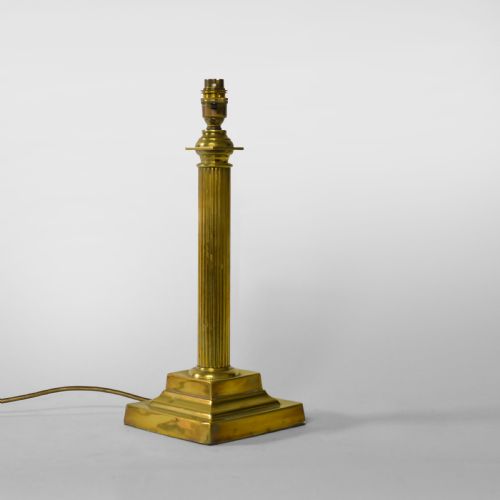
Classical brass candlesticks take many forms across the inventory, ranging from simple columnar designs to elaborate multi-branch candelabra. Pieces date primarily from the eighteenth and nineteenth centuries, carrying styles from French Empire to Edwardian production.
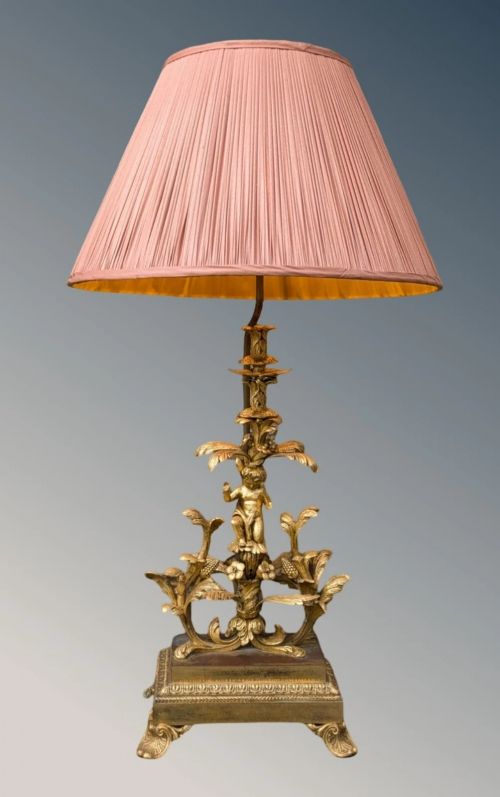
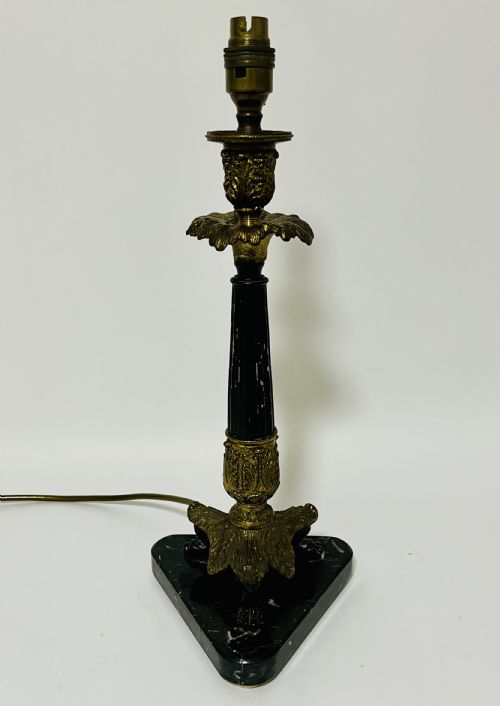
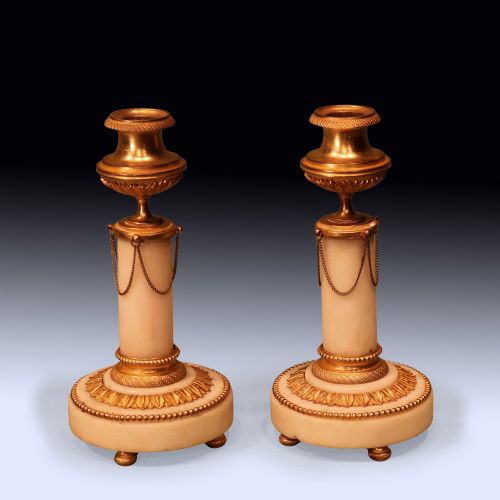
Buyers encounter both straightforward utilitarian sticks and grander decorative examples incorporating marble bases or gilt highlights. The selection reflects periods including Regency, Victorian and Edwardian manufacturing.
Factors of Quality
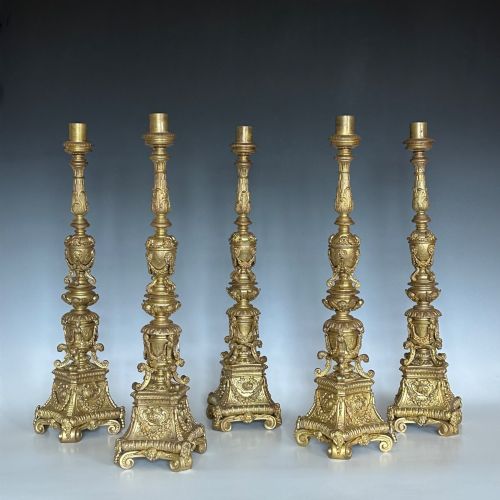
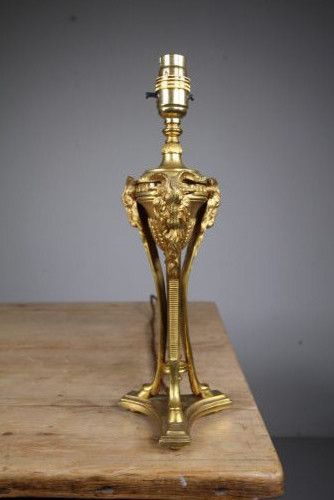
Quality rests in the crispness of the casting and the depth of the chasing on the metal surface. Superior items show sharp detail in classical motifs such as acanthus leaves, rams heads and fluted columns.
The weight of the metal and the integrity of any secondary materials like marble or patinated bronze distinguish finer workshop output from standard production.
Some specimens feature zodiac symbols or four-season figures, reminding us that past owners liked their dinner lighting to tell a cosmic story.
J. Miller
The Classical Brass Candlesticks Glossary
- Ormolu
- High-fineness gold cast and chased onto a bronze base. This technique produces a bright golden finish popular in French Empire pieces.
- Pricket
- A sharp metal spike set into the drip pan to secure a candle. This form appears on older ecclesiastical and formal pieces.
- Corinthian column
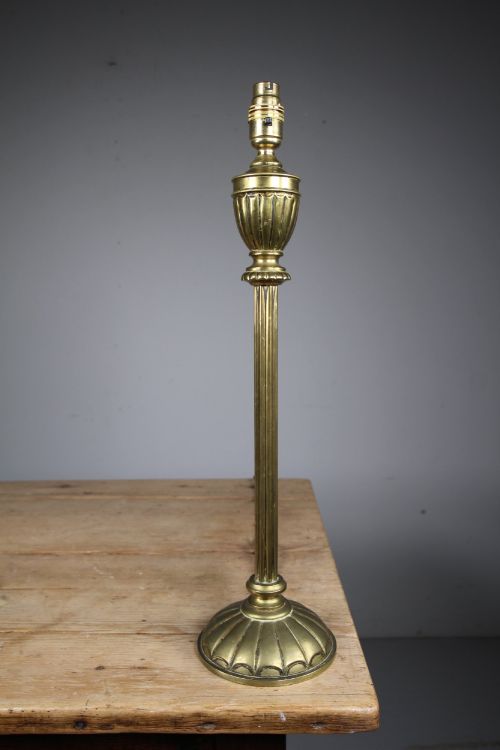
- A classical architectural column form with an ornate capital decorated in acanthus leaves. It serves as a popular pillar design for candlesticks and table lamps.
- Patinated bronze
- A treated or naturally aged surface finish on bronze components. The process darkens the metal to provide contrast against polished brass or gilt elements.
Classical Brass Candlesticks: Frequently Asked Questions
How do I clean antique brass?
Dust gently with a soft dry cloth to preserve the patination. Avoid harsh chemical polishes that strip historical surface ageing.
Professional care is recommended if corrosion threatens the metal stability.
Were these converted to lamps?
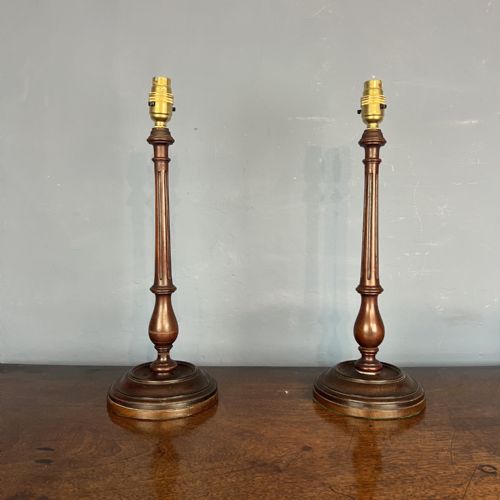
Several pieces in the inventory retain their original lighting function while others have been adapted for electricity. Conversions often use existing central channels to run wiring.
Check individual descriptions to confirm whether wiring is recent or professional.
How do I date a candlestick?
Examine the casting seams, base construction and stylistic motifs such as Regency neoclassical details or Victorian proportions. Maker marks or stamps occasionally appear on the underside.
Compare the weight and assembly methods with documented pieces from the same period.
Where should I place them?
These pieces suit side tables, mantelpieces or central dining displays where their metallic reflection catches natural light. Pair them symmetrically for a formal classical arrangement.
Ensure stability on flat surfaces, particularly with heavier marble-based examples.